
Why Build Terrarium Wall Art for Your Indoor Space
Build terrarium wall art and you can turn any blank wall into a living, breathing focal point — no garden required.
Here’s a quick overview of how to do it:
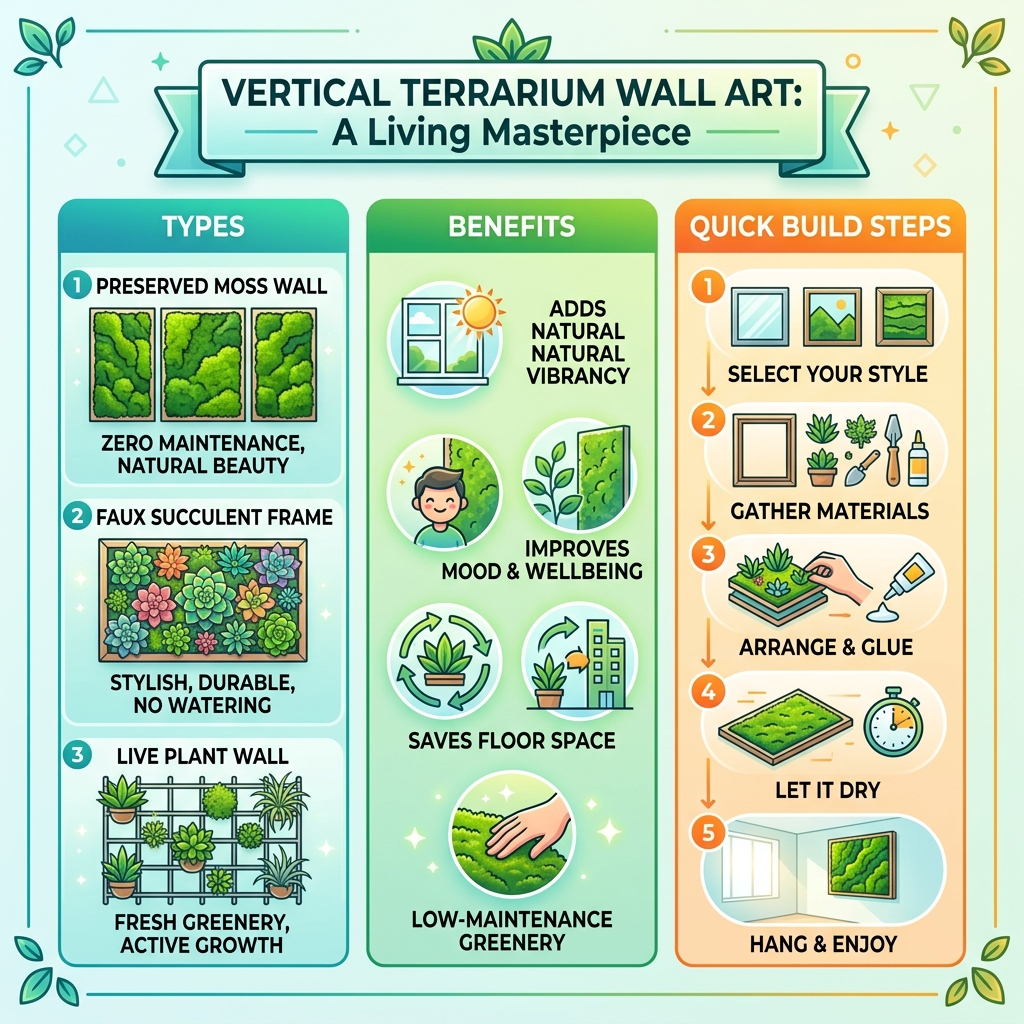
- Choose your style — preserved moss wall, faux succulent frame, or a live vertical plant wall
- Gather materials — a frame or panel, adhesive, and your chosen plants or moss
- Arrange and glue — layer your moss or plants from largest to smallest, filling gaps as you go
- Let it dry — leave flat for several hours before hanging
- Hang and enjoy — mount securely on your wall in a spot with indirect light
These projects work for renters, small-space dwellers, and anyone who wants greenery without floor space. Options range from zero-maintenance preserved moss panels to fully living vertical gardens — so there’s a style for every lifestyle.
Whether you have one free afternoon or a full weekend, terrarium wall art is one of the most rewarding ways to bring nature indoors.
Understanding the Types of Terrarium Wall Art
When we talk about vertical gardening, many people imagine a traditional glass bowl sitting on a shelf. However, when you Build terrarium wall art, you are essentially taking that ecosystem and mounting it to your wall. This shift from horizontal to vertical changes the materials we use and how we care for the plants. Traditional terrariums rely on gravity and a base of soil; wall art requires clever adhesives or specialized rooting panels to keep everything in place.
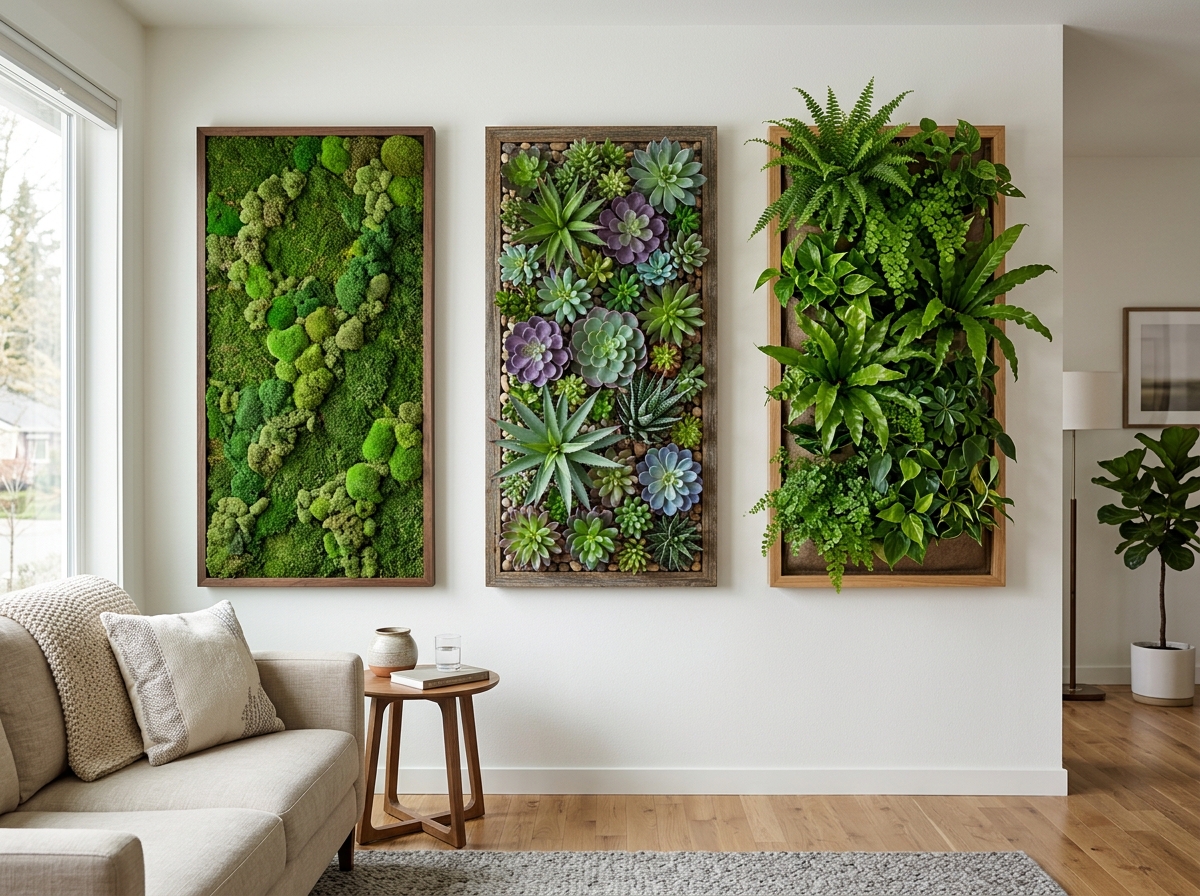
There are three primary ways to approach this project:
- Preserved Moss Walls: These are the ultimate “set it and forget it” option. Using moss that has been treated with glycerol, these walls look and feel alive but require zero water or sunlight.
- Faux Succulent Walls: Perfect for high-traffic areas or spots with absolutely no natural light. High-quality faux plants offer a 100% success rate for those of us who might lack a green thumb.
- Living Vertical Walls: These are true biological systems. They often use lava rock or specialized felt panels to allow real plants like ferns and mosses to grow vertically.
For those with furry friends, many of these options are inherently pet-friendly. Since the art is mounted high on the wall, it stays out of reach of curious cats and dogs. Furthermore, by using preserved or faux materials, you eliminate the risk of pets nibbling on potentially toxic live plants.
| Feature | Preserved Moss | Faux Succulents | Living Walls |
|---|---|---|---|
| Maintenance | Zero | Zero | High (Daily/Weekly) |
| Watering | None | None | Frequent misting |
| Light Needed | None (Indirect only) | None | Medium to Bright Indirect |
| Longevity | 5-10+ years | Indefinite | Depends on care |
| Cost | Moderate | Low to Moderate | High |
Sourcing Your Preserved Moss
If you decide on a moss wall, the quality of your moss is everything. Preserved moss isn’t just “dried” moss. It undergoes a specific preservation process where its natural water content is replaced with glycerol. This treatment is what keeps the moss feeling soft and fluffy rather than brittle and dusty.
When you Shop Preserved Moss on Etsy, look for varieties like reindeer moss, cushion moss, and sheet moss. Using a mix of these textures creates a more natural, “forest floor” appearance. Because the water has been replaced by a preservative, these pieces won’t wilt, but they should still be kept out of direct sunlight to prevent the dyes from fading over time.
DIY vs Ready-Made Costs
One of the first questions we hear is: “Is it cheaper to build it myself?” Generally, yes. A high-end, pre-made moss wall can cost hundreds or even thousands of dollars depending on the size. By sourcing your own frame and moss, you can often create a similar look for a fraction of the price.
A typical DIY project might cost between $50 and $150 for a mid-sized frame, whereas a ready-made designer piece of the same size could easily double that. Plus, building it yourself allows for total customization. You can choose the exact wood for your frame and the specific shades of green that match your rug. If you’re looking for more inspiration on how these make excellent gifts, check out our guide on diy-succulent-terrariums-a-great-gift-idea.
Step-by-Step Guide: How to Build Terrarium Wall Art with Preserved Moss
Ready to get your hands dirty (or at least a little bit sticky)? Creating a preserved moss wall is a therapeutic process that can be completed in eight simple steps.
- Prepare Your Workspace: Preserved moss can be messy. The dyes used in the preservation process can sometimes stain your hands, so we recommend wearing gloves. Lay down some newspaper or a drop cloth.
- Select Your Frame: You can use a deep shadow box, an old wooden photo frame, or even a custom-built wooden panel. Ensure the backing is sturdy enough to hold the weight of the glue and moss.
- Visualize the Design: Before you reach for the glue, lay out your moss and “hardscape” materials. Hardscape refers to non-plant elements like pieces of spiderwood, cork bark, or stones. Think about contrast and flow—do you want a “winding river” of light moss through dark moss?
- Secure the Hardscape: Use a strong adhesive like Gorilla’s wood glue for larger wooden elements or Superglue for smaller, lighter pieces. Let these set for a few minutes so they don’t shift.
- Apply the Moss Base: Start with your largest “sheet” mosses to cover the background. Apply glue to the frame’s backing and press the moss firmly into place.
- Add Texture and Depth: Take your “cushion” or “mood” mosses and glue them in clusters. This creates a 3D effect that mimics the natural undulations of a forest.
- Fill the Gaps: Use small bits of reindeer moss (which comes in many colors) to fill any tiny holes where the backing might be showing through. Scan the piece from all angles to ensure it looks full.
- The Finishing Touch: Once you are happy with the layout, leave the frame lying flat for at least 24 hours. This ensures the glue cures completely before you hang it vertically.
For more advanced tips on making your piece stand out, you might enjoy reading about how to create-a-statement-piece-with-a-diy-succulent-terrarium.
Customizing Your Build Terrarium Wall Art Project
The beauty of DIY is that no two pieces are ever the same. To truly make the project your own, consider adding miniatures. Small figurines like tiny deer, mushrooms, or even a miniature park bench can turn a simple moss panel into a whimsical “fairy garden” for your wall.
Color contrast is also your friend. Don’t just use one shade of green. Mix chartreuse, forest green, and even autumn reds or yellows (available in preserved reindeer moss) to create visual interest. If you prefer a more modern look, keep the design minimalist with just one type of moss and a very sleek, dark frame. For a fun twist on this concept, see our article on the easy-fun-project-diy-hanging-succulent-terrarium.
Creating Faux and Living Vertical Plant Walls
If moss isn’t your style, you might prefer the look of succulents. Faux succulents have come a long way in recent years; many are indistinguishable from the real thing until you touch them. Using a metal wall planter—often around 12 inches in diameter—you can create a stunning arrangement in under an hour.
To build one, simply fill your wall-mounted container with floral foam or decorative rocks, then “plant” your faux succulents. Because they don’t need soil or water, you don’t have to worry about drainage or weight issues. This is a great way to really-simple-diy-succulent-terrariums that stay beautiful forever.
Advanced Living Walls for Paludariums
For the true hobbyist, a living wall is the ultimate challenge. These are often used as backgrounds for paludariums (enclosures that combine water and land). To build these, we often use lava rock or bark panels as a base.
The secret to success here is the “adhesion” phase. We use a mixture of clay soil to stick moss and ferns directly to the lava rock. These panels must be kept horizontally and drizzled with water daily for about 2 to 3 weeks. This “rooting time” is crucial; it allows the plants to firmly grasp the porous surface of the rock. Once the roots have taken hold, the panel can be installed vertically. For a deeper dive into water management for these systems, check out our step-by-step-guide-diy-water-wise-succulent-terrarium.
Care, Maintenance, and Placement Tips
Even “maintenance-free” art needs a little love to stay looking its best. The most important rule for any Build terrarium wall art project is to avoid direct sunlight. While we usually think plants love the sun, direct UV rays will bleach the color out of preserved moss and can cause “glass burn” in enclosed living terrariums.
If you are maintaining a live system, keep an eye out for mold. High humidity is great for plants but can occasionally invite unwanted fungi. If you spot a fuzzy white patch, don’t panic! A Q-tip dipped in a little bit of hydrogen peroxide can be used to gently wipe it away.
Temperature control is also key. Most indoor moss and succulent systems thrive in a cool environment, ideally between 72°F and 74°F. This prevents the air from drying out too quickly and keeps the plants in their “happy zone.” If you’re looking to spruce up your office, consider how to beautify-your-workspace-with-a-diy-succulent-terrarium.
Maintenance for Your Build Terrarium Wall Art
For living wall terrariums that are sealed with a lid, you’ll be surprised by how little water they need. Thanks to the “rain cycle” created inside the glass, you may only need to add water once every 8 to 10 weeks. When you do water, always use natural spring water or rainwater. Tap water often contains chlorine and minerals that can leave white spots on the glass and harm sensitive mosses.
If you’re interested in a system that does most of the work for you, read our guide-to-creating-a-self-sustaining-succulent-terrarium.
Best Locations and Common Mistakes
Where should you hang your masterpiece?
- Do: Place it in a hallway, bathroom (the humidity is great for live moss!), or on a feature wall in your living room.
- Don’t: Hang it directly above a radiator or in the path of an A/C vent. Extreme temperature fluctuations are the enemy of plant health.
- Don’t: Use tap water in a closed system, as it can lead to mineral buildup.
One of the most common mistakes beginners make is overwatering. In a vertical setup, excess water will pool at the bottom of the frame or container, which can lead to root rot or a soggy mess. It is always better to underwater and mist slightly than to drown your plants.
Frequently Asked Questions about Wall Terrariums
Where can I buy DIY terrarium wall art kits?
There are many fantastic options online. You can find specialized kits on Etsy that include 12-inch metal frames, faux succulents, and all the moss you need. These are perfect for beginners because they take the guesswork out of sourcing materials. Most kits ship within a few business days and arrive ready for assembly.
Can terrarium wall art be used for corporate workshops?
Absolutely! Building a moss wall is a fantastic team-building activity. Because preserved moss walls are “clean” (no soil or water required during assembly), they are perfect for office environments. Many companies now offer these workshops as a way to promote sustainability and creativity in the workplace.
How much does it cost to make terrarium wall art at home?
If you’re resourceful, you can Build terrarium wall art for as little as $30 to $50 by upcycling an old frame and buying moss in bulk. On average, a high-quality DIY kit or a fully-sourced custom project will run between $80 and $150. This is still significantly cheaper than buying a pre-made designer moss wall, which can easily cost $300 or more for a similar size.
Conclusion
At Opcion Rural, we believe that everyone should have access to the calming influence of nature, regardless of how much floor space they have. When you Build terrarium wall art, you aren’t just decorating a room; you’re creating a sustainable piece of art that bridges the gap between the outdoors and your home.
Whether you choose the zero-maintenance ease of preserved moss or the rewarding challenge of a living vertical garden, the process of building these ecosystems is a journey of creativity and relaxation. We hope this guide inspires you to pick up a frame, some glue, and a handful of moss to start your own vertical garden journey today.
For more DIY inspiration and rural living tips, visit us at https://www.opcionrural.com/. Happy building!
