
Small Succulents Are the Easiest Plants You’ll Ever Grow (If You Know This)
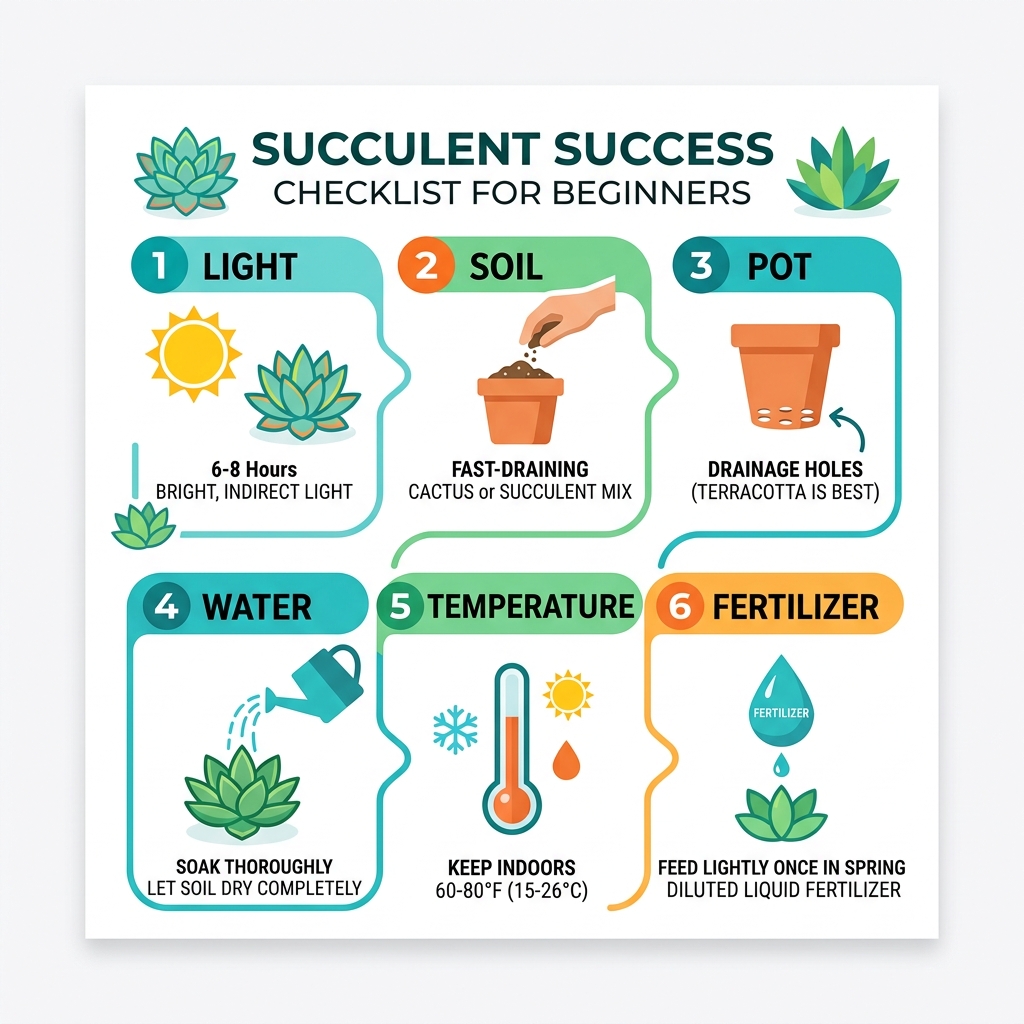
How to care for small succulent plants comes down to six simple habits:
- Light – Give them 6-8 hours of bright, indirect light daily
- Soil – Use a fast-draining cactus or succulent mix
- Pot – Always use a container with drainage holes (terracotta is best)
- Water – Soak thoroughly, then wait until the soil is completely dry before watering again
- Temperature – Keep them between 60-80°F indoors
- Fertilizer – Feed lightly once in spring with diluted liquid fertilizer
That’s really it. Everything else is fine-tuning.
Succulents store water in their thick, fleshy leaves. That one trait changes everything about how you care for them. It means they can handle a missed watering, a dry room, or a week of low attention without falling apart.
There are over 10,000 types of succulents found across more than 40 botanical families, native to every continent except Antarctica. Many of the most popular varieties stay naturally small – Echeveria tops out around 3 inches tall, and Zebra plants (Haworthiopsis attenuata) rarely exceed 5 inches in height and 6 inches wide. That makes them perfect for small living spaces, windowsills, and creative DIY arrangements.
The catch? They’re often marketed as “no-care” plants – and that’s not quite true. They’re low-maintenance, not zero-maintenance. The most common mistake is overwatering, which causes more succulent deaths than anything else.
This guide walks you through everything you need to know to keep your miniature succulents healthy, compact, and thriving – without overcomplicating it.
Choosing the Best Varieties for Your Miniature Garden
When we start a miniature garden, we aren’t just looking for “small” plants; we are looking for varieties that stay small. Some succulents are like Great Dane puppies—cute and tiny now, but destined to take over your living room. For a successful mini succulent indoor garden, we want to focus on species with slow growth rates and compact habits.
Most of our favorite tiny treasures belong to the Crassulaceae family. These plants are famous for their rosette shapes and ability to thrive in tight quarters. If you are living in a cozy studio or a small apartment, these “mini” varieties allow you to collect dozens of plants without losing your floor space.

How to Care for Small Succulent Plants Like Haworthia and Jade
The Zebra Plant (Haworthiopsis attenuata) is a hall-of-fame choice for beginners. It typically grows only about 5 inches tall and features striking white horizontal stripes. Unlike many other succulents, Haworthia is actually a bit more shade-tolerant, making it one of the easiest succulents for office desks.
Another classic is the Jade Plant (Crassula ovata). While standard Jades can become large shrubs, “Dwarf Jade” varieties stay much smaller and are even used for succulent bonsai. We also love the Panda Plant (Kalanchoe tomentosa), which has fuzzy, velvet-like leaves that are incredibly tactile. For those who love the classic flower-like look, our Echeveria care guide explains why these rosettes are the crown jewels of any small arrangement.
Top Low-Light Miniature Varieties
Let’s be honest: not every home has a massive south-facing window. If your light is a bit lackluster, don’t despair. You can still learn how to care for small succulent plants by choosing “low-light” champions.
- Snake Plants (Sansevieria): Specifically the “Hahnii” or Bird’s Nest varieties, which stay in small, tight clumps.
- Gasteria (Ox Tongue): These are slow growers that handle dimmer corners with grace.
- ZZ Plants: While not a traditional succulent, they store water in their stems and thrive in low light.
Knowing how to identify succulent types is the first step in matching the right plant to your home’s specific lighting. Check out our list of the top succulent varieties for low light to find your perfect match.
Master the Essentials: Light, Soil, and the Perfect Pot
If we could give you only one piece of advice, it would be this: Drainage is non-negotiable. Succulents have “wet feet” phobia. In the wild, they live in sandy, rocky soils where rain vanishes almost instantly. To replicate this, we need to get the “Big Three” right: light, soil, and the container.
Selecting the Right Substrate and Container
Forget standard potting soil. It holds too much moisture, which is a one-way ticket to root rot. Instead, use a specialized soil for indoor succulents that contains gritty materials like perlite, pumice, or coarse sand. A good rule of thumb is a mix of one-third organic material and two-thirds mineral material.
When it comes to the vessel, the best pot for indoor succulents is almost always terracotta. Because terracotta is porous, it allows the soil to “breathe” and helps moisture evaporate from the sides of the pot, not just the top. And please, ensure there is a drainage hole! If you find a cute teacup you absolutely must use, grab a masonry bit and drill a hole in the bottom first.
Preventing Leggy Growth and Sunburn
Most succulents need 6-8 hours of bright light daily to maintain their compact shape. If they don’t get enough, they start “stretching” toward the light—a process called etiolation. This makes them look lanky and pale. To prevent succulent stretching, give your pots a quarter turn every week. This ensures all sides get equal sun and the plant grows straight.
On the flip side, beware of “sunburn.” If you move a plant from a dark corner into 100-degree direct sun, it can develop permanent beige or black scars. We recommend a gradual acclimation process or using “nurse plants” to provide a bit of dappled shade until they toughen up. Interestingly, some succulents “blush” (change to vibrant reds or purples) when they get the perfect amount of light—it’s their way of showing they’re happy!
How to Care for Small Succulent Plants: The Watering and Feeding Secret
Watering is where most people “sweat the small stuff” and accidentally kill their plants with kindness. The “soak and dry” method is our golden rule. You want to pour water until it runs out the drainage holes, then leave it alone until the soil is bone-dry all the way through.
Avoiding Common Watering Mistakes
“A little bit of water every day” is the worst thing you can do. This keeps the top of the soil damp, inviting fungus gnats and rot, while the deep roots stay thirsty. Instead, follow a proper indoor succulent watering schedule based on your environment.
Signs of trouble:
- Overwatered: Leaves feel mushy, look translucent, or turn yellow. This often leads to root rot.
- Underwatered: Leaves look wrinkled, flat, or feel rubbery.
- The Chopstick Test: Stick a wooden chopstick into the soil. If it comes out clean and dry, it’s time to water. If soil clings to it, wait.
For more help, see our guide on diagnosing overwatered succulents to catch problems before they become fatal.
Fertilizing Your Tiny Plants for Steady Growth
Small succulents aren’t heavy feeders. In fact, too much nitrogen can cause them to grow too fast and lose their cute, compact shape. We suggest using a balanced 15-15-15 fertilizer (or a 13-6-6 mix) diluted to half or even quarter strength.
Only fertilize your succulents during the active growing season (spring and summer). We also love using seaweed extract; it’s packed with micronutrients that help plants build resilience against pests and temperature swings.
Maintenance, Propagation, and Troubleshooting
Even “low-maintenance” plants need a spa day occasionally. Wiping dust off the leaves with a soft, damp cloth once a month helps them photosynthesize efficiently. If your plant is getting too tall or losing its shape, don’t be afraid to prune your indoor succulents. Always use sterile, sharp shears to prevent infection.
How to Care for Small Succulent Plants During Propagation
The best part about succulents? They are essentially “buy one, get ten free” plants. You can propagate succulents indoors using leaves or offsets (the “pups” that grow at the base of the mother plant).
- Leaf Cuttings: Gently twist a leaf off (make sure it’s a clean break).
- Callusing: Let the leaf sit on a dry paper towel for 2-4 days until the end calluses over.
- Rooting: Place it on top of damp soil. In about 2 weeks, tiny pink roots will appear.
- Patience: Eventually, a tiny “baby” plant will grow from the leaf base!
Identifying Pests and Growth Problems
Even in the best repotting step-by-step guides, we emphasize checking for hitchhikers. The most common enemy is the mealybug—small, white, cottony insects that hide in the crevices of rosettes.
- Treatment: Dab them with a cotton swab dipped in 70% rubbing alcohol.
- Prevention: Good air circulation and avoiding soggy soil are your best defenses.
- Battle Plan: For a deeper dive, check out our comprehensive pest battle plan or our guide to common succulent diseases.
Seasonal Adjustments and Safety for Pets and Kids
As the seasons change, so should your care routine. During winter, most succulents enter a “dormancy” period. They stop growing and require significantly less water—sometimes only once a month. We recommend keeping them in a cool (but not freezing) spot, ideally between 60-80°F. Our guide to seasonal care for indoor succulents goes into detail on how to adjust your light and water as the days get shorter.
Pet-Safe vs. Toxic Varieties
If you have furry friends or curious toddlers, safety is a priority. While many succulents are harmless, some can cause stomach upset or skin irritation. Refer to our temperature and humidity guide for more environmental tips, and use the table below to choose the right varieties for your home.
| Succulent Variety | Safety Status | Note |
|---|---|---|
| Haworthia | Pet Safe | Looks like a mini Aloe but is non-toxic. |
| Echeveria | Pet Safe | Perfectly safe for cats and dogs. |
| Aloe Vera | Toxic | Can cause vomiting if ingested by pets. |
| Jade Plant | Toxic | Can be harmful to pets; keep out of reach. |
| Kalanchoe | Toxic | Beautiful flowers, but toxic to livestock and pets. |
| Euphorbia | Toxic | Contains a milky sap that irritates skin and eyes. |
Frequently Asked Questions about Small Succulents
How often should I water small succulents?
There is no “one size fits all” answer, but most small succulents need water every 10–14 days in the summer and every 3–4 weeks in the winter. Always check the soil first. If the top inch is bone-dry, it’s time. Some indoor succulents need very little water and can go even longer.
Do small succulents need direct sunlight?
Most prefer bright, indirect sunlight. Think of it as “bright enough to read a book comfortably.” A south-facing window is usually the best spot. If your plant is turning pale or stretching, it needs more light. If it’s getting crispy brown spots, it’s getting too much direct sun. You can find more details in our sunlight requirements guide.
How do I keep my mini succulents small?
To maintain that “mini” look, keep them in small pots. This limits their root growth. Also, avoid over-fertilizing and provide adequate light so they don’t stretch out. Choosing naturally slow-growing species is the best tip for succulent longevity.
Conclusion
At Opcion Rural, we believe that anyone can bring a piece of nature into their home, no matter how small their space is. Learning how to care for small succulent plants is more than just a hobby—it’s about blending art and nature to create your own accessible home ecosystem. Whether you are building your first DIY succulent terrarium or just looking for a single plant to brighten your desk, these resilient little wonders are the perfect place to start.
Don’t sweat the small stuff—just give them some light, a gritty home, and the occasional drink, and they’ll reward you with years of green, “juicy” beauty. Start your miniature garden today and join our community of creative plant parents!
