
Why the Best Succulent Plants for Indoors Belong in Every Home
The best succulent plants for indoors are a perfect fit for small spaces, busy schedules, and anyone who wants living greenery without the fuss. Here are the top picks to get you started:
| Succulent | Best For | Light Needs |
|---|---|---|
| Snake Plant | Low light, beginners | Low to bright indirect |
| Aloe Vera | Beginners, medicinal use | Bright indirect |
| Haworthia / Zebra Plant | Desks, windowsills | Low to bright indirect |
| String of Pearls | Hanging baskets, shelves | Bright indirect |
| Jade Plant | Long-term growing | Bright indirect |
| Echeveria | Colorful arrangements | Bright indirect |
| Panda Plant | Unique textures, kids | Bright indirect |
Succulents store water in their thick leaves and stems. That means they can go 2-3 weeks between waterings — far less often than most houseplants. They also thrive in the same temperatures most homes already sit at: 55°F to 75°F.
They’re not just easy to keep alive. They’re genuinely beautiful. Rosette shapes, trailing beads, fuzzy leaves, sculptural stems — there’s a succulent for every style and shelf.
And if you’re working with limited space? Most succulents stay compact. Many thrive in small pots on windowsills or desks.
Whether you’re a first-time plant parent or a creative looking to build a living arrangement, indoor succulents are one of the most rewarding places to start.
Best Succulent Plants for Indoors: Top Low-Light Varieties
One of the most common misconceptions we hear is that all succulents need desert-level sun to survive. While many do love a bright windowsill, several varieties are champion performers in the dimmer corners of our homes. If your apartment doesn’t get 10 hours of direct sun, don’t worry—you can still grow some of the best succulent plants for indoors.
The Indestructible Snake Plant
The Snake Plant is the undisputed king of low-light greenery. Formerly known as Sansevieria, this plant features stiff, sword-like leaves that can grow up to 48 inches tall. It is famous for its ability to convert CO2 into oxygen at night, making it an ideal companion for bedrooms. It thrives on neglect; in fact, more Snake Plants die from over-enthusiastic watering than from being forgotten.
The Architectural Haworthia and Gasteria
If you are looking for something smaller, the Top Succulent Varieties for Low Light often include Haworthia and Gasteria. Haworthia, specifically the Zebra Plant (Haworthiopsis attenuata), is known for its white horizontal stripes that look like a painter took a brush to the leaves. These plants naturally grow in the shade of rocks or bushes in South Africa, so they handle indirect sunlight beautifully. Gasteria, often called “Ox Tongue” due to its rough, tongue-shaped leaves, is equally shade-tolerant and slow-growing, making it perfect for office desks.
For those who want a “set it and forget it” vibe, choosing Low Maintenance Indoor Succulents like these ensures your indoor garden stays green even if your natural light is less than stellar.
Essential Care Requirements for Indoor Greenery
To keep your indoor succulents thriving rather than just surviving, we need to mimic their native environments. This doesn’t mean turning your living room into a sauna; it just means getting the “Big Three” right: Light, Water, and Soil.
The 10-Hour Light Rule
While some tolerate low light, most indoor succulents need about 10 hours of bright, indirect light daily for optimal growth. If they don’t get enough, they suffer from “etiolation”—a fancy word for stretching toward the light, which makes them look leggy and pale. If your windows aren’t cutting it, we recommend supplementing with full-spectrum grow lights.
The “Soak and Dry” Method
The biggest mistake beginners make is misting their succulents. Succulents hate “wet feet.” Instead, use the soak-and-dry method: water the plant thoroughly until water runs out of the drainage holes, then wait until the soil is bone-dry several inches down before watering again. Indoors, this usually happens every 2-3 weeks, though in winter, you might only water once a month.
Soil and Potting: Drainage is Non-Negotiable
Succulents need a “sharp-draining” mix. Standard potting soil holds too much moisture. We suggest a mix that is roughly one-third organic and two-thirds mineral.
| Component Type | Examples | Purpose |
|---|---|---|
| Organic (1/3) | Coconut coir, peat moss, pine bark | Provides nutrients and holds minimal moisture |
| Mineral (2/3) | Perlite, coarse sand, pumice, grit | Creates air pockets and ensures rapid drainage |
Always choose pots with drainage holes. Terracotta is a favorite for Indoor Succulent Plants for Low Maintenance because the porous clay helps wick away excess moisture from the roots.
Beginner-Friendly Favorites and Unique Aesthetics
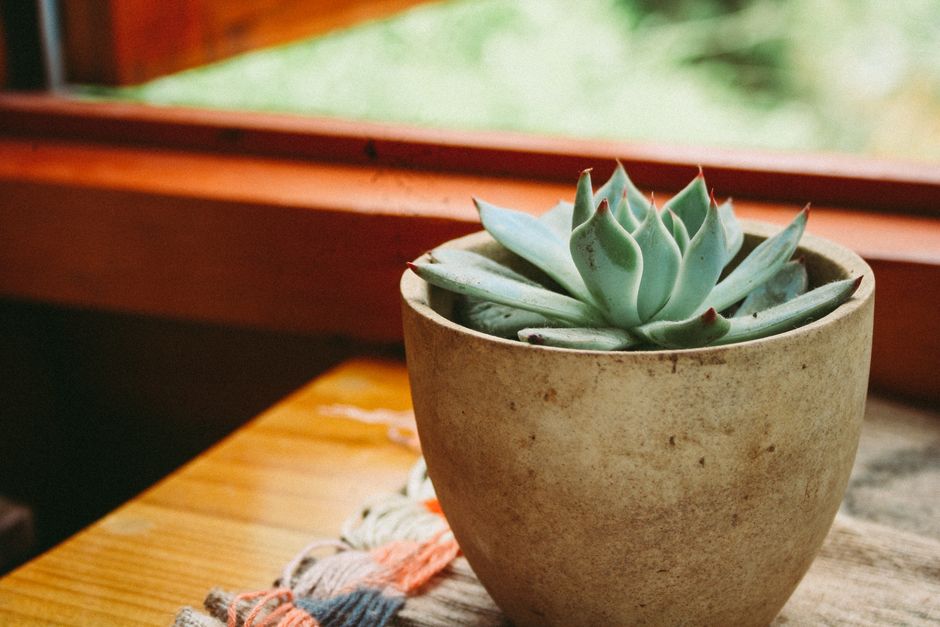
If you are just starting your collection, you want plants that are forgiving. Fortunately, some of the most visually striking succulents are also the easiest to keep alive.
The Panda Plant (Kalanchoe tomentosa)
A favorite of children and those of us who can’t stop touching our plants, the Panda Plant has fuzzy, velvet-like leaves with dark chocolate spots on the edges. These “pussy ears” are covered in tiny hairs that help the plant conserve water and reflect intense light. It adds a wonderful soft texture to any Mini Succulents for Indoor Gardening setup.
Rare and Variegated Gems
For those looking for something a bit more “boutique,” you might seek out Rare Indoor Succulents to Grow at Home. Varieties like the ‘Black Rose’ Aeonium offer deep burgundy, almost black foliage that provides a stunning contrast to the usual greens. Others, like the ‘Baby Toes’ (Fenestraria rhopalophylla), have transparent “windows” on the leaf tops to let light reach the interior of the plant—a cool evolutionary trick!
Easy Best Succulent Plants for Indoors for New Gardeners
For a truly “bulletproof” experience, look no further than the classics:
- Aloe Vera: Not just a pretty face, its medicinal sap is a lifesaver for kitchen burns. It’s incredibly resilient and will produce “pups” (baby plants) that you can gift to friends. Learning How to Grow Aloe Vera Indoors is a rite of passage for every indoor gardener.
- Jade Plant (Crassula ovata): Often called the “Money Tree,” these can live for decades, eventually growing into miniature trees with thick, woody stems.
- Zebra Haworthia: As mentioned earlier, its slow growth and tolerance for variable light make it one of the The Beginners Guide to Easy Indoor Succulents we recommend most often.
Trailing Best Succulent Plants for Indoors for Baskets
Don’t forget to look up! Trailing succulents add vertical interest and are perfect for Succulent Varieties for Small Apartments where floor space is at a premium.
- String of Pearls (Curio rowleyanus): This RHS Award of Garden Merit winner looks like a spill of green peas over the side of a pot. It loves bright, indirect light and a slightly cooler winter rest.
- Burro’s Tail (Sedum morganianum): This plant features heavy, braided-looking stems of blue-green leaves. Be careful, though—the leaves drop easily if bumped, so hang it in a low-traffic area.
Troubleshooting and Propagation Tips
Even the best succulent plants for indoors run into trouble occasionally. The key is to catch the signs early.
- Root Rot: If the leaves turn yellow, mushy, or translucent, you are likely overwatering. Stop watering immediately and check if the roots are black and slimy.
- Etiolation: If your rosette-shaped Echeveria starts looking like a pine tree, it’s “stretching” for light. Move it to a brighter spot or use a grow light.
- Pests: Mealybugs are the most common indoor pest. They look like tiny bits of white cotton in the leaf joints. A cotton swab dipped in 70% isopropyl alcohol and dabbed directly on the bugs will clear them up.
The Magic of Propagation
One of the best parts of succulent gardening is getting free plants! Most indoor varieties are incredibly easy to propagate.
- Offsets (Pups): Plants like Aloe and Haworthia grow babies at their base. Simply snip them off once they have a few leaves of their own.
- Leaf Cuttings: For many Echeveria and Sedum varieties, you can gently wiggle a leaf off the stem. Let the leaf “callous” (dry out) for a few days until a scab forms over the break, then lay it on top of some soil. In a few weeks, tiny roots and a new “pup” will emerge.
Check out our Echeveria Care Guide for Beginners for a deeper dive into the callousing process and how to identify different How to Identify Succulent Types before you start snipping!
Frequently Asked Questions about Indoor Succulents
How much light do indoor succulents really need?
Most of the best succulent plants for indoors thrive with at least 6 to 10 hours of bright, indirect light. A south-facing window is usually the “golden ticket” for light. If your plant starts leaning or losing its vibrant color, it’s telling you it needs more sun.
How often should I water my indoor succulents?
The average is every 2-3 weeks, but you should always use the “finger test.” Stick your finger two inches into the soil; if it feels even slightly damp, hold off. In the winter, when plants go dormant, you might only water once a month. Remember: succulents store water for a reason—they’d rather be thirsty than drowning!
What is the best soil for succulents kept inside?
Avoid standard “moisture-control” potting soils. Look for a dedicated cactus and succulent mix. If you want to DIY it, mix 1 part potting soil with 2 parts coarse sand, perlite, or pumice. This ensures that water moves through the pot quickly, keeping the roots healthy and oxygenated.
Conclusion
At Opcion Rural, we believe that bringing nature into your home should be a source of joy, not stress. The best succulent plants for indoors offer a unique opportunity to blend art and nature, allowing you to create stunning “living ecosystems” even in the smallest city apartment. From the sculptural heights of a Snake Plant to the whimsical dangles of a String of Pearls, these resilient plants are ready to transform your space.
Ready to take your indoor garden to the next level? Start your journey with our Guide to Flowering Indoor Succulents and learn how to coax beautiful blooms from your favorite desert natives!
