
Why Outdoor Succulents Are the Smartest Low-Maintenance Garden You Can Build
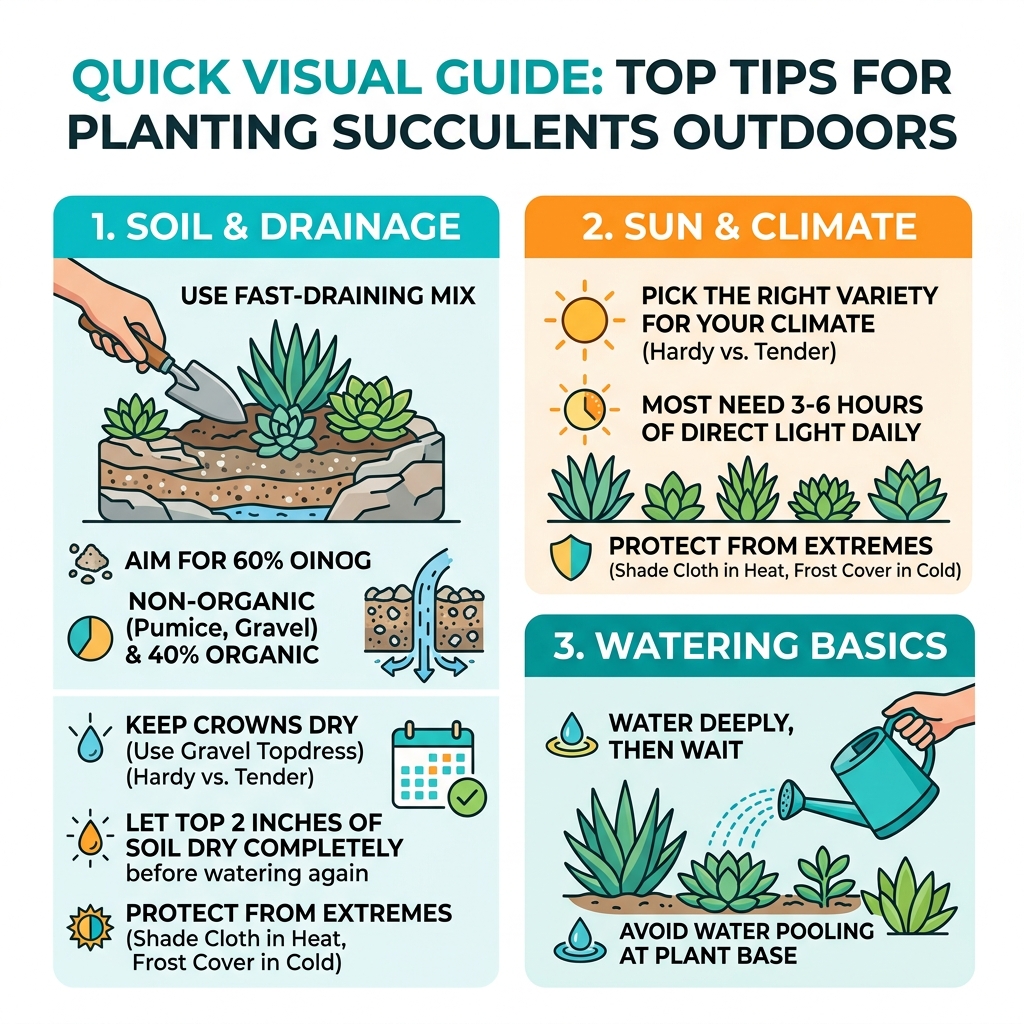
The best tips for planting succulents outdoors come down to a handful of key rules:
- Pick the right variety for your climate (cold-hardy types like Sempervivum survive down to -20°F)
- Use fast-draining soil — aim for roughly 60% nonorganic material (pumice, gravel) and 40% organic
- Give them sun — most succulents need at least 3 to 6 hours of direct light daily
- Water deeply, then wait — let the top 2 inches of soil dry out completely before watering again
- Keep crowns dry — use a gravel topdress and avoid letting water pool at the base of the plant
- Protect from extremes — use shade cloth in heat waves and frost covers when temps drop hard
Succulents have a reputation for being fussy. But that reputation is mostly backwards.
These plants evolved in some of the harshest places on earth — alpine cliffs, desert floors, rocky slopes with almost no soil. They don’t need much from you. What they do need, they’re very specific about.
Get those few things right, and you’ll have a living garden that practically takes care of itself. It saves water, resists drought, and looks stunning in small spaces — which makes it a perfect fit for creative DIYers who want a beautiful outdoor ecosystem without the constant upkeep.
Whether you’re dreaming of a small rock garden on a patio, a container arrangement by the front door, or succulents spilling over a stone wall — this guide covers everything you need to make it work.
Choosing the right varieties for your climate
One of the most common mistakes we see is choosing a plant based solely on looks without checking its “toughness” rating. In succulents, there are two main camps: hardy and tender.
Cold-hardy species are the superheroes of the garden. Varieties like Sempervivum (commonly known as Hens and Chicks) and many Sedums (Stonecrops) are alpine species. They don’t just tolerate the cold; they thrive in it. Many of these can endure temperatures as low as -20°F (USDA Zone 5), and some, like Opuntia fragilis (the brittle prickly pear), are hardy down to a bone-chilling -35°F (Zone 3b).
On the flip side, we have heat-tolerant Agaves and Aloes. While some Agaves, like Agave parryi, can handle a bit of snow if kept dry, most “tender” succulents like Echeveria or Jade plants will turn to mush the moment a hard frost hits.
Best tips for planting succulents outdoors for beginners
If you are just starting your journey, we recommend sticking to the “indestructibles.” Hens and Chicks are fantastic because they are monocarpic—the mother plant blooms once and dies, but not before producing dozens of “pups” or “chicks” to take her place. Stonecrop Sedums are equally rewarding; they act as a beautiful groundcover that changes color with the seasons.
Before you head to the nursery, it helps to know what you’re looking at. You can How to Identify Succulent Types to ensure you’re buying a plant that matches your backyard’s reality. And if you’re feeling confident, why not Test Your Prickly Knowledge With a Cactus Identification Quiz to see if you can spot the difference between a hardy prickly pear and a tropical cactus?
Essential tips for planting succulents outdoors
The secret to a happy succulent isn’t in the leaves; it’s in the roots. Most succulents die from “wet feet”—roots sitting in stagnant water that lead to rot.
Soil Composition and Drainage
To prevent this, we need to rethink soil. Typical garden soil is too heavy and holds too much moisture. We suggest a gritty mix consisting of about 60% nonorganic material (like pumice, perlite, or crushed granite) and 40% organic material (like pine bark fines or sifted compost). This ratio ensures that water moves through the soil quickly while leaving enough “air pockets” for the roots to breathe.
If you are planting in containers, always ensure there are large drainage holes. For in-ground beds, we love building mounds and berms. By raising the planting area 4 to 8 inches above the surrounding ground, you use gravity to pull excess water away from the plants.
Rock Garden Construction
Creating a rock garden is one of the most effective tips for planting succulents outdoors. Start by placing large boulders to create a natural-looking border, then fill the center with your gritty soil mix.
When it’s time to plant, try the no-backfill method: dig a hole the size of the root ball, place the plant, and don’t pack the soil down tight. This leaves an air gap that allows roots to expand at their own pace. For more inspiration on layouts, check out our guide on How to Create a Succulent Garden or explore a Succulent Arrangement Using Different Varieties to mix textures and heights.
Design tips for planting succulents outdoors
A succulent garden should look like a miniature landscape. We achieve this through topdressing. Adding a 1/2-inch layer of pea gravel or crushed granite isn’t just for aesthetics; it keeps the “crown” (where the leaves meet the roots) dry and prevents soil from splashing onto the leaves during rain.
Use the thriller-filler-spiller method for visual impact:
- Thriller: A bold, upright plant like an Agave or a tall Sedum.
- Filler: Mounding plants like Hens and Chicks that fill the gaps.
- Spiller: Trailing succulents like ‘Angelina’ Sedum that drape over rocks or the edges of pots.
If you have limited ground space, consider a vertical approach. You can find tips for Creating a Plant Wall That Will Make Your Neighbors Green With Envy right here on our site.
Mastering sunlight and watering rhythms
Succulents are sunlight junkies, but even they can get a “sunburn.” Most varieties need 3 to 6 hours of sunlight daily.
Morning sun is generally the “sweet spot”—it’s bright enough to trigger beautiful colors (often called sun-stressing) but cool enough to prevent leaf scorch. If you live in a desert climate, provide afternoon shade to protect your plants from the most intense heat.
On the other hand, too little light leads to etiolation. This is when a succulent stretches out, becoming “leggy” and pale as it searches for the sun. If your garden is mostly shaded, you’ll need to be picky. Take a look at the Top Succulent Varieties for Low Light to find species that won’t stretch.
Hydration tips for planting succulents outdoors
When it comes to water, we follow the “soak and dry” method. This means you water the soil deeply until it is saturated, and then you don’t touch it again until the soil is bone-dry.
How do you know when to water?
- The Finger Test: Stick your finger 2 inches into the soil. If it feels even slightly damp, wait.
- The Leaf Cues: Thirsty succulents will have shriveled leaves that feel slightly pliable.
- The Danger Zone: If you see mushy stems or yellowing leaves, you likely have root rot from overwatering.
If you suspect you’ve been a bit too generous with the hose, read our Overwatered Succulents Diagnosis or learn How to Revive a Drooping Succulent before it’s too late.
Protecting and maintaining your outdoor garden
Even the toughest plants need a little help when the weather goes to extremes. During heatwaves (95°F+), a 30-50% shade cloth can be a lifesaver. Conversely, if a surprise frost is coming for your tender varieties, a breathable frost cloth can provide just enough insulation to keep them alive.
Pests and Fertilizing
Outdoor succulents are generally hardy, but they can attract mealybugs and aphids. Mealybugs look like tiny bits of white cotton hiding in the crevices of the leaves. A quick dab with a cotton swab soaked in isopropyl alcohol usually does the trick.
As for food, succulents aren’t heavy eaters. A balanced 15-15-15 fertilizer diluted to half-strength once in the spring is usually plenty. Avoid fertilizing in late fall, as you don’t want to encourage soft new growth right before the winter freeze. For a deeper dive into health issues, consult our Common Succulent Diseases and Their Cures: A Handy Guide and learn about the hidden Root Rot in Succulents: Causes.
Overwintering tips for planting succulents outdoors
If you live in a region where winters are harsh and you’ve planted tender succulents in pots, it’s time to move them. Winter dormancy means the plants will slow down their growth significantly, so you should reduce watering to once a month or less.
Terra cotta pots are excellent for this transition because they naturally wick moisture away from the soil, helping prevent rot during humid indoor months. If your home doesn’t get much natural light, consider grow lights (LEDs) kept 8-14 inches above the plants.
Before bringing any plant inside, do a thorough pest inspection. You don’t want to invite mealybugs to your indoor plant collection! If a plant is looking rough, follow our Rescue Your Dying Succulent: A Step-by-Step Guide and learn How to Prevent Succulent Leaves From Falling to keep your garden intact until spring.
Frequently Asked Questions about outdoor succulents
Can succulents live outside year-round?
Yes, but it depends entirely on the variety and your USDA zone. Hardy varieties like Sempervivum and Sedum can stay outside in Zones 4 and 5, even under a blanket of snow. They enter a state of winter dormancy where they stop growing to protect themselves. The key is ensuring they have perfect drainage; cold, wet soil is the primary killer of succulents in winter.
How often should I water succulents in the ground?
In-ground succulents need less frequent watering than those in pots because the earth stays cool longer. In the summer, once a week is a good baseline, but if it rains, skip your turn! During the winter, most outdoor succulents require very little water—often just once a month—unless you are experiencing an extreme drought.
What is the best soil for outdoor succulents?
A sandy loam with high porosity is best. You want a gritty texture that allows water to run through in seconds. Aim for a slightly acidic pH of 5.5 to 6.5. Avoid heavy clay at all costs, as it traps water and suffocates roots. To avoid other common pitfalls, check out our list of Beginner Mistakes in Succulent Care.
Conclusion
At Opcion Rural, we believe that gardening should be a blend of art, nature, and creativity. Building a succulent garden is more than just planting; it’s about creating a miniature home ecosystem that thrives with minimal interference. By following these tips for planting succulents outdoors, you’re not just growing plants—you’re crafting a resilient, water-wise landscape that brings a bit of the wild into your daily life.
Ready to start your next DIY project? Whether it’s a rural living upgrade or a creative succulent terrarium, we’re here to help you every step of the way. Learn More about how you can transform your space today.
