
Why DIY Natural Ecosystem Crafts Belong in Every Home and Classroom
DIY natural ecosystem crafts are hands-on projects that use natural and recycled materials to build miniature living worlds — from sealed moss terrariums to bottle ecosystems and backyard wildlife habitats.
Here’s a quick overview of the most popular types:
| Project Type | Best For | Difficulty |
|---|---|---|
| Sealed moss terrarium | Small spaces, beginners | Easy |
| Bottle eco-column | Classroom, kids | Easy–Medium |
| Shoebox ecosystem diorama | School projects | Easy |
| Aquatic jar ecosystem | Science learners | Medium |
| Backyard frog or insect hotel | Outdoor wildlife | Easy–Medium |
These projects serve two purposes at once: they teach real ecology (food chains, water cycles, decomposition) and they’re genuinely relaxing to build and maintain.
Research backs this up. Studies show that kids who spend time with nature grow into happier adults. And crafting itself has well-documented meditative benefits — for all ages. Even bringing nature indoors through small projects carries similar mental health benefits to being outside.
The best part? Most of what you need is already in your backyard, recycling bin, or a nearby park.
Understanding DIY Natural Ecosystem Crafts and Their Benefits
When we talk about diy natural ecosystem crafts, we aren’t just talking about making something that looks pretty on a shelf. We are talking about creating functional models of the world around us. These crafts are defined by their use of living components—plants, microbes, and sometimes small invertebrates—interacting within a contained environment.
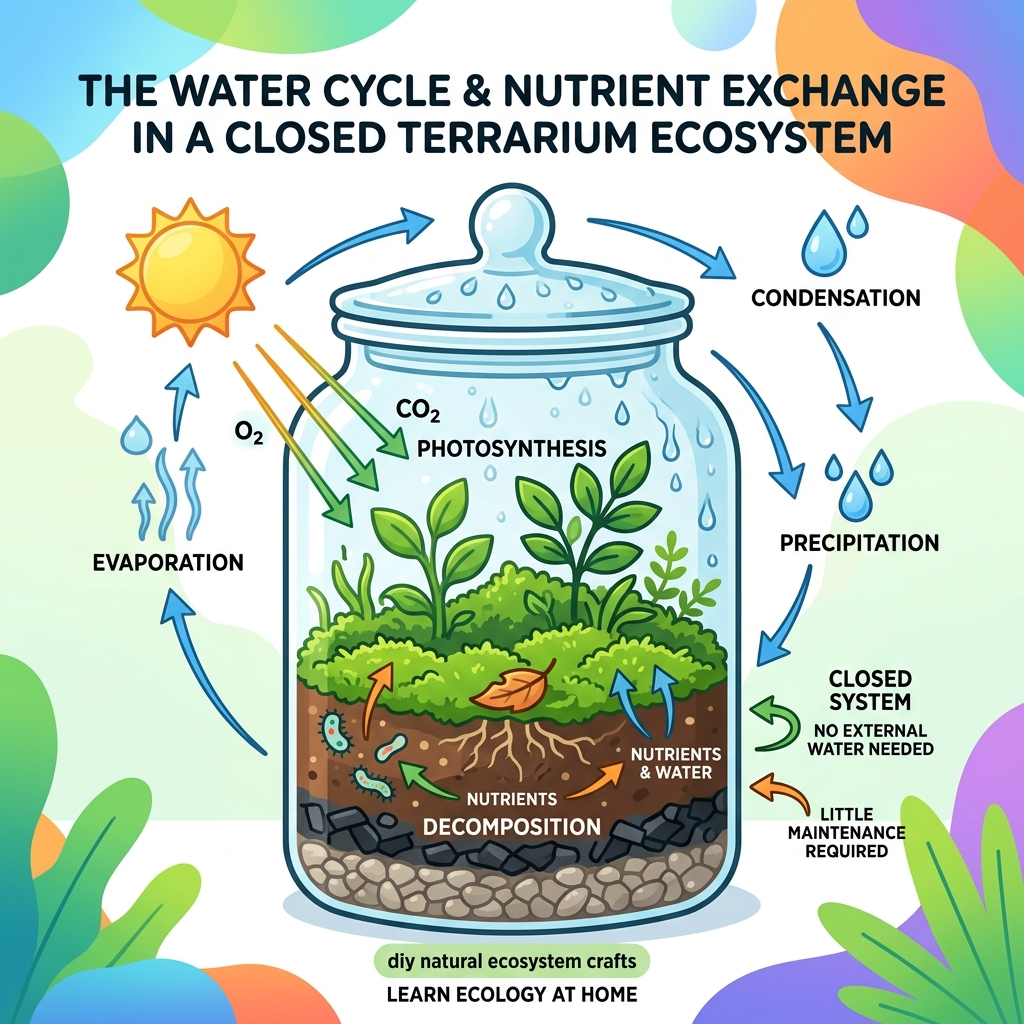
The primary purpose is education through immersion. By building a mini ecosystem for nature observation with kids, we move beyond textbooks. Children can actually see the water cycle in action as condensation forms on the glass and drips back into the soil. They can witness decomposition as a leaf turns into nutrient-rich earth.
The benefits extend far beyond the classroom:
- Mental Health and Well-being: Research shows that crafting focuses the mind and provides meditative benefits. For those who can’t get outside easily, indoor nature crafts bring the therapeutic effects of the outdoors inside.
- Biodiversity Education: These projects teach us about the delicate balance required for life. If one part of the system fails, the rest struggles, highlighting the importance of every organism.
- Sustainability and Waste Reduction: Many of these projects utilize upcycled materials like 2-liter soda bottles or glass jars, turning potential trash into a thriving habitat.
- Imaginative Play: Creating a “dinosaur jungle” or a “fairy moss forest” fosters creativity while grounding it in biological reality.
Interest in these projects is booming. For instance, Pinterest data shows that hundreds of people search for “DIY ecosystem” every month, seeking ways to reconnect with the green world from the comfort of their living rooms.
| Feature | Terrestrial Mini-Ecosystem | Aquatic Mini-Ecosystem |
|---|---|---|
| Primary Life | Moss, Ferns, Succulents | Algae, Aquatic Plants, Snails |
| Key Cycle | Transpiration & Soil Nutrients | Oxygenation & Water Filtration |
| Maintenance | Occasional misting/pruning | Light balance & water top-offs |
| Best Container | Glass jars, Wardian cases | Clear bottles, Fish bowls |
Essential Materials for DIY Natural Ecosystem Crafts
One of the joys of diy natural ecosystem crafts is the “treasure hunt” aspect. Before we start building, we get to go outside and source our components.

Sustainable Sourcing
When collecting materials, we must be mindful. Always harvest moss from shady areas where it is abundant, and never take more than a small patch. Look for “found” items like:
- Seed pods and pinecones: Great for adding texture and “housing” for small insects.
- Driftwood and twigs: These provide structure and a surface for moss to climb.
- River stones and pebbles: Essential for the drainage layer at the bottom of your project.
The “Must-Haves” for Your Toolkit
To ensure your ecosystem thrives, you’ll need a few specific items:
- Recycled Glass or Plastic: Mason jars, old pickle jars, or 2-liter soda bottles are perfect.
- Activated Charcoal: This keeps the water fresh and prevents odors in closed systems.
- Dechlorinated Water: If using tap water, let it sit out for 24–48 hours to allow the chlorine to evaporate.
- Organic Soil: Avoid soils with heavy chemical fertilizers, as these can overwhelm a small system.
- Low-Melt Glue: If you are creating decorative elements or “critter” sculptures from seeds and pods, a low-melt glue gun is safer for handling natural materials.
For more advanced aesthetic projects, you might even consider the step-by-step guide to creating a moss wall art installation to bring a larger scale of greenery into your home.
Top Projects for Creating a DIY Natural Ecosystem Craft
Ready to get your hands dirty? Building a mini-world is an exercise in patience and precision. Whether you are looking for how to make a self contained ecosystem for the classroom or a weekend project for the family, these ideas cover the full spectrum of biomes.
The Three-Chamber Eco-Column
This is the “gold standard” for educational crafts. It uses three 2-liter bottles stacked together:
- The Top (Terrestrial): Home to soil, grass seeds, and perhaps a few “pill bugs.”
- The Middle (Decomposition): Filled with leaf litter and twigs where organic matter breaks down.
- The Bottom (Aquatic): A freshwater pond with gravel, pond water, and aquatic plants.
As you water the top layer, the water filters through the decomposition layer—picking up nutrients—and eventually drips into the aquatic chamber. It is a perfect demonstration of how different environments interact.
Shoebox Dioramas and Biomes
For a creative twist, use a shoebox to recreate a specific habitat. You can use blue cellophane for an ocean scene, or sand and small cacti for creating a mini desert DIY succulent terrarium. These dioramas are excellent for school projects because they allow students to research specific animals and plants that coexist in the wild. If you prefer a more lush look, try creating your own jungle with a DIY succulent terrarium using moisture-tolerant varieties.
Building a Self-Sustaining Bottle Ecosystem
If you want something truly self-contained, a bottle ecosystem is the way to go. By balancing the right amount of light, plants, and microbes, these systems can survive for years without being opened.
Steps to Build:
- Substrate: Start with an inch of pebbles, then a thin layer of charcoal, followed by two inches of soil.
- Planting: Use small, hardy plants like moss or ferns. For a “desert” version, follow our guide to creating a self-sustaining succulent terrarium.
- Watering: Add just enough water to make the soil damp, not soaked.
- Sealing: Close the lid. If you see light fog on the glass in the morning that clears by afternoon, the moisture level is perfect.
Designing a DIY Natural Ecosystem Craft for Local Wildlife
Not all ecosystems need to be inside a jar! We can use our crafting skills to benefit the “wild” neighbors in our own backyards.
- Frog Hotels: Using PVC pipes of varying diameters bundled together in a water-filled planter, you can provide a cool, damp sanctuary for tree frogs. Adding a small solar light nearby will attract insects—a “room service” buffet for your froggy guests!
- Insect Hotels: A simple wooden frame filled with hollow bamboo, pinecones, and drilled logs provides nesting sites for solitary bees and other beneficial bugs.
- Pollinator Support: You can even extend your garden vertically by creating a plant wall that will make your neighbors green with envy, focusing on native flowering species that feed local butterflies.
Maintenance and Care for Your DIY Natural Ecosystem Crafts
Once your diy natural ecosystem crafts are assembled, the real observation begins. Maintenance is usually minimal, but it requires a keen eye.
Light and Temperature
Most mini-ecosystems prefer indirect sunlight. Placing a glass jar in a direct south-facing window can turn it into a miniature greenhouse, literally cooking the plants inside. If you notice your plants “stretching” toward the light, they need a brighter spot. If they look bleached or brown, they are getting too much sun.
Water and Humidity
For closed systems, keep an eye on the condensation. Too much water leads to mold. If you see heavy droplets obscuring the view for more than a day, open the lid for a few hours to let excess moisture escape. For open systems, such as a water-wise succulent terrarium, only water when the soil is completely dry to the touch.
Pruning and Troubleshooting
- Mold: If a fuzzy white patch appears, remove that section of the plant or soil immediately and increase ventilation.
- Overgrowth: Don’t be afraid to give your “jungle” a haircut. Pruning encourages bushier growth and prevents one plant from “choking out” the others.
- Critter Care: If you’ve included snails or insects for short-term observation, ensure they have a food source. Always practice the ethical release of critters—return them to exactly where you found them after a few days of study.
Frequently Asked Questions about DIY Natural Ecosystem Crafts
How do I source materials sustainably without harming the environment?
The best rule is “take only pictures, leave only footprints,” but for crafting, we use the “1-in-20” rule. Only harvest a small piece of moss or a single seed pod if there are at least 20 others nearby. Always check local regulations before removing anything from public parks, and whenever possible, source from your own backyard or a friend’s garden.
Can these mini-ecosystems really survive without being opened?
Yes! In a closed terrarium, the plants “breathe” through photosynthesis during the day and respiration at night. The water cycles through evaporation and condensation. Some famous sealed terrariums have survived for over 50 years without a single drop of new water!
What are the best plants for a beginner-friendly ecosystem project?
For closed, humid environments, moss and ferns are nearly indestructible. For open, drier projects, succulents and air plants are excellent choices. Avoid fast-growing “weeds” or plants that require deep root systems, as they will quickly outgrow their containers.
Conclusion
At Opcion Rural, we believe that the best way to understand the natural world is to bring a piece of it home. Whether you are building a complex three-chamber eco-column for a school science fair or a simple, stylish moss jar for your desk, these diy natural ecosystem crafts help us slow down and appreciate the intricate balance of life.
From the rural landscapes we love to the small glass worlds we create, nature offers endless inspiration. We hope these projects inspire you to look at a recycled bottle or a backyard pebble and see the potential for a thriving, living masterpiece.
Explore more creative projects at Opcion Rural and start building your own miniature world today!
