
Why So Many People Are Choosing to Build Moss Wall Art Right Now
To build moss wall art, follow these core steps:
- Choose your moss type — sheet, reindeer, mood, or pole moss (all preserved for indoor use)
- Prepare a backing board — wood tray, canvas frame, MDF panel, or birch plywood
- Plan your layout — arrange moss before gluing, mixing textures and colors
- Glue moss to the base — apply adhesive to the board, press moss firmly, hold 5–10 seconds
- Add accents — driftwood, lichen, bark, or faux plants for depth
- Cure and hang — let dry 12–24 hours, then mount with appropriate hardware
There’s something almost magnetic about a wall covered in lush, layered greenery. No wonder moss wall art has taken off as one of the most popular biophilic home decor projects around.
The appeal is real. You get the look and feel of nature indoors — without soil, watering schedules, or finicky plants. Preserved moss walls are essentially zero-maintenance once installed. That’s a big deal if you live in a small apartment or just want greenery without the upkeep.
And the results can be stunning. A well-designed moss wall adds texture, warmth, and a calm, natural energy to any room. Research from Gensler and Steelcase links access to nature indoors with better focus, lower stress, and higher wellbeing. Even a small framed moss piece can make a difference.
The best part? You don’t need a craft background to pull this off. Most DIY moss walls come together with a few bags of preserved moss, a frame, some glue, and an afternoon.
This guide walks you through everything — from picking the right moss to hanging your finished piece securely on the wall.

Understanding Moss Wall Art: Preserved vs. Living Greenery
Before we grab the glue gun, we need to talk about the two main “flavors” of moss walls. While they both look green and gorgeous, they function very differently. At Opcion Rural, we generally recommend preserved moss for indoor DIY projects because it offers the beauty of nature without the risk of a “science project” gone wrong in your living room.
| Feature | Preserved Moss Wall | Living Moss Wall |
|---|---|---|
| Maintenance | Zero (No water/light) | High (Misting/Humidity) |
| Lifespan | 5–8+ Years | Up to 25 Years (if kept moist) |
| Best For | Indoors, Offices, Bedrooms | Outdoors, Shaded Gardens |
| Air Purification | Minimal (unless specialized) | Active CO2 capture |
| Acoustics | Excellent sound absorption | Good sound absorption |
| Installation | Easy DIY | Complex (Needs irrigation/drainage) |
Preserved moss is real moss that has had its water content replaced with a preservative like glycerol (glycerin). This stops the growth but keeps the moss soft, fluffy, and vibrant. It’s basically “mummified” greenery. On the other hand, living moss walls are true vertical gardens. They require constant humidity and specific light. If you’re interested in more complex indoor garden structures, you might want to artistic terrarium garden walls that will make your neighbors green with envy.
The Science of Air Quality and Acoustics
One of the most fascinating reasons to build moss wall art is the hidden benefit to your environment. While standard preserved moss doesn’t “breathe” like a living plant, specialized systems like Moss Pure have shown that live moss can filter over 1,500,000 ppm of pollutants daily, including dust, pet dander, and wildfire smoke.
Even the preserved versions we use for DIY projects serve a purpose. Moss is an incredible acoustic diffuser. Because of its irregular, porous surface, it softens high-frequency reflections and reduces echoes in rooms with hard surfaces like wood floors or large windows. It’s biophilic design at its best—improving your mental state by reducing noise and providing a visual connection to American biodiversity.
Choosing the Right Environment for Your Installation
To keep your moss art looking fresh for years, location is everything. Even though preserved moss doesn’t need sun to grow, UV rays are its worst enemy. Direct sunlight will bleach the dye and turn your lush green oasis into a brittle, brown desert.
We suggest placing your art in hallways, entryways, or on walls that receive indirect light. Avoid placing it directly above a radiator or a heating vent, as the dry air can cause the moss to shrivel. Humidity is generally good (it keeps the moss soft), but steer clear of “splash zones” near sinks.
Essential Materials to Build Moss Wall Art
Ready to get your hands dirty (well, slightly green)? Gathering your supplies is the most satisfying part of the process.
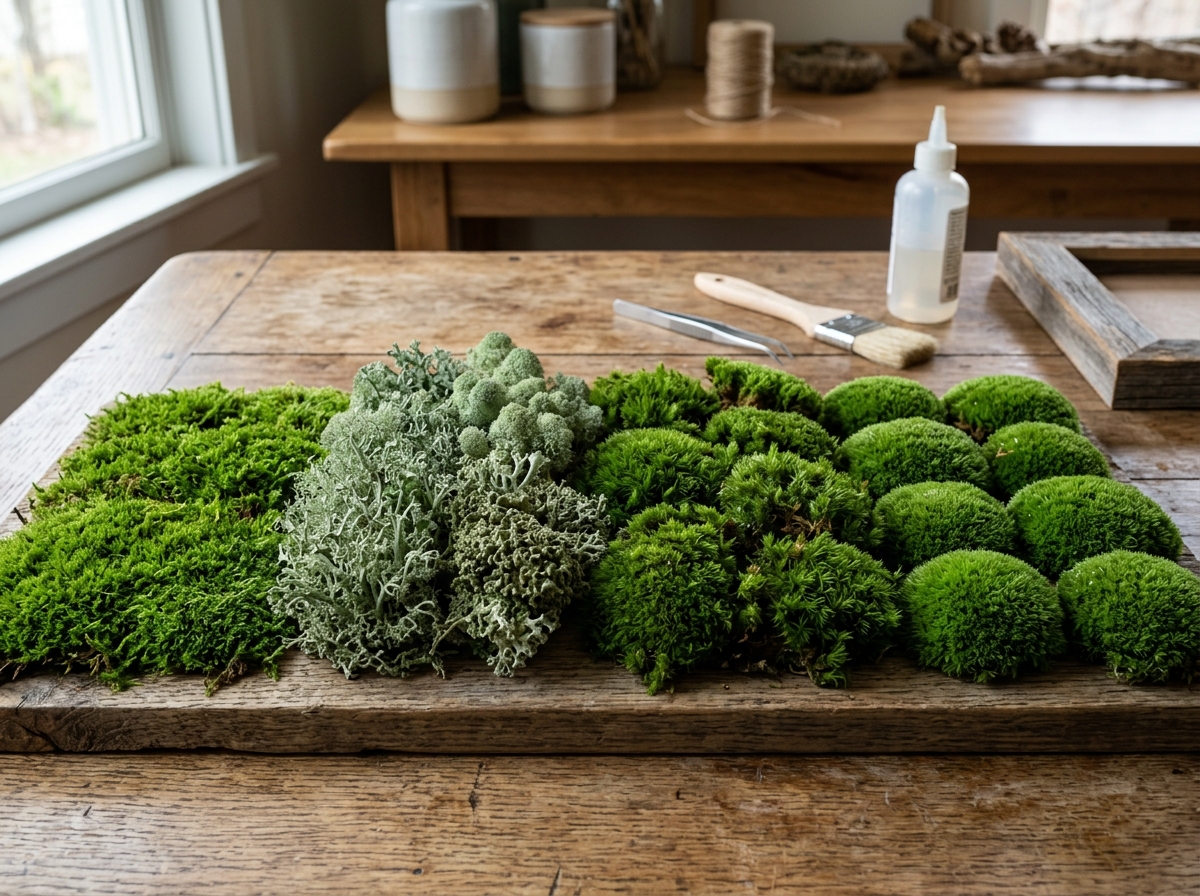
- Moss Types:
- Sheet Moss: Think of this as your “carpet.” It’s flat and great for covering large areas quickly.
- Reindeer Moss: Technically a lichen, this provides that signature “bumpy” texture and comes in various shades of green and tan.
- Mood Moss: Thick, clumpy, and velvet-like. It adds wonderful 3D depth.
- Pole/Cushion Moss: Round, mounded pieces that look like tiny green hills.
- Backing Boards: You need a sturdy base. Birch plywood or MDF panels are industry standards because they don’t warp easily. If you want a deeper look, check out our guide on how to build terrarium wall art for a stunning indoor garden.
- Neoprene Foam: A pro tip we love is gluing a layer of 1/4″ neoprene foam to your board first. It builds up the base so you use less glue and the moss has something “squishy” to adhere to.
For more inspiration on high-end looks, see our article on DIY moss wall art that looks like a million bucks.
Selecting Adhesives and Tools
To build moss wall art that stays on the wall, you need the right “stick.”
- Hot Glue Gun: Best for small, heavy pieces like mood moss or driftwood. Warning: Wear nitrile gloves! We’ve seen plenty of DIYers end up with blisters from hot glue drips.
- Wood Glue or White Craft Glue: Great for large areas of sheet moss. You can spread it with a paintbrush for even coverage.
- Floral Pins: These “U” shaped pins are lifesavers for holding heavy clumps in place while the glue cures.
- Staple Gun: Useful for securing mesh or chicken wire if you’re going for a more “wild” look.
Professional Tips to Build Moss Wall Art on a Budget
You don’t need to spend a fortune. One of our favorite tricks is canvas flipping. Buy a large, cheap pre-stretched canvas. Cut the canvas off the front and staple it to the back of the wooden frame. Suddenly, you have a recessed wooden tray that’s perfect for filling with moss—and it already has a “frame” built-in! Bulk sourcing your moss online rather than buying tiny bags at a craft store will also save you a significant amount of money.
Step-by-Step Guide to Creating Your Preserved Masterpiece
Now, let’s get into the nitty-gritty of the build.
1. Frame Preparation
Start by sanding the edges of your wooden tray or frame. If you want a specific look, stain or paint the edges now. We recommend painting the inside of the tray a dark forest green or black. This ensures that if there are any tiny gaps in your moss, they look like natural shadows rather than bright wood.
2. Hanging Hardware
Install your hardware before you add the moss. It’s much harder to hammer a sawtooth hanger or screw in a French cleat once the frame is full of delicate greenery. If you’re planning a massive installation, the-step-by-step-guide-to-creating-a-moss-wall-art-installation covers the heavy-duty mounting needed for larger pieces.
3. Designing Your Layout to Build Moss Wall Art
Don’t start gluing yet! Lay your frame flat on a table and arrange your moss pieces like a puzzle. We use the 60/30/10 rule:
- 60% Base Moss: Use sheet moss to cover the majority of the background.
- 30% Texture: Add mounds of mood moss or reindeer moss to create “hills.”
- 10% Accents: This is where you tuck in driftwood, lichen, or smooth river stones.
Take a photo of your layout once you’re happy with it. Trust us—you’ll forget where that perfect piece of driftwood went the second you start moving things to apply glue. For more tips on vertical layouts, read about creating a plant wall that will make your neighbors green with envy.
4. Assembly and Finishing Touches
Work in small sections. Apply a generous amount of glue to the backing board, then press the moss firmly for 5–10 seconds.
- Layering: Don’t be afraid to overlap. Nature isn’t flat.
- Gap Filling: Once the main pieces are in, go back with small “tufts” of moss to hide any visible glue or backing.
- The Shake Test: After the glue has set for a few hours, gently lift the frame and give it a very light shake. If anything falls off, hit it with another dab of hot glue.
- Cleaning: Pull away those annoying “spiderwebs” of hot glue strings. You can use a pair of tweezers for a professional finish.
Maintenance and Safety: Keeping Your Wall Vibrant
Even though it’s “zero-maintenance,” your moss wall still needs a little love to stay vibrant for the 5–8 years it’s expected to last.
- Dusting: Use a can of compressed air (keep it at a distance!) or a soft, anti-static brush to gently whisk away dust every few months. Never use a damp cloth.
- Color Refreshing: If your moss starts to fade after a few years, you can actually “paint” it back to life. Mix a tiny bit of green floral tint or watered-down acrylic paint and sponge it onto the tips.
- Softness: If the moss feels brittle, it’s likely too dry. Some people use a glycerin-based spray to re-soften it, but usually, moving it to a slightly more humid room (like a well-ventilated bathroom) does the trick.
Safety First: Preserved moss is flammable. Keep it away from candles, fireplaces, and open flames. If you have curious pets or toddlers, mount the art high enough that they can’t “snack” on it. While the dyes are usually non-toxic, they can cause a mess if chewed on!
Frequently Asked Questions about Building Moss Walls
What are the most common mistakes beginners make?
The biggest mistake is over-gluing. If you use too much hot glue, it can bleed through the moss and leave hard, visible yellow spots. Another “oops” is using live moss indoors without a proper irrigation system. It will turn brown and crispy within weeks. Stick to preserved moss for your first few projects!
How long does preserved moss wall art typically last?
High-quality preserved moss can last 5 to 10 years if kept out of direct sunlight and away from high-heat sources. It doesn’t “die” because it isn’t alive, but the colors can eventually fade and the fibers can become brittle over time.
Can I build a moss wall for a bathroom or kitchen?
Yes, but with caution. Bathrooms are great because the steam from the shower keeps the moss soft. However, avoid putting it in a spot where it gets splashed directly. In kitchens, keep it away from the stove. Grease from cooking can settle on the moss and it’s impossible to clean off without ruining the texture.
Conclusion
We believe that everyone deserves a little slice of the outdoors inside their home. When you build moss wall art, you’re not just making a decoration; you’re creating a focal point that brings calm and creativity into your daily life. It’s an accessible, rewarding project that bridges the gap between traditional art and living ecosystems.
Whether you’re starting with a small 12×12 frame or tackling a full-scale feature wall, the process is all about experimentation and enjoying the tactile feel of the moss.
Ready to get started? Start your next project at Opcion Rural and explore more of our guides on sustainable, nature-inspired living. Happy building!
