
What Is a Succulent Terrarium Bowl (and How Do You Build One)?
A succulent terrarium bowl is an open glass container layered with drainage materials, gritty soil, and small succulents to create a miniature indoor desert garden. It is one of the easiest and most rewarding DIY plant projects for small spaces.
Quick-start overview:
- Choose a container – An open-top glass bowl, 7-12 inches wide
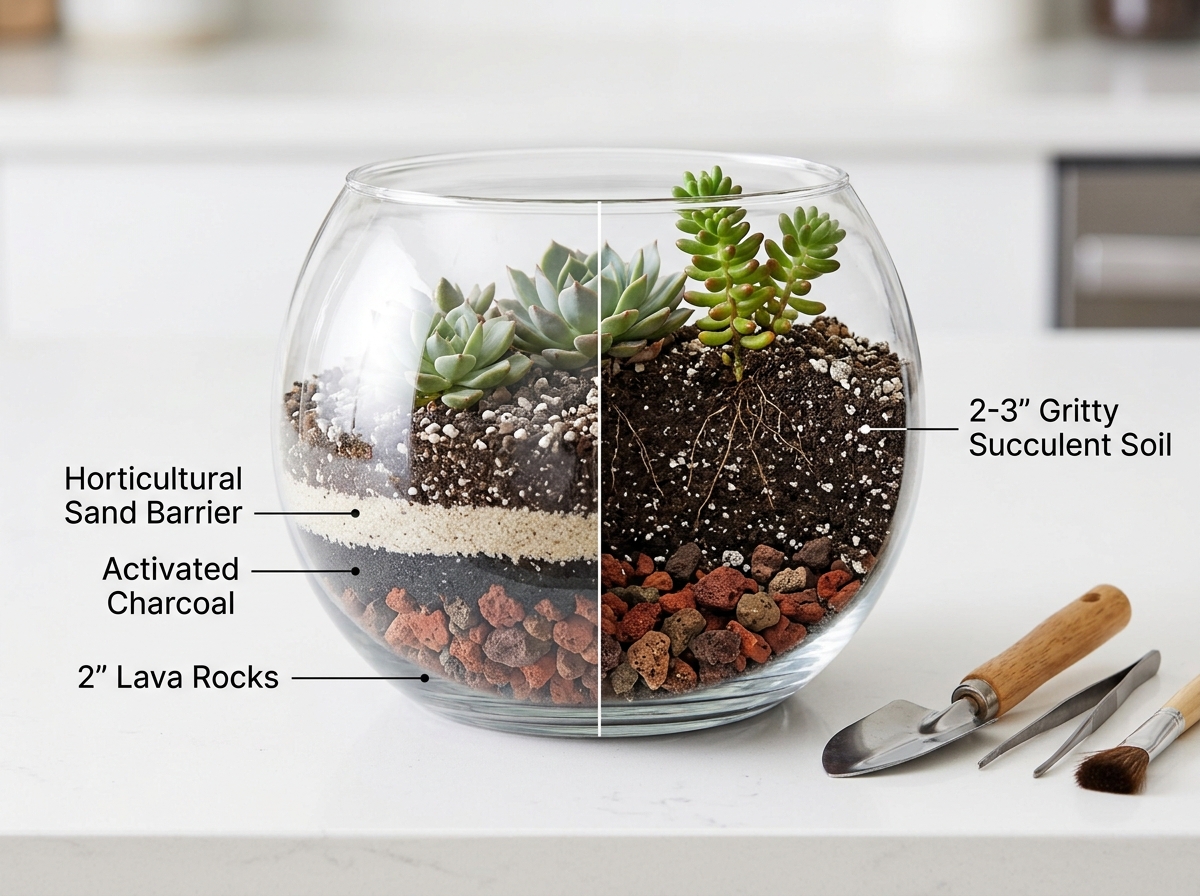
- Build drainage layers – Lava rocks or gravel at the base, then a sand barrier
- Add succulent soil – At least 2-3 inches of fast-draining cactus mix
- Plant your succulents – Slow-growing varieties like Echeveria or Haworthia work best
- Decorate – Top with fine sand, pebbles, driftwood, or moss
- Water sparingly – Every 2-4 weeks when the soil is completely dry
- Place in bright light – Near a sunny window, out of direct harsh sun
Succulent terrariums sit at the sweet spot between art project and living garden. They bring texture, color, and a touch of nature into tight spaces – without demanding much time or attention.
Pre-made kits typically range from around $33 to $80, while building one from scratch gives you full creative control and can cost less. Either way, the process is simple enough for complete beginners.

Why Choose a Succulent Terrarium Bowl for Your Home?
When we think of terrariums, we often imagine those misty, closed glass jars filled with ferns and moss. While those are lovely, they are a death sentence for succulents. Succulents are nature’s ultimate hoarders; they store water in their fleshy leaves and stems, evolving to thrive in arid, breezy environments.
This is why an open succulent terrarium bowl is the superior choice. Unlike closed systems that trap humidity, an open bowl allows for vital airflow. This prevents the “swampy” conditions that lead to root rot. Furthermore, these glass gardens are essentially bug-free. Because we use sterile potting mixes and inorganic top dressings like sand or stone, you won’t have to deal with the gnats or soil pests often found in traditional houseplants.
Beyond the health of the plants, these bowls serve as stunning modern decor. Whether you are creating a statement piece with a diy succulent terrarium for your dining table or looking for diy-succulent-terrariums-a-great-gift-idea, the versatility is unmatched.
| Feature | Open-Air Terrarium Bowl | Closed Terrarium |
|---|---|---|
| Ideal Plants | Succulents, Cacti, Air Plants | Ferns, Moss, Tropicals |
| Humidity | Low (Dry) | High (Moist) |
| Airflow | Excellent | Restricted |
| Watering | Infrequent (Every 2-4 weeks) | Very Rare (Self-sustaining) |
| Maintenance | Very Low | Moderate (Pruning/Cleaning) |
Selecting the Right Glass for Your Succulent Terrarium Bowl
Choosing your vessel is where the fun begins. While you can find specialized Glass Bowl Terrarium Succulent Garden Glassware made from recycled eco-glass, you can also get creative with household items.
We recommend clear glass for several reasons. First, it allows maximum light penetration, which succulents crave. Second, it lets you see your beautiful layers of stone and soil. Finally, it acts as an early warning system—if you see condensation or standing water at the bottom, you know you’ve overwatered.
Popular shapes include:
- Bubble Bowls: Classic rounded bowls that provide a wide surface area for multiple plants.
- Angled Bowls: These have a slanted opening, making it easier to reach inside for maintenance while offering a unique “cove” look.
- Fish Bowls: Repurposing a clean fish bowl is a budget-friendly way of turning glass containers into diy succulent terrariums.
Regardless of the shape, aim for a bowl that is at least 6 to 8 inches in diameter. A standard 8-inch bowl can comfortably hold about five assorted succulents, while a larger 12-inch bowl allows for a more complex “desertscape” with driftwood and larger rocks.
Essential Materials and Tools for Success
To build a healthy home for your plants, you need more than just a bowl and some dirt. Because most glass bowls lack a drainage hole, we have to engineer a drainage system within the container. This involves experimenting with layers in your diy succulent terrarium to ensure water doesn’t sit against the roots.
Here is what we recommend gathering:
- Lava Rocks or Pebbles: These form the foundation (about 2 inches) where excess water can settle safely away from the soil.
- Activated Charcoal: A thin layer of this acts as a “filter,” absorbing impurities and preventing that “old pond” smell.
- Horticultural Sand: This acts as a barrier, or as we like to call it, the “bouncer at the club,” preventing the soil from washing down and clogging your drainage rocks.
- Gritty Succulent Soil: Never use regular potting soil. You need a mix containing perlite, pumice, or coarse sand to ensure fast drainage.
- Tools: A small trowel or even a large spoon helps with turning glass containers into diy succulent terrariums-2. A soft paintbrush is also essential for dusting soil off delicate leaves after planting.
Creative Decor for Your Succulent Terrarium Bowl
Once the structural elements are in place, it’s time to play artist. A Succulent Bowl DIY Terrarium | Open Garden Kit | Create a Stylish Indoor Desertscape often includes these elements, but you can source them yourself for a personal touch.
Consider adding:
- River Rocks: Large, smooth stones add a sense of scale.
- Driftwood: A weathered piece of wood creates an organic, “found in nature” look.
- Moss: While live moss likes moisture, preserved reindeer moss or Spanish moss can be used sparingly for pops of color without affecting the succulents’ dry environment.
- Top Dressing: A final layer of fine sand or small gravel hides the soil and gives the project a professional, finished appearance.
Step-by-Step Guide to Building Your Terrarium
Ready to get your hands dirty? Building a succulent terrarium bowl is a meditative process. Follow these steps for an easy-diy-succulent-terrarium-for-beginners:
- The Foundation: Clean your glass bowl thoroughly. Add about 2 inches of lava rocks or medium stones to the bottom. This is your “false bottom” for drainage.
- The Filter: Sprinkle a thin layer of activated charcoal over the stones. You don’t need much—just enough to help keep the ecosystem fresh.
- The Barrier: Add a layer of coarse sand. This prevents your soil from falling into the rocks, keeping your drainage layer clear and functional.
- The Soil: Add 2 to 3 inches of succulent potting mix. We like to mound the soil slightly higher on one side to create a more dynamic, natural landscape rather than a flat surface.
- The Prep: Take your succulents out of their nursery pots. Gently tickle the roots to loosen them and remove excess old soil. If you are using cuttings, make sure the ends have calloused over for a few days before planting.
- The Planting: Start with your largest “anchor” plant. Dig a small hole, tuck the roots in, and firm the soil around it. Add your smaller succulents around the anchor, leaving a bit of space for growth.
- The Finishing Touches: Use a spoon to add your top dressing (sand or gravel) around the plants. Place your driftwood or larger decorative stones. Finally, use your soft brush to whisk away any stray dirt from the succulent leaves.
Best Succulent Varieties for Open Bowls
Not all succulents are created equal when it comes to life in a bowl. For a successful building-a-small-ecosystem-diy-succulent-terrarium, you want slow-growing varieties that won’t outgrow the container in a month.
- Echeveria: These look like stunning green or pink roses. They are the “stars” of most terrariums.
- Haworthia (Zebra Plant): These are incredibly hardy and tolerate slightly lower light than other succulents, making them perfect for office desks.
- Jade (Crassula ovata): A classic choice that looks like a miniature tree.
- Sempervivum (Hens and Chicks): These grow in tight clusters and add wonderful texture.
- String of Pearls: If you want a “vine” look, these can trail over the edge of the bowl. They prefer a tiny bit more water than their desert cousins.
- Cacti: If you want a true desert look, a cactus-terrarium-diy-everything-you-need-to-know follows the same rules, just be sure to wear gloves!
Maintenance and Troubleshooting Tips
The biggest mistake people make with a succulent terrarium bowl is loving it too much—specifically, watering it too much. Succulents thrive on a bit of neglect.
Watering: Use the “soak and dry” method. Wait until the soil is bone-dry all the way to the bottom. Then, use a pipette or a small watering can to apply water directly to the soil (avoiding the leaves). Since there are no drainage holes, use only a few tablespoons of water. If you see water pooling in the rock layer, stop immediately!
Light: Your bowl needs bright, indirect light. A south-facing windowsill is ideal. If your plants start getting “leggy” (stretching out with wide gaps between leaves), they are telling you they need more sun. Conversely, if they turn yellow or develop brown “scorch” marks, they might be getting too much direct, hot sun through the glass.
Pruning: Over time, succulents will grow. You can maintain and propagate succulents in a bowl over time by snipping off long stems and replanting the tops. Removing dead leaves from the base of the plants is also important to prevent rot and keep your really-simple-diy-succulent-terrariums looking sharp.
Troubleshooting Signs:
- Yellow, mushy leaves: This is a classic sign of overwatering. Stop watering and let the bowl dry out completely.
- Wrinkled leaves: The plant is thirsty! Give it a small drink.
- White “fuzz”: This could be mealybugs. Wipe them off with a cotton swab dipped in rubbing alcohol.
Frequently Asked Questions
How often should I water succulents in a bowl?
Generally, every 2 to 4 weeks. The frequency depends on your home’s humidity and the season. In winter, succulents go dormant and need even less water. Always check that the soil is 100% dry before adding more moisture.
Do I need a drainage hole in my glass bowl?
While a drainage hole is always “safer” for succulents, you do not need one if you build proper drainage layers. By using rocks, charcoal, and a sand barrier, you create a reservoir for excess water, allowing the soil to stay aerated. Just remember: it is much easier to add more water later than it is to remove it from a glass bowl!
Why are my succulents getting tall and skinny?
This is called “etiolation.” It happens when the plant isn’t getting enough light and is physically stretching toward the nearest light source. To fix this, move your succulent terrarium bowl to a brighter spot. You can also “behead” the tall plant, let the top callous, and replant it to restore the compact look.
Conclusion
At Opcion Rural, we believe that creating your own jungle with a diy succulent terrarium is one of the best ways to bring peace and creativity into your home. Whether you are beautify-your-workspace-with-a-diy-succulent-terrarium or crafting a stylish-and-simple-diy-succulent-terrariums for a friend, the results are always rewarding.
Building a succulent terrarium bowl isn’t just about home decor; it’s about building a small, manageable ecosystem that teaches us the value of patience and the beauty of the natural world. So grab a bowl, some grit, and a few “fat plants,” and start your desertscape today!
For more creative projects and rural living tips, visit us at Opcion Rural.
