
What You Need to Know Before You Make a Succulent Terrarium
Make a succulent terrarium and you get living art, a low-maintenance indoor garden, and a creative outlet — all in one small glass container.
Here’s a quick overview so you can get started right away:
- Pick an open glass container (fishbowl, mason jar, bubble bowl)
- Add a 1-2 inch drainage layer of gravel or small rocks
- Sprinkle a thin layer of activated charcoal to prevent mold
- Fill with 2-3 inches of cactus/succulent potting mix
- Plant your succulents (Echeveria, Haworthia, and Jade plant are great choices)
- Decorate with sand, pebbles, or small figurines
- Water sparingly — roughly every two weeks, only when soil is fully dry
- Place in bright, indirect light
Estimated cost: $20-50 Working time: 10-30 minutes Skill level: Beginner-friendly
Succulents are tough, drought-tolerant plants that store water in their thick leaves. That makes them almost perfect for terrariums — as long as you use an open container. A closed container traps too much moisture, which leads to root rot fast.
The result is a compact, eye-catching piece of living decor that thrives with very little attention. It fits a windowsill, a desk, or a small shelf — ideal if you’re short on space but still want a touch of nature indoors.
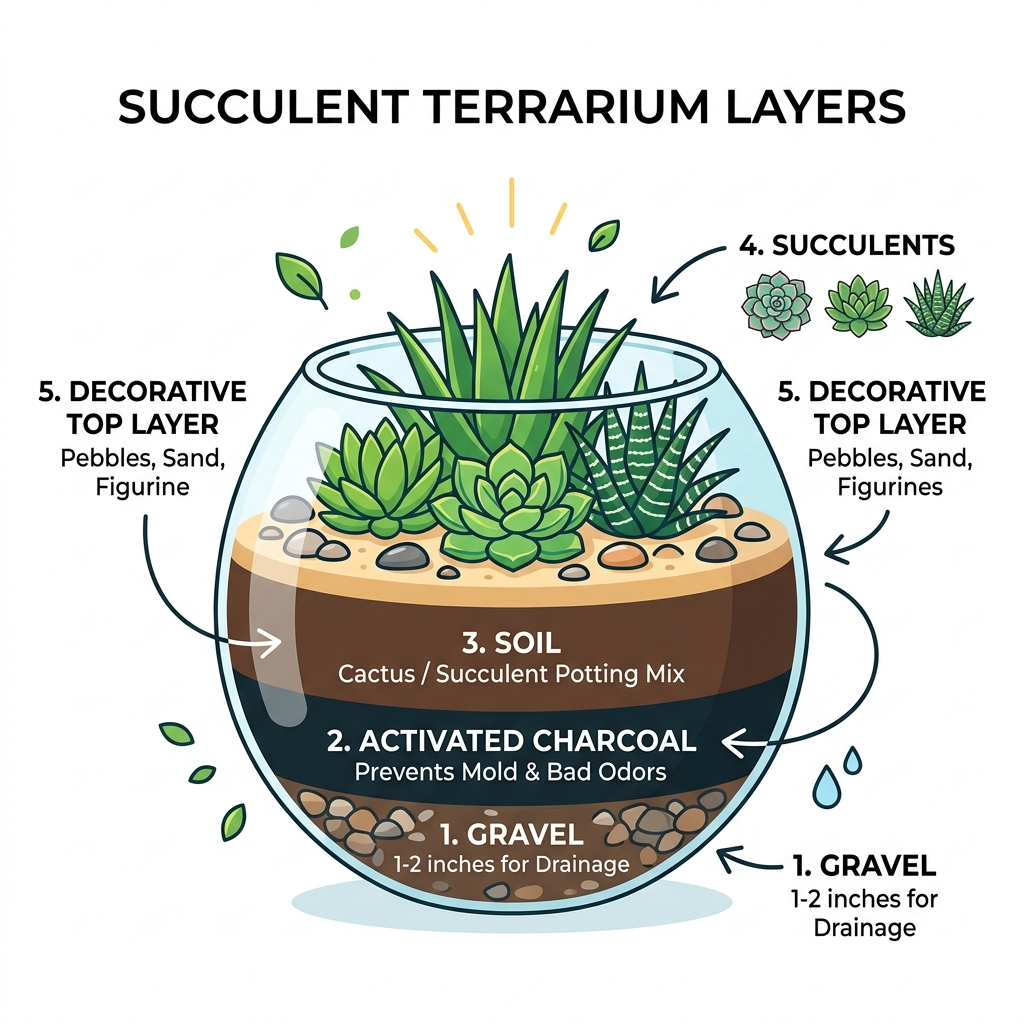
Essential Supplies and Plant Selection
Before we get our hands dirty, we need to gather the right “ingredients.” At Opcion Rural, we believe that the foundation of any successful DIY project lies in the quality of the materials. When you decide to make a succulent terrarium, you aren’t just putting plants in a jar; you are experimenting with layers in your DIY succulent terrarium to create a balanced environment.
The most critical component is the substrate. Many beginners make the mistake of using standard potting soil, but this can be a death sentence for desert-dwelling plants. Succulents have evolved specific plant characteristics that allow them to store water in fleshy tissues, meaning they absolutely hate “wet feet.”
| Feature | Succulent/Cactus Mix | Standard Potting Mix |
|---|---|---|
| Drainage Speed | Very High (Gritty) | Moderate to Low |
| Water Retention | Low | High |
| Aeration | High (lots of air pockets) | Low (can become compacted) |
| Ingredients | Perlite, sand, bark chips | Peat moss, pine bark, vermiculite |
To make a succulent terrarium that lasts, you will also need:
- A Glass Vessel: Anything from a geometric gold-rimmed container to an upcycled pickle jar.
- Drainage Rocks: Pea gravel, river stones, or even colorful aquarium rocks.
- Activated Charcoal: This is the “secret sauce” that keeps the water fresh and prevents the growth of mold and bacteria.
- The Plants: You want slow-growing varieties that won’t take over the container in a month.
Our top recommendations for beginners include:
- Echeveria: These look like beautiful green or purple roses. They are the “focal point” of many designs.
- Haworthia (Zebra Plant): These have striking white stripes and are incredibly hardy.
- Jade Plant (Crassula ovata): Known for its tree-like appearance and symbolic association with good luck.
- Sedum (Burro’s Tail): Excellent for adding a “trailing” effect over the edge of your glass.
Step-By-Step Guide: How to Make a Succulent Terrarium
Now for the fun part! Setting up your miniature world is surprisingly therapeutic. If you follow this easy DIY succulent terrarium for beginners guide, you’ll have a professional-looking piece in under half an hour.

1. Create the False Bottom
Since glass containers don’t have holes at the bottom, we have to create a “false bottom” to catch excess water. Pour about 1 to 2 inches of gravel or river rocks into the bottom of your clean container.
2. Add the Protective Layer
Sprinkle a thin layer (about 2-3 tablespoons) of activated charcoal over the rocks. This acts as a filter. If you want to be extra precise, you can place a small piece of mesh or a coffee filter over the rocks before adding soil to keep the layers from mixing.
3. Soil Mounding
Add your succulent potting mix. We like to mound the soil slightly higher on one side to create “topography.” This adds visual depth and makes the terrarium look like a tiny slice of a hillside rather than a flat pancake.
4. Root Preparation
Take your succulents out of their nursery pots. Gently tickle the roots to loosen them and shake off the old, heavy peat soil. This helps them adapt faster to their new home.
5. The Planting Process
Always start with your largest plant first. Dig a small depression in the soil, place the roots in, and firmly (but gently) pack the soil around the base. Work from the back of the container to the front so you don’t accidentally crush your smaller plants while reaching in.
6. Finishing Touches
Cover the exposed soil with a thin layer of decorative sand or pebbles. This isn’t just for looks—it also keeps the lower leaves of the succulents away from damp soil, which helps prevent rot. You can also follow this step by step guide DIY water wise succulent terrarium for more advanced arrangement tips.
Selecting the Right Container to Make a Succulent Terrarium
We cannot stress this enough: airflow is king. While you might see beautiful photos of succulents in closed jars online, those are often temporary setups for photoshoots. In the real world, succulents need the air to move.
When you turn glass containers into DIY succulent terrariums, look for wide openings. If you are upcycling, consider old fishbowls, large pasta jars, or even vintage brandy sniffers. The larger the opening, the less likely you are to deal with humidity issues that turn your plants into mush.
Planting Techniques to Make a Succulent Terrarium
One “pro tip” we use at Opcion Rural is the “Rule of Odds.” When arranging your plants, try to use 3 or 5 succulents rather than 2 or 4. For some reason, the human eye finds odd numbers more natural and aesthetically pleasing.
Spacing is also vital. Leave about an inch of “breathing room” between each plant. Succulents are slow growers, but they do need space for their leaves to expand without touching the glass, which can sometimes trap moisture and cause leaf rot.
Maintenance and Troubleshooting
Congratulations! You’ve built it. Now, how do you keep it alive? Succulent care is often described as “managed neglect.” If you are the type of person who wants to water your plants every day, you might need to find a different hobby—or at least hide your watering can!
Light is Life
Succulents are sun-worshippers. They need bright, indirect light for at least 6 hours a day. A south-facing windowsill is usually the “goldilocks” spot. If your plants start “stretching” (growing tall and skinny with wide gaps between leaves), they are telling you they are hungry for more light. This is called etiolation.
The Watering Paradox
In a container without drainage holes, you must be careful. We recommend watering roughly every 10 to 14 days. However, don’t just follow a calendar—feel the soil. If it’s not bone-dry, wait. When you do water, use a small spout or a syringe to target the base of the plant, avoiding the leaves.
Why Avoid Closed Environments?
You might be tempted to try and make a closed DIY succulent terrarium, but we generally advise against it for beginners. Closed environments create a water cycle that results in high humidity. While ferns love this, succulents will literally melt. If you see fog on the glass, your terrarium is too wet. Leave the lid off or move it to a breezier location immediately.
Troubleshooting Common Issues
- Root Rot: If the base of your plant turns black or mushy, it’s likely overwatered. You may need to remove the plant, cut off the rotten parts, let it callus, and replant in fresh, dry soil.
- Mold: If you see white fuzzy spots on the soil, your activated charcoal might be overwhelmed, or there’s too much moisture. Remove the moldy patch and increase airflow.
- Pests: Mealybugs (tiny white cottony spots) can occasionally appear. A Q-tip dipped in rubbing alcohol is the best way to spot-treat these uninvited guests.
Frequently Asked Questions
How often should I water my succulent terrarium?
In most indoor environments, once every two weeks is the sweet spot. However, in the winter, succulents go dormant and may only need water once a month. Always use the “finger test”—if the soil sticks to your finger, it’s still wet.
Do succulent terrariums need direct sunlight?
They love bright light, but be careful with magnified direct sun. A glass bowl can act like a magnifying glass and actually scorch the leaves of your plants if the sun is too intense. “Bright indirect light” (a very sunny room but not directly in the path of the harshest rays) is usually best.
How long can a succulent terrarium last?
With proper care, a succulent terrarium can last several years! Eventually, the plants may outgrow the space or the soil may become depleted of nutrients. When this happens, you can prune the plants back (and propagate the cuttings!) or repot the entire arrangement into a larger vessel.
Conclusion
At Opcion Rural, we believe that anyone can create a thriving indoor ecosystem. Learning to make a succulent terrarium is the perfect entry point into indoor gardening. It blends the precision of science with the freedom of art, resulting in a piece of decor that is uniquely yours.
Whether you are looking to create your own jungle with a DIY succulent terrarium or just want a tiny desert for your desk, the key is patience and the right drainage. Ready to start your next project? Check out our DIY services and guides for more inspiration on bringing the beauty of the rural lifestyle into your home. Happy planting!
