
Why DIY Succulent Terrarium Ideas Are Taking Over Indoor Gardening
DIY succulent terrarium ideas are one of the easiest ways to bring living art into your home — no garden required.
Here are some popular ideas to get you started:
- Desert bowl — a wide glass bowl with sand, gravel, and a mix of echeveria and cacti
- Vintage lantern — fill an old metal lantern with succulents and pebbles for a rustic look
- Wine glass mini — a single rosette succulent planted in a stemless wine glass
- Apothecary jar display — layered soil and moss inside a tall glass jar, great as a centerpiece
- Fairy garden landscape — small figurines, driftwood, and trailing “String of Pearls” in a wide bowl
- Holiday greenhouse — a white-painted glass cloche with winter-toned succulents
- Hanging geometric planter — open-sided glass shapes filled with compact succulents
- Bubble bowl oasis — a clear 12-inch globe showing off colorful layered soil and plants
- Repurposed candle jar — clean out an old jar candle and plant a small succulent inside
- Wall-mounted planter — flat-backed glass containers arranged as living wall art
- Kid-friendly mason jar — a simple, safe project using a wide-mouth jar and slow-growing varieties
Succulents are uniquely well-suited for terrariums. They store water in their thick leaves, need minimal soil, and tolerate some neglect. That makes them perfect for small glass containers with no drainage holes.
The best part? Most builds cost between $20 and $50, take under an hour, and use materials you can find at any home improvement store or order online.
Whether you want a calm weekend project, a handmade gift, or a low-maintenance way to add greenery to a small space — there’s a succulent terrarium design here for you.

Essential Materials for DIY Succulent Terrarium Ideas
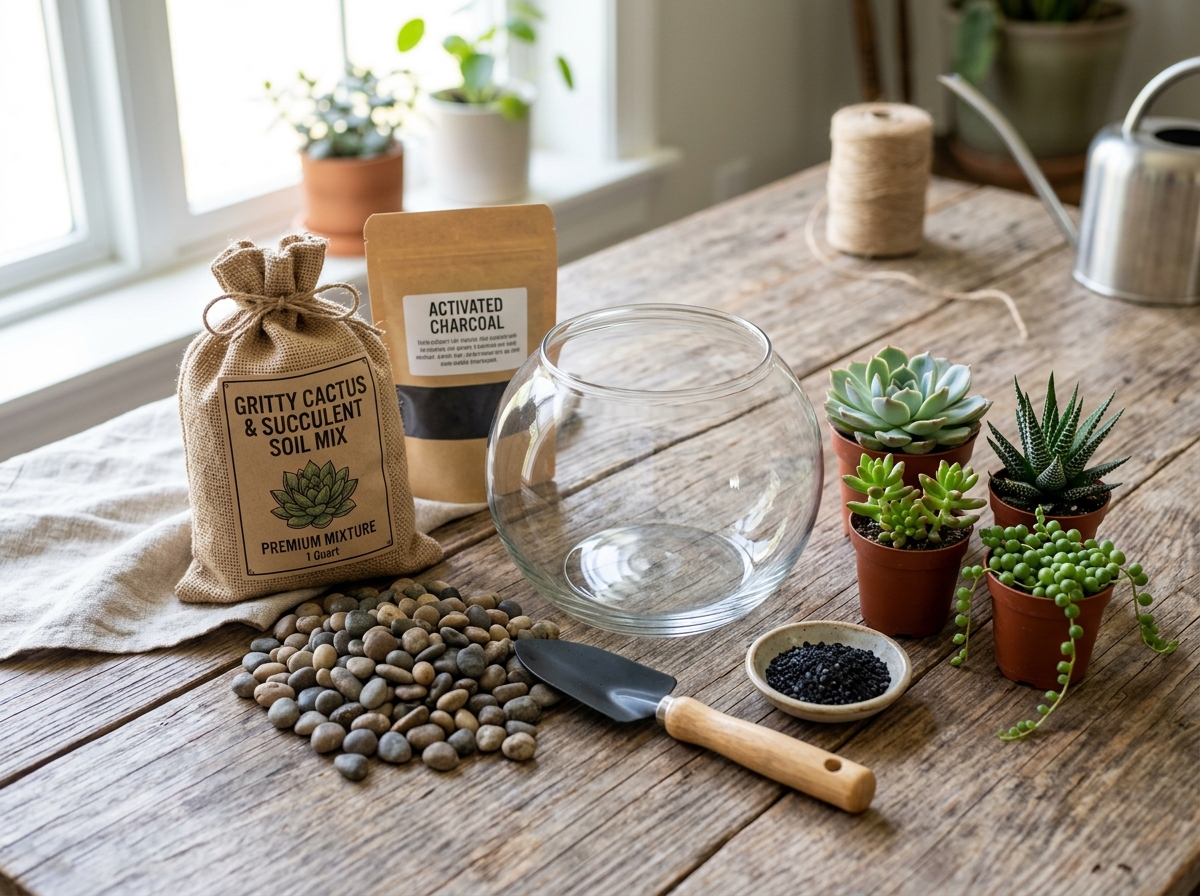
Before we dive into the specific themes, we need to gather our “ingredients.” Building a terrarium is a bit like baking; if you skip a key component, the whole thing might fall flat. Since most glass vessels lack drainage holes, we have to engineer a drainage system within the container itself.
The Vessel
The sky is the limit here! We love using clear glass because it allows you to see the beautiful layers of earth and stone. Popular choices include fishbowls, 12-inch bubble bowls, mason jars, and even repurposed stemless wine glasses or old candle jars. The key for succulents is to choose an open container. These plants hate high humidity, so a lid-free vessel ensures the airflow they need to stay dry and happy.
The Foundation Layers
Because there is no hole for water to escape, we start with a 1-to-2-inch layer of drainage pebbles or river rocks. This creates a reservoir where excess water can sit away from the sensitive roots.
Next comes the “secret weapon”: activated charcoal. This isn’t the stuff from your barbecue grill; it’s horticultural-grade carbon that acts as a filter. It helps absorb odors and inhibits the growth of mold and bacteria in the damp soil. While some hobbyists skip this, we consider it an essential insurance policy for a long-lasting project. You can learn more about perfecting these levels by experimenting with layers in your DIY succulent terrarium.
The Right Soil
This is the most common mistake beginners make. Do not use standard potting soil! Regular dirt holds moisture like a sponge, which will rot your succulents in days. You need a gritty, fast-draining mix specifically labeled for cacti and succulents.
| Feature | Standard Potting Soil | Succulent/Cactus Mix |
|---|---|---|
| Water Retention | High (holds moisture) | Low (drains quickly) |
| Texture | Dense and rich | Gritty and porous |
| Key Ingredients | Peat moss, compost | Perlite, sand, pumice |
| Risk | High risk of root rot | Promotes healthy root growth |
Sourcing Your Plants
You can find affordable succulents at local big-box stores like Home Depot or Lowe’s, but online retailers like Amazon also offer great variety packs. When choosing plants, look for different heights, colors, and textures. According to research on succulent water storage, these plants are masters of survival, but they do best when grouped with others that have similar light and water needs.
10+ Creative Themes and Designs
Now for the fun part! Once you have the basics down, you can adapt your diy succulent terrarium ideas to fit any aesthetic. Whether you’re looking for a great gift idea or a new centerpiece, these themes offer endless inspiration.
The Bubble Bowl Oasis
This is the classic “fishbowl” look. A large 12-inch bubble bowl provides enough room to create a miniature landscape. We like to mound the soil higher at the back to create depth and use a mix of tall plants (like Aloe or Jade) and shorter rosettes (like Echeveria).
Vintage Lanterns and Glass Cloches
For a rustic or “cottagecore” vibe, try planting inside a metal lantern. It adds an architectural element to your decor. If you prefer something more elegant, a glass cloche or apothecary jar creates a sophisticated “science lab” aesthetic. These crafty and creative ideas turn everyday objects into living art.
Hanging and Wall-Mounted Designs
Short on shelf space? Go vertical! DIY hanging succulent terrariums use geometric glass globes suspended by twine or wire. You can also build terrarium wall art by using flat-backed containers that mount directly to your walls, creating a stunning “living gallery.”
Holiday and Seasonal Themes
Succulents are surprisingly festive. For Christmas, we love building a “White Christmas Greenhouse” using white decorative sand and miniature figurines. For spring, add colorful moss and crystals to create a vibrant table centerpiece.
Budget-Friendly DIY Succulent Terrarium Ideas for Beginners
If you are just starting out, don’t feel like you need to spend a fortune. Many of our favorite easy projects for beginners use repurposed kitchen items.
- Mason Jars: Everyone has a few of these lying around. They are deep enough for good root growth and look great in a windowsill.
- Candle Jars: Once your favorite candle burns out, freeze it to pop out the wax, clean it with soap, and you have a free, high-quality glass vessel.
- Kid-Friendly Projects: Use plastic containers or wide-mouth jars. Let the kids pick out “slow-growing” varieties like Haworthia (Zebra Plant) which are hardy and don’t outgrow their space quickly.
Advanced DIY Succulent Terrarium Ideas for Home Decor
For those who want to create a true statement piece, focus on “hardscaping.” This involves using non-plant elements to tell a story.
- Driftwood and Mopani Wood: These add a gnarled, ancient look to your stylish succulent terrariums.
- Creating a Mini Desert: Focus on a mini desert theme by using only cacti and succulents with heavy sand top-dressing and textured rocks.
- Cascading Elements: Use trailing plants like “String of Pearls” or “Burro’s Tail” near the edge of the container so they spill over the side for a dramatic effect.
Step-by-Step Assembly Guide
Ready to build? Follow our proven process to ensure your plants thrive.
- Prep the Vessel: Start by turning your glass containers into clean canvases. Wash them thoroughly with soap and water to remove any residues that could cause mold.
- The Drainage Foundation: Add 1-2 inches of pebbles. This is the base of your small ecosystem.
- The Purifier Layer: Sprinkle a layer of activated charcoal over the stones. It doesn’t need to be thick; just enough to cover the rocks.
- The Barrier (Optional but Recommended): Place a thin layer of dried moss or a coffee filter over the charcoal. This prevents the soil from sifting down into your drainage rocks over time.
- Adding the Gritty Mix: Pour in your succulent soil. Aim for at least 2-3 inches of depth so the roots have room to anchor.
- Plant Preparation: Gently remove your succulents from their nursery pots. Tease the root balls slightly to loosen them, and brush away any excess old soil. If you are using cuttings, make sure they have “callused” (dried at the tip) for a few days before planting.
- The Arrangement: Place your largest “feature” plant first, usually toward the back or center. Work your way forward with smaller accent plants. Leave about an inch of space between plants to allow for growth and airflow.
- Finishing Touches: Add a top dressing of decorative sand, fine gravel, or sea glass. Use a soft paintbrush to whisk away any stray dirt from the leaves of your plants.
Maintenance and Troubleshooting
Even the best-built terrarium needs the right care to survive long-term. Succulents are hardy, but they aren’t indestructible.
Lighting: The Golden Rule
Succulents need bright, indirect light. A south-facing windowsill is usually the best spot. They need about 6 hours of light daily. If they don’t get enough, they will start to stretch out and become “leggy”—a process called etiolation. If your plant looks like it’s desperately reaching for the window, it needs more light!
How Often Should You Water a Succulent Terrarium?
Overwatering is the #1 killer of terrariums. Because there are no drainage holes, the water has nowhere to go.
- The “Soak and Dry” Method: Only water when the soil is completely, 100% bone-dry. Stick your finger an inch into the soil; if you feel any moisture, wait.
- Technique: Use a small watering can with a narrow spout or even a turkey baster to apply water directly to the soil at the base of the plant. Avoid getting water on the leaves, as this can cause rot.
- Frequency: Usually, once every 2 to 3 weeks is plenty. In the winter, you may only need to water once a month. You can follow our water-wise guide for more specifics.
Can Succulents Thrive in Closed Terrariums?
This is a hot debate in the gardening world. Conventional wisdom says “no” because succulents love dry air and closed jars create high humidity. However, some enthusiasts have had success with closed succulent terrariums by being extremely careful with water. If you see condensation fogging up the glass, open the lid immediately! For beginners, we always recommend sticking to open containers to avoid the “swamp effect.”
Troubleshooting Common Issues
- Root Rot: If leaves turn yellow, mushy, or translucent, you are overwatering. Stop immediately and let the container dry out in a sunny spot.
- Pests: Look out for “cottony” white fluff in the crevices of leaves—these are mealybugs. Dab them with a Q-tip dipped in rubbing alcohol to get rid of them.
- Pruning: Don’t be afraid to trim your plants! If a succulent gets too tall, snip off the top. You can let the cutting callus and plant it in a new container to start a self-sustaining ecosystem.
Conclusion
At Opcion Rural, we believe that gardening should be accessible to everyone, regardless of whether you have a backyard or a tiny apartment. Creating a succulent terrarium is more than just a craft; it’s a way to decompress and connect with nature. Whether you want to beautify your workspace or create a personalized gift, these diy succulent terrarium ideas offer a perfect blend of art and science.
To keep your new mini-garden thriving, remember these quick tips:
- Light: Bright and indirect (6 hours a day).
- Water: Only when bone-dry; never mist the leaves.
- Air: Keep it open for better circulation.
- Drainage: Never skip the pebble and charcoal layers.
Ready to start your own project? Grab a glass jar and some grit, and let your creativity grow! Start your project today at Opcion Rural.
