
Why a Woodland Terrarium Is the Perfect Indoor Nature Project
A woodland terrarium craft tutorial gives you everything you need to build a tiny, self-sustaining forest scene inside a glass container — no garden required.
Here’s the quick version of how to make a woodland terrarium:
- Choose a glass container with a lid (jar, cloche, or geometric terrarium)
- Add a drainage layer — 1 to 1.5 inches of pebbles or aquarium sand
- Layer activated charcoal over the drainage to prevent bacteria and odors
- Add 2 to 3 inches of substrate (potting mix with coco coir works well)
- Plant moisture-loving species like ferns, moss, and nerve plants
- Arrange hardscape — stones, twigs, pine cones, or small figurines
- Mist lightly, seal the lid, and place in bright indirect light
- Water only when the glass shows no condensation for several days
Think of it as a living piece of art. The glass holds a miniature ecosystem where moisture evaporates from the soil, condenses on the glass walls, and drips back down to the roots — cycling on its own with almost no help from you.
This idea is older than you might think. In the 1800s, a botanist named Dr. Nathaniel Ward accidentally discovered that plants could thrive for years inside a sealed glass bottle. That led to the “Wardian case” — the ancestor of every terrarium you see today.
Fast forward to now, and terrariums are one of the most-shared DIY projects online, with some tutorials racking up tens of thousands of shares. And it’s easy to see why: they’re low-maintenance, budget-friendly, and endlessly customizable — ideal for small spaces where a full garden just isn’t possible.
Whether you’re a complete beginner or a seasoned crafter, this guide walks you through every step.
Essential Supplies for Your Woodland Terrarium Craft Tutorial
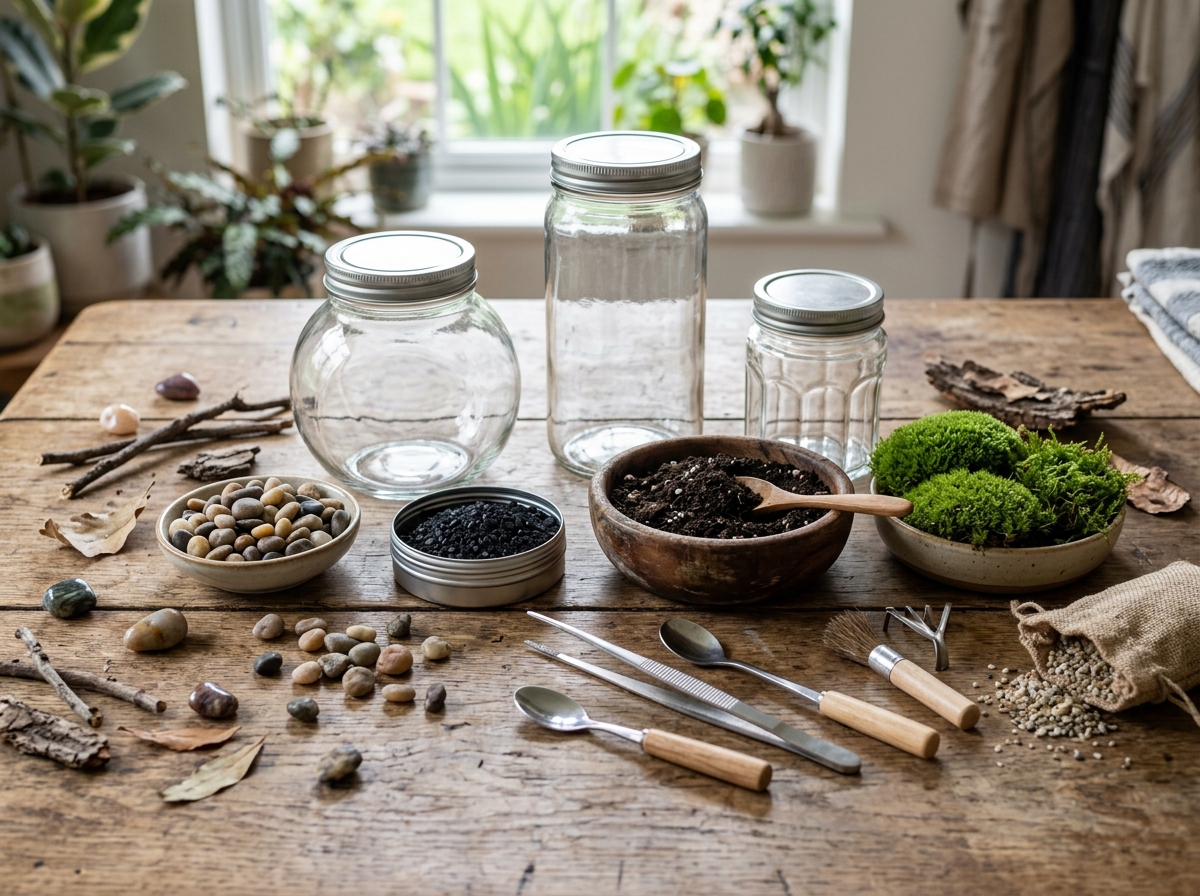
Before we dive into the assembly, we need to gather our tools. Think of this as the “mise en place” for your miniature forest. Creating a successful ecosystem requires more than just shoving a plant into a jar; we need to build a foundation that mimics the natural earth.
The Glass Container
The vessel is the soul of your project. You can use almost anything glass: a vintage cracker jar, a mason jar, a geometric terrarium, or even a repurposed kitchen canister. For a true woodland feel, a closed container is best because it traps humidity. If you are crafting with kids, some experts suggest using plastic mason jars from dollar stores—they are much safer if dropped! When turning glass containers into diy succulent terrariums, we often look for wide openings, but for a woodland scene, make sure you can at least fit your hand inside to arrange the elements.
The Drainage Layer
Since glass jars don’t have holes in the bottom, we have to create a “false bottom.” This is usually 1 to 1.5 inches of pebbles, gravel, or LECA (lightweight expanded clay aggregates). This layer allows excess water to pool away from the roots, preventing the dreaded root rot.
Activated Charcoal
This is a non-negotiable for closed systems. Activated carbon (or horticultural charcoal) acts as a filter. It absorbs toxins, prevents odors, and keeps the water fresh as it cycles through the ecosystem. A thin layer (about half an inch) over your pebbles is all you need.
The Substrate Mix
Standard potting soil can be too dense. We recommend a mix of coco coir, orchid bark, and a bit of peat moss. This creates a fluffy, well-draining environment that allows roots to breathe. If you are used to experimenting with layers in your diy succulent terrarium, woodland plants need much more moisture retention than desert plants.
Tools of the Trade
- Long-handled tweezers or chopsticks: Essential for placing small plants in tight spots.
- A spoon or small trowel: For adding soil.
- A spray mister: To provide that initial “rain” without flooding the jar.
- A paintbrush: To wipe dust and soil off the glass walls before sealing.
Selecting the Best Plants and Hardscape for a Forest Scene
The magic of a woodland terrarium lies in its texture. You want a mix of “trees” (tall plants), “shrubs” (bushy plants), and “groundcover” (mosses).
Best Plants for a Woodland Terrarium Craft Tutorial
When choosing plants, look for species that thrive in low light and high humidity. Avoid succulents at all costs—they will rot in a closed woodland environment! Instead, consider these:
- Ferns: The “Fluffy Ruffles,” Maidenhair, and Button ferns are classic choices. They provide height and that quintessential forest feel.
- Nerve Plants (Fittonia): These come in vibrant pinks, reds, and whites, adding a pop of color to the green landscape.
- Polka Dot Plants (Hypoestes): Similar to nerve plants, these offer beautiful speckled foliage.
- Mosses: Mosses are the carpet of your forest. Mood moss provides a “windswept” look, while sheet moss is great for covering large areas of soil.
- Creeping Fig (Ficus pumila): A wonderful vining plant that will eventually “climb” the walls of your jar.
When building a small ecosystem diy succulent terrarium, we focus on drainage, but here we focus on moisture-loving harmony.
Choosing Hardscape for a Woodland Terrarium Craft Tutorial
Hardscape refers to the non-living elements that give your scene structure. To create a statement piece with a diy succulent terrarium or a woodland one, you need an anchor point.
- Stones: Seiryu stone or dragon stone adds a craggy, mountainous look.
- Wood: Foraged twigs from your backyard work perfectly. Look for pieces with lichen for extra character.
- Forest Floor Elements: Acorns, pine cones, and small pieces of bark make the scene feel realistic.
- Whimsy: Don’t be afraid to add a small ceramic bear, a tiny deer, or a faux mushroom to create a “fairy garden” effect. This is one of our favorite crafty and creative diy succulent terrarium ideas that translates perfectly to the woodland theme.
Step-by-Step Guide to Assembling Your Miniature Ecosystem
Ready to get your hands dirty? Follow this woodland terrarium craft tutorial assembly guide to ensure your ecosystem survives and thrives.
1. Prepare the Vessel
Clean your glass thoroughly. Any residue can encourage mold growth later. If you’ve learned how to make a closed diy succulent terrarium, you know that cleanliness is the first step to success.
2. Layering Your Woodland Terrarium Craft Tutorial
The order of layers is vital. Start with your 1-inch pebble base. Next, add your charcoal. Some crafters like to add a thin layer of dried sphagnum moss or even a piece of mesh over the charcoal to prevent the soil from sifting down into the drainage layer. This keeps the layers looking sharp and clean. Finally, add about 2-3 inches of your substrate mix. For more on this, check out our step-by-step guide diy water wise succulent terrarium for layering inspiration.
3. Plan the Layout
Before planting, place your “hardscape” (the big rocks and wood). It’s much easier to plant around a rock than to try and wedge a heavy rock between delicate ferns. This is a great easy diy succulent terrarium for beginners tip: always place your largest items first.
4. Planting
Remove your plants from their nursery pots and gently tease the roots. Dig a small hole in the substrate, place the plant, and firm the soil around it. Start with your tallest plants in the back and work your way forward. If you have a variety of plants, succulent arrangement using different varieties principles apply here too—aim for a balance of heights and textures.
5. Adding the “Forest Floor”
Once the plants are in, press your moss into the remaining bare soil. Add your twigs, acorns, and pebbles to create “paths” or “ravines.”
| Feature | Open Terrarium | Closed Terrarium (Woodland) |
|---|---|---|
| Humidity | Low (Dry) | High (Humid) |
| Watering | Frequent | Very Rare (Self-Sustaining) |
| Best Plants | Succulents, Cacti | Ferns, Moss, Nerve Plants |
| Maintenance | Moderate | Low |
Long-Term Care and Troubleshooting Tips
Once your terrarium is sealed, it becomes a little world of its own. However, it still needs a watchful eye.
Light Requirements
Place your terrarium in bright, indirect light. Think of a forest floor—it gets light, but it’s filtered through the trees. Never put a closed terrarium in direct sunlight; the glass will act like a greenhouse and literally cook your plants. This is a key tip from our beautify your workspace with a diy succulent terrarium guide.
Watering and Condensation
The “Golden Rule” of closed terrariums: if you see condensation on the glass in the morning that clears up by afternoon, your water level is perfect. If the glass is constantly fogged and dripping, it’s too wet—open the lid for 24 hours to let some moisture escape. If there is no condensation at all, give it a few mists with your spray bottle. Our guide to creating a self sustaining succulent terrarium emphasizes this delicate balance.
Maintenance
- Pruning: If a fern leaf touches the glass, it might rot. Use long scissors to trim back any growth that gets too rowdy.
- Cleaning: Use a damp paper towel on a stick to wipe the inside of the glass if it gets dirty.
- Bioactive Additions: Some enthusiasts add “springtails”—tiny, harmless bugs that eat mold and decaying matter. They are the “janitors” of the terrarium world and help in creating your own jungle with a diy succulent terrarium or woodland scene.
Frequently Asked Questions about Woodland Terrariums
Why is my terrarium glass foggy?
Fog is normal! It means your ecosystem is “breathing.” However, if you can’t see your plants at all for several days, it means there is too much water. Simply take the lid off for a day to balance the humidity.
How often should I water a closed woodland terrarium?
In a perfect world, almost never. Some terrariums have gone years without being opened. Practically, you might need to mist it once every few months if the soil looks dry or the condensation stops appearing.
Can I use succulents in a woodland-themed terrarium?
No. Succulents need dry air and drainage holes. In a humid, closed woodland jar, they will turn to mush within weeks. Stick to tropical, moisture-loving plants for this project.
Conclusion
At Opcion Rural, we believe that bringing a bit of the wild indoors is the best way to stay connected to nature, even in the middle of a city. A woodland terrarium is more than just a craft; it’s a living lesson in ecology and a beautiful addition to any home.
Whether you’re looking for diy succulent terrariums a great gift idea or you want to build a sprawling forest under glass for your own mantel, the process is rewarding and meditative.
Ready to start your journey into miniature gardening? Start your next creative project with Opcion Rural and discover the joy of building your own indoor ecosystem today!
