
Why a DIY Green Wall Might Be the Best Home Project You’ll Do This Year
A diy green wall is a vertical arrangement of plants — real or faux — mounted or hung on a wall to create a living, breathing piece of art in your home. Whether you have a spare corner, a blank fence, or a tiny apartment wall, there’s a system that fits your space and budget.
Here are the top DIY green wall options at a glance:
| System Type | Best For | Approx. Cost | Difficulty |
|---|---|---|---|
| Felt pocket wall | Herbs, small plants | $100 – $500 | Beginner |
| Modular planter panels | Larger living walls | $500 – $1,200 | Intermediate |
| Faux panel wall | No-maintenance look | $50 – $620 | Beginner |
| DIY artificial panel | Budget custom look | £90 – £120 | Beginner |
| Freestanding plywood frame | Renters, flexibility | $500 – $600 | Intermediate |
Green walls go by several names — vertical gardens, living walls, eco-walls — but they all share one goal: bringing nature into tight spaces.
The appeal is real. For creative DIY enthusiasts with limited floor space, a vertical garden transforms a blank wall into a focal point. It can reduce stress, add humidity, dampen sound, and even support local wildlife outdoors.
Costs range widely. A small faux panel setup can cost as little as $50, while a fully irrigated living wall with custom woodwork can run up to $1,200. Build times range from a couple of hours to a full weekend.
The good news? You don’t need advanced skills or a big budget to get started.

Choosing Your System: Living vs. Faux Green Walls
When we decide to embark on a diy green wall journey, the first fork in the road is choosing between living plants and artificial foliage. Both have their place in modern biophilic home design, but they serve different lifestyles.
Living walls are essentially vertical ecosystems. They offer the unparalleled benefit of air purification, naturally filtering toxins and releasing fresh oxygen into your room. However, they require a commitment to watering, pruning, and ensuring adequate light. On the other hand, faux green walls provide an immediate aesthetic win with zero maintenance. They are perfect for “plant parents” who might struggle to keep real greenery thriving or for spaces with absolutely no natural light.
| Feature | Living Green Wall | Faux Green Wall |
|---|---|---|
| Maintenance | High (watering, pruning, feeding) | Low (occasional dusting) |
| Air Quality | Purifies air and adds humidity | No effect on air quality |
| Lifespan | Years (with proper care) | 5-10+ years (UV rated) |
| Initial Cost | $100 – $1,200+ | $50 – $620 |
| Sound Dampening | Excellent (soil + foliage) | Good (dense plastic/silk) |
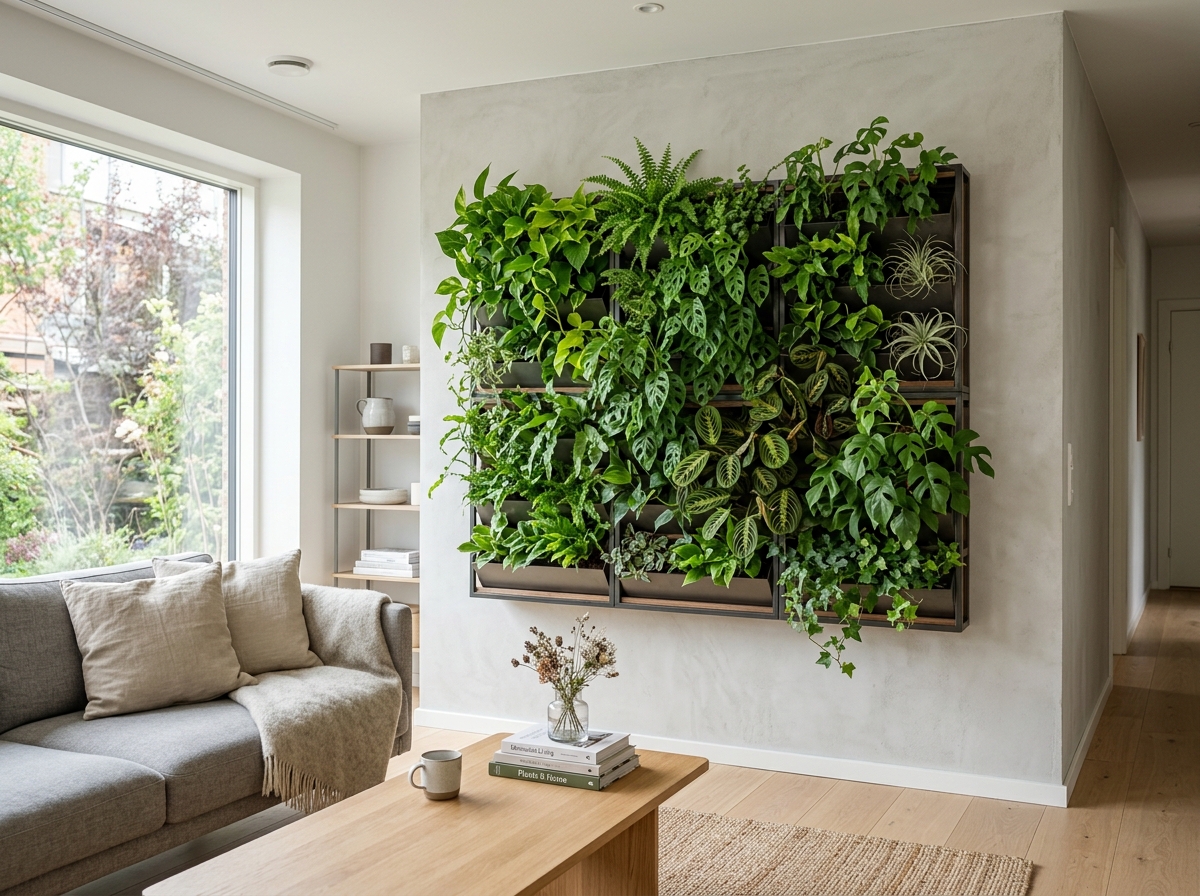
The Benefits of a diy green wall
Beyond just looking “cool,” these installations serve as functional art. We love how a vertical garden can transform a sterile office into a sanctuary. The psychological benefits are well-documented; being surrounded by greenery helps in stress reduction and improves focus.
In a home setting, a living wall acts as a natural humidifier, which is a lifesaver during dry winter months. If you build one outdoors, you’re creating a vital wildlife habitat for bees, butterflies, and birds. Additionally, the density of a diy green wall—whether real or faux—provides significant soundproofing, helping to quiet down noisy rooms by absorbing echoes.
Renter-Friendly and Temporary diy green wall Ideas
We often hear from readers who want the look but can’t drill permanent holes into their walls. Don’t worry, we have solutions! Biophilic home design should be accessible to everyone, regardless of their lease agreement.
One of the best ways to create a temporary setup is using a freestanding plywood frame. By building a large frame that simply leans against the wall, you avoid structural damage. You can secure it with a simple hook and eye at the top for safety. For smaller setups, modular felt pockets can be hung using heavy-duty Command hooks.
Another clever trick is using a wire grid or a tension rod system. These allow you to hang lightweight pots or air plants without leaving a trace when you move out. If you’re going the faux route, using thumbtacks to secure panels is a great way to minimize wall damage—they leave holes no bigger than a pinprick!
Planning and Building a Living diy green wall
Before you pick up a drill, you need a plan. Site selection is the most critical step for a living wall. We recommend doing a light study of your chosen wall. Most indoor tropical plants need at least 150 foot-candles of light to thrive. If your wall is in a dark hallway, you’ll need to factor in the cost of supplemental grow lights.
Structural integrity is another biggie. A 1m x 1m living wall can weigh over 20kg (about 44 lbs) once the plants are watered and the soil is saturated. You must ensure your wall can support this weight, ideally by securing your frame directly into the wall studs.
Essential Materials and Tools for Your Project
To build a professional-grade living wall, you’ll need the right gear. We’ve found that using high-quality Plant Pockets is one of the easiest ways for beginners to get started.
If you’re building a wooden frame, you must protect the wood from moisture. Using Polyurethane to seal the wood is essential; we recommend at least three coats to ensure it’s fully waterproofed. For the actual planting, you might want to reference our Step-by-Step Guide: DIY Water-Wise Succulent Terrarium for tips on managing moisture and drainage in small containers.
Your basic toolkit should include:
- A power drill and a level (to keep things straight!)
- Pond liners or heavy-duty plastic to protect the wall
- A dedicated irrigation system if you’re building a large wall
- Specialized planters like those from Atlantis, Elmich, or Holman
Step-by-Step Installation and Irrigation
- Prepare the Barrier: Attach a waterproof backing (like a pond liner or thick plastic sheeting) to your wall or the back of your frame. This prevents rot and mold on your drywall.
- Mount the Frame: Secure your frame to the wall. If you’re using a modular system, install the mounting brackets or stacked gutters now.
- Install the Irrigation: For larger walls, a gravity-fed drip line or a self watering system is a game-changer. It ensures even watering across all levels. If you’re using a manual system, make sure the top pockets are accessible for watering.
- Attach the Planting System: Mount your cassettes or felt pockets onto the frame. Ensure they are spaced correctly to allow plants room to grow.
- Planting: Place your plants into the system. If using felt pockets, we recommend mixing water-storing crystals into the soil to help maintain moisture levels.
Selecting the Best Plants for Vertical Growth
Not every plant is cut out for life on a wall. We look for species that are hardy, have shallow root systems, and don’t mind living in close quarters.
Light is the ultimate decider. For indoor walls with moderate light, Pothos and Philodendrons are the “gold standard” because they trail beautifully and are very forgiving. If you have a sunny spot, succulents are a fantastic choice. You should definitely check out our guide on Sunlight Requirements for Indoor Succulents to make sure your sunny wall doesn’t turn into a scorched wall!
Top Plant Varieties for 2026
For a lush, professional look, we recommend mixing 3-4 different species to create texture and depth.
- Trailing Vines: Pothos and Heartleaf Philodendron create that “jungle” look quickly.
- Texture Builders: Ferns (like Asparagus or Boston ferns) add airy volume.
- Low-Maintenance Gems: Check out our list of Low-Maintenance Indoor Succulents for plants that won’t mind if you forget to water them for a week.
- Small Scale Wonders: Mini Succulents for Indoor Gardening are perfect for tight pocket systems.
- Native Species: If you’re building outdoors, always opt for native plants. They support local pollinators and are already adapted to your local climate.
When arranging them, use a Succulent Arrangement Using Different Varieties strategy—place taller or fuller plants at the top and trailing ones at the bottom to cover the structure.
Creating a Realistic Faux Green Wall on a Budget
If you want the “wow” factor without the “work” factor, a faux diy green wall is the way to go. The secret to a high-end look is avoiding the cheap, shiny plastic panels. Look for PE material panels; they have a matte, waxy finish that mimics real boxwood or ivy.
To add depth, don’t just slap panels on a flat wall. We like to paint the wall (or a backing board) a dark forest green or black first. This ensures that if there are any small gaps in the foliage, the viewer sees a “shadow” instead of a bright white wall.
Installation Techniques for Faux Panels
- Prepare the Base: If you’re a renter, use an MDF backing board cut to size. You can attach your panels to this board and then mount the board to the wall with just a few screws.
- Connect the Panels: Most Faux Boxwood Panels come with a snap-lock system. Lay them out on the floor first to ensure the “grain” of the leaves is all facing the same direction.
- Secure the Foliage: Use a staple gun or heavy-duty zip ties to attach the panels to your frame or backing.
- The “Fluff” Factor: This is the most important step! Once the wall is up, go through and manually pull the leaves forward. This hides the seams between panels and creates a 3D effect.
- Add Lighting: Integrating LED strips behind the panels or around the frame can make the wall “pop” and give it a high-end, designer feel.
Maintenance, Costs, and Common Pitfalls
Even a “low-maintenance” wall needs some love. For living walls, we highly recommend getting a soil tester. It takes the guesswork out of watering—you’ll know exactly when the middle of the root ball is dry.
Pruning is also essential to keep the wall from looking like an overgrown mess. Keep your pruners sharp and learn How to Prune Indoor Succulents to encourage bushier growth rather than leggy stems. For faux walls, maintenance is as simple as a quick pass with a feather duster or a can of compressed air every few months.
Cost Breakdown: What to Expect
Building a diy green wall can fit almost any budget, but it helps to know where your money is going.
- Budget ($50 – $200): Small faux panel setups or simple felt pocket systems with basic plants like Pothos.
- Mid-Range ($300 – $600): Medium-sized living walls with a wooden frame, waterproof backing, and manual irrigation.
- Premium ($700 – $1,200+): Large, custom-built modular systems with integrated drip irrigation, high-end lighting, and professional-grade planters.
Common Mistakes to Avoid
We’ve seen it all, and we want you to avoid the “oops” moments. The biggest mistake is inadequate waterproofing. Water is persistent; if there’s a gap in your liner, it will find your wall and cause damage.
Another pitfall is a poor light study. Many people assume “indoor light” is enough for all plants, but most living walls fail because the plants simply starve for light. If you’re new to this, start with our Indoor Succulent Care Tips for Beginners to get a handle on the basics of plant health before scaling up to a full wall.
Finally, don’t overwater! In a vertical system, water naturally drains downward. This means the bottom plants often end up sitting in soggy soil while the top ones dry out. A good irrigation system or careful manual watering is key.
Frequently Asked Questions about DIY Green Walls
How much does a DIY green wall cost to build?
As we’ve discussed, it varies! A basic faux wall can be done for under $100. A standard 1m x 1m living wall with native plants usually costs around $500. If you’re going big with custom woodwork and automated watering, expect to spend closer to $1,000.
Do indoor living walls attract bugs?
They can, but only if they are poorly maintained. Overwatering and leaving dead leaves on the wall are the primary invitations for gnats and mites. By keeping your plants healthy and using neem oil occasionally as a preventative measure, you can keep your wall bug-free.
How often do I need to water a vertical garden?
For living walls with native plants or tropicals, we recommend watering 3 to 5 times a week. However, if you use a system with a reservoir, you might only need to refill it every 3 to 4 weeks. Always use a soil tester to be sure!
Conclusion
At Opcion Rural, we believe that bringing nature into your home shouldn’t be a luxury reserved for those with massive backyards. A diy green wall is the perfect marriage of art, nature, and creativity. Whether you choose a lush living ecosystem or a stunning, no-fuss faux display, you’re making a sustainable choice for your mental well-being and your home’s aesthetic.
Ready to start your journey into creative home ecosystems? We have plenty more guides to help you blend nature with your living space. From small-scale terrariums to massive vertical gardens, the only limit is your imagination.
Visit us at https://www.opcionrural.com/ for more DIY inspiration and expert tips on rural and creative living!
