
Turn Any Plastic Bottle Into a Tiny Living World
Recycled bottle terrarium ideas are one of the easiest, cheapest ways to bring plants into a small space — no garden required.
Here are the most popular ways to do it:
- Self-watering terrarium — Cut a bottle in two, flip the top upside down into the base, thread a cotton wick through the cap, and let it pull water up to the roots automatically
- Closed mini-ecosystem — Cut a 2-liter bottle, layer pebbles, charcoal, and soil, plant small tropical or moisture-loving plants, then seal the top back on
- Mini-greenhouse — Cut a bottle in half, plant seeds or seedlings in the base, and use the top as a humidity dome
- Glass bottle terrarium — Use any clear glass bottle from your cupboard, fill with charcoal and soil, and use chopsticks to position small plants inside
- Window-flap terrarium — Cut a hinged opening in the side of a 2-liter bottle for easy planting access, then tape it shut to trap moisture
Plastic bottles are notoriously hard to recycle effectively. But instead of sending them to a landfill, you can turn them into something genuinely useful — a self-sustaining miniature ecosystem that practically waters itself.
The concept is simple. A sealed bottle traps moisture. That moisture evaporates, condenses on the sides, and drips back down to the roots — just like rain. A well-built closed terrarium may only need watering every four to six months.
It’s a creative outlet, a low-maintenance plant fix, and an upcycling win — all from something you were about to throw away.
Why Recycled Bottle Terrarium Ideas are the Ultimate Eco-Project
We live in a world where plastic pollution is a staggering challenge. While we often toss our soda bottles into the blue bin with good intentions, the reality is that plastic bottles can be incredibly hard to recycle effectively. This is where upcycling comes in to save the day. By choosing to explore recycled bottle terrarium ideas, we aren’t just making a pretty decoration; we are participating in a high-impact environmental project.
Upcycling is actually superior to traditional recycling because it requires zero energy-intensive reprocessing. We aren’t melting the plastic down; we are simply giving it a new, higher purpose. For those of us living in apartments or homes without a backyard, these “bottled jungles” offer a way to engage with nature on a budget. It is a cost-effective gardening solution that uses materials most of us already have in our recycling bins.
Beyond the environmental perks, these projects are fantastic for STEM learning. Whether you are a parent trying to keep the kids’ brains active over summer break or a teacher looking for a classroom project, a bottle terrarium is a living science experiment. It demonstrates the water cycle, photosynthesis, and the delicate balance of an ecosystem in a way that a textbook never could. Plus, it’s just plain fun to see a bean sprout or a tiny fern thrive inside a container that used to hold ginger ale!
Essential Materials for Your Recycled Bottle Terrarium Ideas
Before we start cutting, let’s gather our supplies. Most of these items are likely sitting in your pantry or garage right now. If you’re looking for more inspiration on how to get started with varied designs, check out these crafty and creative DIY succulent terrarium ideas to see how different containers can change the aesthetic.
Here is your master checklist:
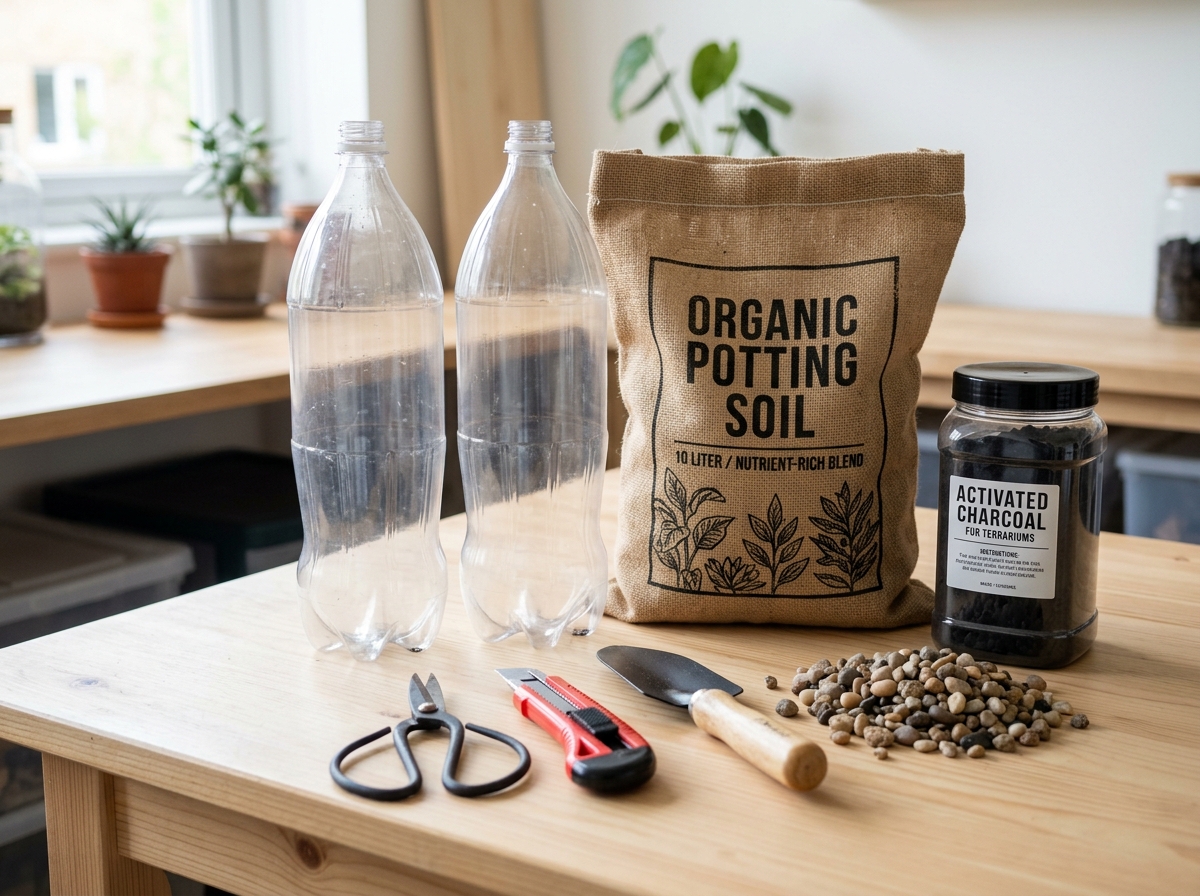
- Plastic Bottles: 2-liter soda bottles are the gold standard because of their size and clear plastic, but 1-liter bottles or even clear juice jugs work well.
- Activated Charcoal: This is a non-negotiable for closed systems. It absorbs unwanted chemicals and prevents the “swamp smell” that can occur in sealed environments.
- Drainage Pebbles: Small rocks, gravel, or even crushed terracotta pot pieces.
- Potting Soil: Use a high-quality, lightweight mix. If you’re going for a tropical vibe, organic soil is always our preference for the health of the plants and the planet.
- Tools: A sharp utility knife (or box cutter), a pair of sturdy scissors, and perhaps some sandpaper to smooth out those cut edges.
- Precision Tools: Chopsticks or long-handled tweezers are lifesavers for positioning plants through narrow openings.
Choosing the Best Plants for Recycled Bottle Terrarium Ideas
Not every plant wants to live in a plastic bottle. Since closed terrariums trap a lot of humidity, you want “spa-loving” plants that thrive in moist, warm air. If you prefer a drier look, you might consider creating a mini desert DIY succulent terrarium, though keep in mind that succulents usually require an open bottle system to prevent rot.
For a classic closed bottle terrarium, look for:
- Peperomia: These stay small and love the humidity.
- Nerve Plants (Fittonia): Known for their striking leaf patterns, they are the “drama queens” of the plant world and will perk up instantly in a humid bottle.
- Moss: Fresh moss acts like a beautiful green carpet and helps retain moisture.
- Ferns: Miniature varieties like the Lemon Button Fern are perfect for 2-liter setups.
- Seeds: If you’re doing this with kids, lima beans or chia seeds grow incredibly fast, providing almost instant gratification.
Creative Decorations to Personalize Your Build
This is where we get to let our inner artist out. A terrarium is more than just a plant in a bottle; it’s a story. You can beautify your workspace with a diy succulent terrarium by adding personal touches that make you smile during a long workday.
Consider adding:
- Miniature Figurines: Small plastic animals, tiny garden gnomes, or even LEGO figures can turn your terrarium into a miniature scene.
- Polished Stones and Crystals: Amethyst or quartz points add a touch of “earthy chic.”
- Foraged Bark and Twigs: If you use items from the outdoors, we recommend boiling them for five minutes first to kill off any hitchhiking bugs or mold spores.
- Colored Sand: Layering different colors of sand at the very bottom can create a stunning “sand art” effect beneath the soil.
Step-by-Step Guide: Preparing and Layering Your Bottle
Ready to build? Safety first! If you are working with children, make sure an adult handles the sharp tools. To get the best results, we need to focus on the foundation. You can read more about the importance of those hidden layers in our guide on experimenting with layers in your DIY succulent terrarium.
1. The Cut: To get a clean, straight line, wrap a rubber band around the bottle at the height you want to cut. This serves as a perfect guide. Use your utility knife to make the initial puncture, then finish the job with scissors. For a “two-part” terrarium, cut about 4-5 inches from the bottom. 2. The Smooth: Cut plastic can be surprisingly sharp. Use a bit of sandpaper to buff the edges of the cut. This makes it safer to handle and helps the top piece slide over the bottom more easily. 3. The Drainage Layer: Pour about an inch of pebbles or gravel into the bottom. This is where excess water will sit so your plant’s roots don’t “drown.” 4. The Filtration Layer: Add a thin layer of activated charcoal. This acts as a filter to keep the water fresh and the air clean inside the bottle. 5. The Soil: Add 2-3 inches of potting soil. We like to use a funnel (or a rolled-up piece of paper) to keep the sides of the bottle clean while pouring.
| Feature | Closed Bottle System | Open Bottle System |
|---|---|---|
| Humidity Level | High | Low to Moderate |
| Best Plants | Ferns, Moss, Tropicals | Succulents, Cacti, Air Plants |
| Watering Frequency | Every 4-6 months | Every 1-2 weeks |
| Maintenance | Low (Self-Sustaining) | Moderate (Needs manual watering) |
Mastering the Self-Watering Recycled Bottle Terrarium Ideas
If you are someone who constantly forgets to water your plants, the self-watering wick system is a game-changer. This design uses physics to do the chores for you.
To build one, cut your 1-liter or 2-liter bottle in half. Poke a hole in the bottle cap. Thread a thick piece of cotton string or yarn through the hole, leaving several inches hanging out on both sides. Screw the cap back on and place the top half of the bottle upside down into the bottom half.
Fill the bottom with water and the top with soil. The string acts as a “wick,” pulling water up from the reservoir into the soil as the plant needs it. The top of the bottle still traps humidity, creating a perfect mini-greenhouse. It’s “science magic” at its finest! For more on this, see our guide to creating a self-sustaining succulent terrarium.
Maintenance and Long-Term Care for Bottle Ecosystems
Even a self-sustaining ecosystem needs a little love. The most common mistake is placing your bottle in direct sunlight. Because the plastic acts like a magnifying glass, direct sun can literally cook your plants. Indirect sunlight is the sweet spot — think of a bright windowsill that doesn’t get “scorched” at noon.
Monitoring Condensation: In a closed system, you should see a light mist on the inside of the glass in the morning. If the bottle is so foggy you can’t see the plants, it’s too wet! Simply pop the lid off for a few hours to let the excess moisture evaporate. Conversely, if the sides are bone dry and the plants look wilted, it’s time for a light misting.
Pruning and Cleaning: Plants in terrariums can grow surprisingly fast. If a leaf starts touching the side of the bottle, it might rot, so use your scissors to pinch off any overgrowth. Also, keep an eye out for mold. If you see fuzzy white spots, remove that section of the plant immediately. For a deeper dive into maintaining these tiny worlds, check out our article on building a small ecosystem DIY succulent terrarium.
Frequently Asked Questions about Bottle Terrariums
How often do I need to water a closed bottle terrarium?
If the seal is tight, you might only need to add water every 4 to 6 months! The system recycles its own moisture. You only need to add water if the condensation stops forming on the sides of the bottle or if the soil looks light brown and dry.
Why is activated charcoal necessary for recycled containers?
In a closed container, there is no drainage hole for “old” water to leave. Without charcoal, bacteria can grow, leading to root rot and unpleasant odors. The charcoal traps toxins and keeps the environment “sweet” and healthy for your plants.
What should I do if my plants outgrow the plastic bottle?
This is actually a sign of success! You have two options: you can prune the plant back to keep it small, or you can carefully remove the plant and move it to a larger glass jar or even plant it in a traditional pot. Then, you have a perfectly prepared bottle ready for a new “baby” plant!
Conclusion
At Opcion Rural, we believe that bringing a bit of the outdoors inside shouldn’t cost a fortune or require a degree in botany. These recycled bottle terrarium ideas prove that with a little creativity and some “trash,” you can create a stunning piece of living art. Whether you’re building a “Rainforest in a Bottle” with your kids or a sleek self-watering herb garden for your kitchen, you’re making a choice that benefits both your home and the planet.
Sustainable living is all about these small, intentional acts of reuse. We hope this guide inspires you to look at that empty soda bottle not as waste, but as a blank canvas for a new ecosystem. If you’re ready to try a more advanced version, learn how to make a closed DIY succulent terrarium or explore our other projects.
Keep the momentum growing at Opcion Rural!
