
Small Plants, Big Impact: Why Tabletop Planter Ideas Are Worth Your Attention
Tabletop planter ideas are one of the easiest ways to bring life, color, and calm into any room — no garden required.
Here are the most popular approaches to get started fast:
- Succulent dish gardens — low-maintenance, visually striking, perfect for small spaces
- Herb planters — fragrant, functional, great for kitchen tables or windowsills
- Terrarium centerpieces — enclosed glass gardens that practically care for themselves
- Foliage-forward arrangements — mix leaf shapes and colors for year-round interest
- Seasonal displays — swap plants or decor for holidays, spring bulbs, or autumn themes
- DIY wood and glass planters — custom containers that match your existing furniture
- Air plant displays — no soil needed, mount on cork or display in glass globes
- Upcycled containers — turn bundt pans, wooden crates, or glass vases into planters
The best part? Most of these work whether you have a sunny patio table, a shaded dining room, or just a small desk corner.
A few things drive people toward tabletop plants in the first place. Many of us spend more time at home — and more time looking at our tables — than ever before. A simple planted container can soften a hard surface, spark a conversation, and make a room feel more alive without taking up much space at all.
The key is knowing a few basic rules: keep it low enough to see over, choose plants that share the same light and water needs, and protect your furniture from moisture. Everything else is creative freedom.
Essential Design Principles for Tabletop Planter Ideas
When we dive into tabletop planter ideas, it’s easy to get swept up in the beauty of the plants and forget the physics of the table. At Opcion Rural, we believe the best designs balance art with functionality. The “design police” might not be coming to your dinner party, but your guests will appreciate being able to see the person sitting across from them!
Proportion and Sightlines The number one rule for any tabletop display is proportion. A massive fern might look great in a corner, but on a dining table, it becomes a green wall. To keep conversation flowing, follow the “chin-level rule.” Sit at your table and ensure the highest point of your arrangement stays below the chin level of the person opposite you. Generally, this means a maximum height of about 12 inches including the container.
Color Harmony and Shapes Consider the room’s existing decor. If you have a blue-and-white ceramic theme, a terracotta pot might clash. We love echoing the shape of the table with the container—round containers for round tables, and long, rectangular troughs for harvest tables. This creates a sense of unity and visual flow.
Texture and Foliage Impact While flowers are lovely, they are often fleeting. For a long-term display, rely on foliage. Mixing different leaf sizes, colors, and textures—like the waxy thickness of a jade plant against the delicate fronds of a maidenhair fern—creates a sophisticated, asymmetrical balance.
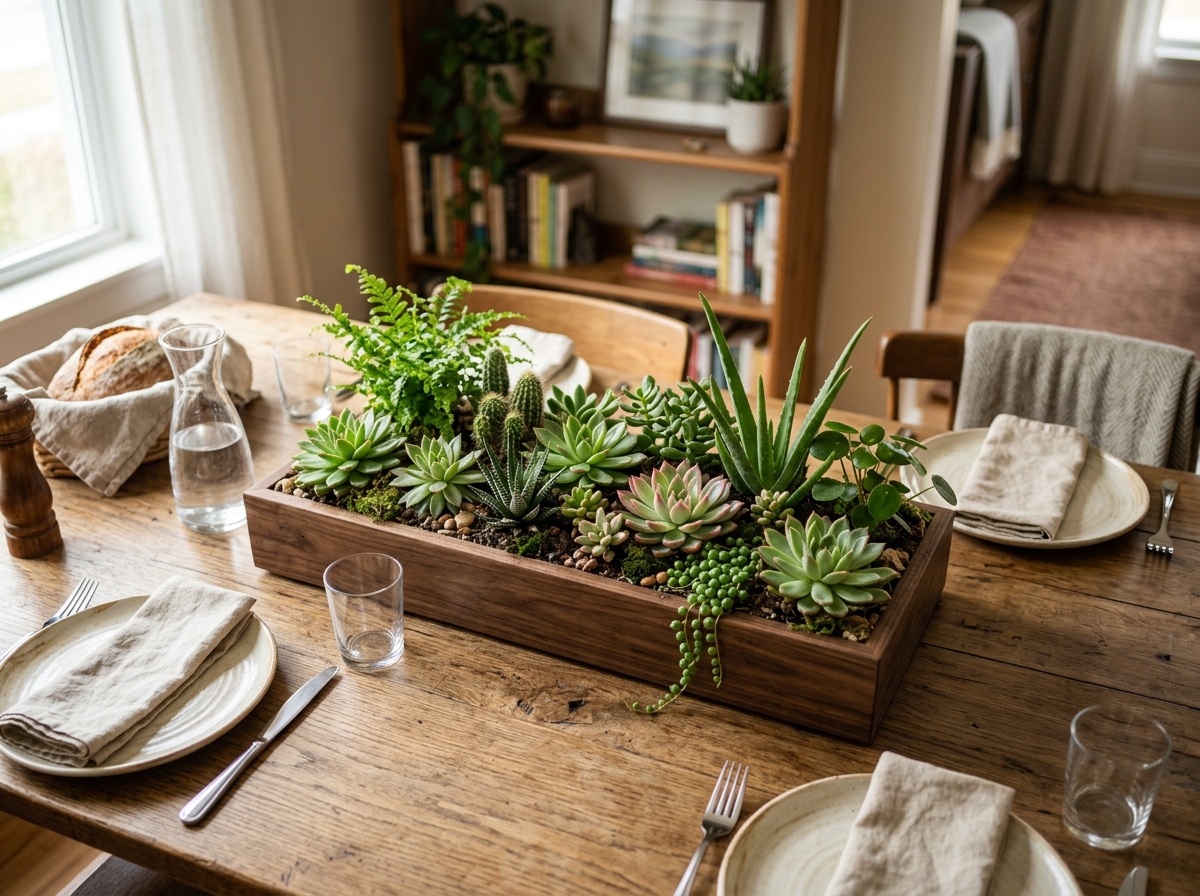
Choosing the Best Plants for Your Tabletop Display
Not every plant is a “table person.” Some grow too fast, some are too messy, and some just demand too much attention. For the best results, we look for petite varieties that pack a visual punch.
- Air Plants (Tillandsia): These are the ultimate “no-mess” option. They don’t need soil, absorbing moisture through their leaves instead. You can mount them on driftwood or nestle them in glass globes.
- Forced Bulbs: Miniature daffodils or grape hyacinths are perfect for bringing a scent of spring indoors. Pack them tightly for a lush, high-impact look.
- Caladiums: If you want color without the hassle of flowers, Heart to Heart caladiums offer stunning variegated leaves that look like hand-painted art.
- Herbs: A mini herb garden is both beautiful and functional. Imagine reaching out to snip fresh basil or mint right at the dinner table!
- Ornamental Peppers: For a splash of bright red or purple, these compact plants are tough and festive.
If you’re looking specifically for your workspace, check out these Easy Succulent Types for Office Desks to find varieties that handle fluorescent light and forgotten waterings. For those who want a more structured environment, our Step by Step Guide DIY Water Wise Succulent Terrarium will help you build a self-sustaining ecosystem.
Low-Maintenance Tabletop Planter Ideas for Beginners
If you’ve ever claimed to have a “black thumb,” don’t give up just yet. Tabletop gardening is the perfect way to practice. We recommend starting with what we call the “tough guys.”
Snake plants and pothos are nearly indestructible and adapt to almost any light level. If you prefer the desert look, Lemon Coral Sedum is a “pet-able” plant that kids love because of its soft texture, and it’s incredibly drought-resistant.
To ensure success, use the “finger test”: stick your finger about half an inch into the soil. If it feels dry and cool, it’s time to water. If it’s still damp, walk away! For a foolproof start, try one of these Easy DIY Succulent Terrarium for Beginners or follow our guide for Really Simple DIY Succulent Terrariums.
Seasonal and Event-Based Tabletop Planter Ideas
One of our favorite tabletop planter ideas is the “short-term” centerpiece. Think of this as a flower arrangement with roots. Because it only needs to look good for a weekend or a single event, you can pack the plants in much tighter than you would for a long-term display.
- Spring: Use mossy baskets filled with primroses and ivy.
- Autumn: Incorporate dried gourds, pine cones, and colorful fallen leaves around your planters.
- Winter: Red-flowering Kalanchoe paired with silver-toned succulents creates a festive, holiday feel.
If you are looking for a personalized touch, DIY Succulent Terrariums a Great Gift Idea are perfect for hosts. For winter months when the air is dry, learning How to Make a Closed DIY Succulent Terrarium can help keep humidity levels stable for your plants. You can find more inspiration in our list of Crafty and Creative DIY Succulent Terrarium Ideas.
DIY Tabletop Garden Projects and Creative Containers
The container is half the fun! At Opcion Rural, we love upcycling. Why buy a standard plastic pot when you can use a vintage bundt pan, a wooden crate, or even a glass teapot?
Wood and Glass Combos A popular project involves building a simple wooden frame to hold inexpensive square glass vases. This “long and low” design is perfect for harvest tables. If you’re handy with tools, pocket hole joinery is a great way to create strong, hidden joints for a sleek, modern look.
The “Table Inside” Concept One truly unique idea is the glass-top table garden. If you have a table with a recessed base and a removable glass top, you can create a literal “home ecosystem” inside the furniture. Layer sand, shells, and driftwood, then nestle in tillandsia or succulents. It’s a guaranteed conversation starter!
For more creative builds, check out how to Create a Statement Piece with a DIY Succulent Terrarium or explore Turning Glass Containers into DIY Succulent Terrariums. Whether you want something Stylish and Simple DIY Succulent Terrariums or a complex build, the possibilities are endless.
Practical Maintenance and Furniture Protection Tips
A beautiful planter isn’t so beautiful when it leaves a permanent water ring on your mahogany table. Protection is paramount.
Drainage and Moisture Barriers If your container doesn’t have drainage holes (like most glass vases or decorative crates), you must create a drainage layer. Use an inch or two of river rocks or gravel at the bottom. This gives excess water a place to sit so it doesn’t rot the roots. We detail this process in our guide on Building a Small Ecosystem DIY Succulent Terrarium.
To protect the table itself, use a saucer. For extra security, we like to tuck a small piece of plastic wrap or a cork pad under the saucer. This prevents both moisture and scratches.
Watering Wisdom For tight arrangements or terrariums, a watering can is often too messy. Use a turkey baster! It allows you to direct water exactly where it needs to go without splashing soil onto your table or the plant’s leaves.
Weight Reduction If you have a delicate antique table, a large ceramic pot filled with wet soil might be too heavy. A pro tip: fill the bottom third of the container with lightweight materials like Styrofoam packing peanuts before adding your soil and plants.
| Feature | Indoor Tabletop Care | Outdoor Tabletop Care |
|---|---|---|
| Light | Diffused or bright indirect | Part sun to full shade (watch for “magnified” heat) |
| Watering | Less frequent; check soil 1/2″ deep | Daily or every other day in summer heat |
| Pests | Watch for aphids or whiteflies | Watch for slugs or spider mites |
| Maintenance | Dust leaves regularly | Deadhead flowers to encourage new blooms |
Whether you want to Beautify Your Workspace with a DIY Succulent Terrarium or are Creating a Mini Desert DIY Succulent Terrarium, these maintenance tips will keep your greenery thriving.
Frequently Asked Questions about Tabletop Planters
How do I prevent my tabletop planter from damaging my furniture?
The best way is to use a “multi-layer” defense. Start with a glazed saucer that won’t “sweat” moisture. For added peace of mind, place a cork pad or a clear plastic liner underneath the saucer. If you are using a wooden crate, always use a thick plastic liner inside the wood to prevent rot and leaks.
What is the ideal height for a dining table centerpiece?
To maintain sightlines and conversation flow, aim for a “low-profile” design. The total height of the container and the plants combined should generally not exceed 12 inches. A good rule of thumb is the “chin-level rule”—if you have to crane your neck to see over the plant, it’s too tall!
Can I use outdoor plants for an indoor tabletop display?
Yes, but with caveats. Many “outdoor” tabletop plants like begonias or kalanchoes thrive indoors if they have enough light. However, you must acclimate them slowly. Indoor light is much less intense than sun, so place them in a spot with bright, diffused light. Conversely, be careful with glass-enclosed planters (like terrariums) near windows; the glass can act as a magnifying glass and scorch your plants.
Conclusion
At Opcion Rural, we believe that bringing a bit of the rural aesthetic into your home shouldn’t be complicated or expensive. Whether you are building a modern wooden trough or a delicate glass-top garden, these tabletop planter ideas are all about blending art, nature, and creativity.
By following basic design principles—like keeping your sightlines clear and protecting your furniture—you can create an accessible home ecosystem that brings joy to every meal and workday. Ready to start your next project? Explore our full library of DIY guides and succulent secrets at https://www.opcionrural.com/ and let’s grow something beautiful together!
