
The Easiest Way to Get a Lush Green Wall (No Watering Required)
A diy faux green wall lets you create a stunning, maintenance-free vertical garden using artificial plant panels — no soil, no sunlight, and no green thumb needed.
Here’s how to build one in 4 simple steps:
- Measure your wall and calculate how many panels you need
- Choose a backing — wood slats, MDF board, or cardboard for renters
- Attach your faux panels using staples, zip ties, or Command hooks
- Fluff the leaves at seams to hide gaps and create a natural look
Total time: 2–4 hours. Cost: $50–$200 depending on size. Skill level: beginner.
If you’ve ever wanted to fill your home with lush greenery but struggled with low light, travel schedules, or just a knack for killing plants — you’re not alone. Real living walls are beautiful, but they demand irrigation systems, regular pruning, and the right conditions to survive.
Faux green walls solve all of that. A well-built artificial greenery wall looks remarkably realistic, lasts 5–10+ years indoors, and costs a fraction of professional installations. One DIY project covering 90 square feet came in at around $620 total — significantly less than hiring a commercial installer.
The best part? Whether you’re working with a tiny apartment, a home office, or a backyard fence, there’s a version of this project that works for your space and your budget.
This guide covers everything: materials, step-by-step installation, renter-friendly methods, creative add-ons, and how to keep it looking fresh long-term.
Why Choose a DIY Faux Green Wall for Your Space?
When we think about home design, we often find ourselves torn between the beauty of nature and the reality of our busy schedules. A diy faux green wall bridges that gap perfectly. Unlike living walls, which can be heavy, temperamental, and prone to pests, artificial walls offer a “set it and forget it” solution that stays vibrant 365 days a year.
One of the most surprising benefits we’ve discovered is sound dampening. Because of the density of the foliage and the backing materials, these walls actually help quiet loud rooms by absorbing echoes. They are also a dream for allergy sufferers; you get the aesthetic of a jungle without the pollen or mold that can sometimes accompany damp soil.
Furthermore, faux walls are the ultimate low-light solution. If you have a windowless basement office or a dark hallway, a living wall would wither in days. An artificial installation thrives in total darkness, bringing a sense of life to the most “un-plantable” corners of your home.
Benefits of Artificial Over Living Walls
The primary reason we often lean toward faux is the lack of infrastructure needed. A true living wall requires a complex self watering system to keep plants from drying out. Without it, you’re looking at a daily chore of misting and monitoring.
Weight is another critical factor. A living wall filled with saturated soil and water can weigh hundreds of pounds, often requiring structural reinforcement of the wall itself. A diy faux green wall, by contrast, is lightweight and can be supported by standard drywall anchors or even simple thumbtacks. You get an instant impact without the fear of your wall collapsing or the need for zero sunlight or expensive UV grow lights.
Cost Analysis and Budgeting
Is it cheaper to do it yourself? Absolutely. Our research shows that a DIY artificial green wall panel (roughly 160cm × 52cm) can be built for about £90-120 in materials. This is 40-60% less expensive than commercial panels that can cost upwards of £200-350 for the same size.
| Project Scale | DIY Estimated Cost | Professional Install |
|---|---|---|
| Small Feature (Under 10 sq ft) | $50 – $100 | $300 – $500 |
| Medium Wall (20 – 40 sq ft) | $150 – $300 | $800 – $1,500 |
| Large Accent (90+ sq ft) | $600 – $800 | $2,500+ |
By sourcing your own Faux Boxwood Panels and handling the labor, you aren’t just saving money; you’re ensuring the quality of every leaf. The long-term value is incredible when you consider there are no ongoing costs for water, fertilizer, or replacement plants.
Essential Materials and Tools for Your DIY Faux Green Wall
Before we get our hands dirty (well, metaphorically dirty!), we need to gather our supplies. Having the right tools makes the difference between a project that takes two hours and one that takes all weekend.
The Essentials:
- Greenery Panels: These are the stars of the show. We recommend Faux Boxwood Panels for a classic, dense look.
- Measuring Tools: A reliable Tape Measure is non-negotiable for calculating your grid.
- Fasteners: Depending on your wall type, you’ll need a staple gun, green zip ties, or heavy-duty Thumb Tacks.
- Cutting Tools: Sharp Scissors or a box cutter to trim the plastic grid backing.
Choosing the Right Foliage Panels
Not all faux plants are created equal. For the most realistic look, look for PE (Polyethylene) material. PE panels have a “waxy” feel and a matte finish that mimics real leaves, unlike cheap silk or thin plastic that can look shiny and fake.
If you plan to install your wall near a window or outdoors, ensure the panels have a UV-rating. This prevents the vibrant greens from turning a sad, sickly blue-gray after a few months of sun exposure. We also love mixing textures—adding a few sprigs of faux fern or eucalyptus into a standard boxwood base adds depth and “organic” imperfection.
Selecting a Backing System
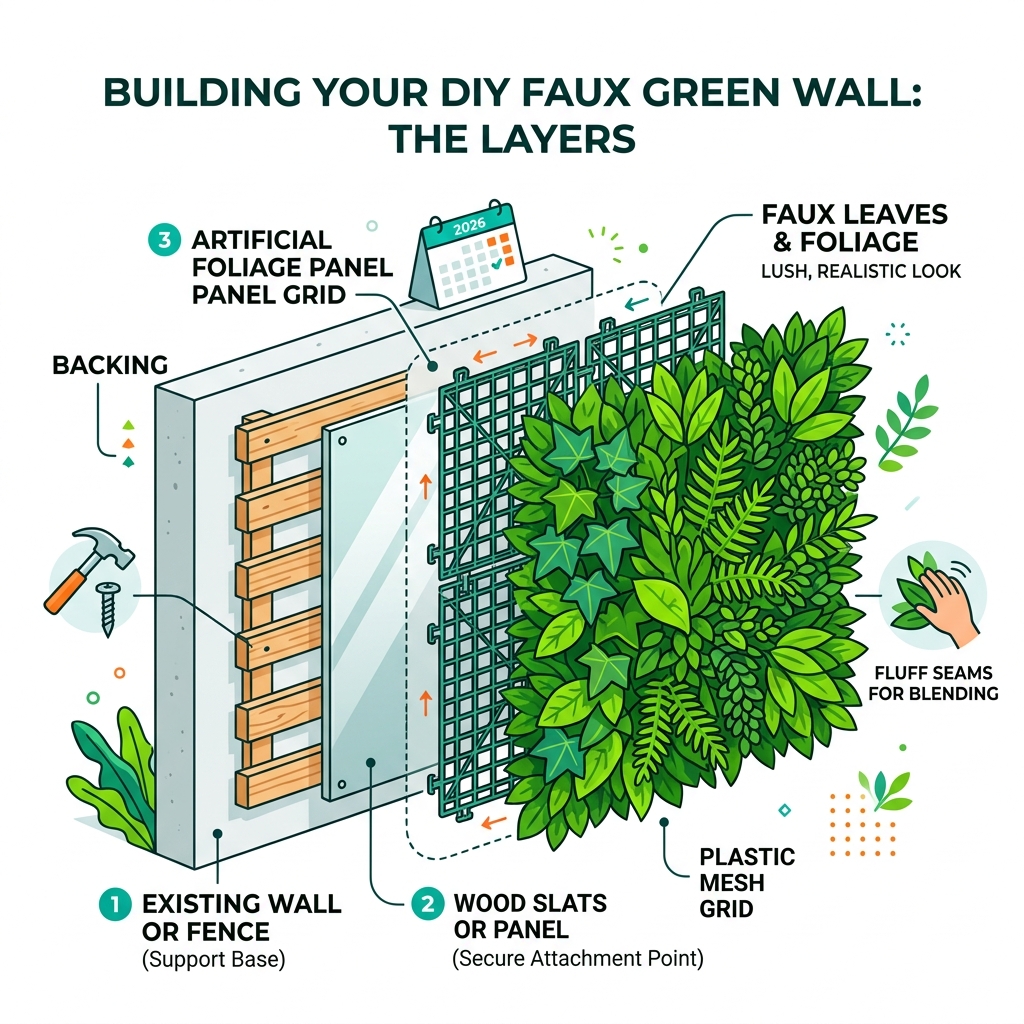
The “skeleton” of your wall depends on your living situation. For a permanent, high-end look, 1x2x8 Wood Slats can be used to create a frame that sits slightly off the wall. This is great for hiding wires if you plan to add lights.
Other options include:
- MDF Board: Provides a solid, flat surface that can be painted dark green or black before attaching plants.
- Hex Netting: Also known as chicken wire, this is a flexible and affordable way to attach individual stems.
- Insulation Foam: 1-inch thick pink insulation board is a secret weapon for DIYers. It’s lightweight and allows you to “plug” stems directly into the base.
- Check out our other Guides for home projects for more structural ideas.
Step-by-Step Guide: Building Your DIY Faux Green Wall
Ready to build? Let’s walk through the process of turning a blank wall into a botanical masterpiece.
Prepping the Wall and Frame
First, measure your space and use a Long Level to mark your boundaries. If you’re building a wooden frame, use a sanding block to smooth any rough edges on your slats.
Pro Tip: Paint the wall or the backing material a dark color (black or forest green) before you start. This creates an “optical illusion” of depth and ensures that if there are any tiny gaps between the leaves, you see a dark “shadow” instead of a bright white wall.
If you’re using a Nail Gun to secure your frame, ensure you’ve located the studs in your wall. For those needing to cut wood to specific lengths, always remember Miter Saw safety: wear goggles and keep your fingers clear of the blade path.
Assembling the diy faux green wall Panels
Most faux boxwood panels come with a built-in interlocking grid.
- Lay them out: Before going to the wall, snap your panels together on the floor to ensure the “grain” of the leaves is all facing the same direction.
- Secure the grid: Use green zip ties at the corners for extra security. This prevents the panels from sagging over time.
- Mounting: Start at the top corner. If you’re using a staple gun, fire a staple every 6 inches along the top edge.
- The “Floof”: This is our favorite part. After the panels are up, they might look a bit flat from being in a box. Use your fingers to comb through the leaves and pull them forward. This hides the seams and makes the wall look like one continuous unit.
Many designers find One Room Challenge inspiration by looking at how others have integrated these walls around TVs or as headboards.
Renter-Friendly and Budget Customization Tips
Living in an apartment shouldn’t stop you from having a jungle vibe. You can create a 15ft long diy faux green wall on a budget without losing your security deposit.
The secret is using a lightweight backing like cardboard or foam board. Instead of stapling into the drywall, use Thumb Tacks or Clear ones to secure the cardboard to the wall. The holes are so small they’re virtually invisible when you move out. For even less damage, use heavy-duty Command hooks to hang the panels like a series of pictures.
Creative diy faux green wall Add-ons
Once the base is up, it’s time to accessorize. This is where we at Opcion Rural love to see the “art” side of our USP shine.
- LED Strip Lights: Tuck these behind the frame for a “halo” effect.
- Mosaic Mirrors: Glue small mirror fragments among the leaves to reflect light and make the space feel larger.
- Mixed Succulents: Use hot glue to add pops of different colors.
- Neon Signs: A “Hello Gorgeous” or “Stay Wild” neon sign mounted on top of the greenery is the ultimate Instagram backdrop.
- Find more inspiration for Decorating with nature on our blog.
Using Unconventional Budget Materials
If you’re on a razor-thin budget, get creative at the dollar store. We’ve seen incredible results using:
- Dollar store mops: Dye the cotton heads green and unravel them to create “vines” or “moss.”
- Pool Noodles: Cut them in half and wrap them in green fabric to create 3D “mounds” of moss.
- Repurposed Silk Garlands: Cut individual leaves off old garlands to fill in any sparse areas of your wall.
Maintenance and Longevity: Keeping Your Wall Fresh
One of the best things about a diy faux green wall is that it doesn’t die, but it does collect dust. To keep it looking “freshly grown,” we recommend a quick cleaning routine every few months.
- The Light Dust: Use a feather duster or a microfiber cloth to gently go over the surface.
- The Deep Clean: For smooth-leaved plants like boxwood, a damp cloth can wipe away stubborn grime. Some DIYers even use a hair dryer on a “cool” setting to blow dust out of the tight crevices.
- UV Protection: If your wall is in a sunny spot, consider a quick spritz of UV-protection spray once a year to keep the greens from fading.
- Repair: If a stem comes loose, a simple dab of hot glue or a new zip tie will have it looking good as new in seconds.
Frequently Asked Questions about DIY Faux Green Walls
Can I install a faux green wall outdoors?
Yes! However, you must ensure your panels are UV-rated and made of PE material. Standard silk panels will fade and fall apart in the rain. Also, ensure your mounting system (like a wooden frame) is treated for outdoor use to prevent rot.
How do I make the seams between panels invisible?
The “floofing” technique is key. By pulling the leaves forward and overlapping them slightly at the edges where two panels meet, the grid disappears. Using a dark background paint also helps hide the “cracks” between panels.
Is a faux green wall safe for homes with pets?
Generally, yes. Unlike many real houseplants (like lilies or pothos) which can be toxic to cats and dogs, high-quality PE plastic is non-toxic. However, ensure the panels are secured tightly so curious pets can’t pull down stems and try to eat them.
Conclusion
At Opcion Rural, we believe that everyone deserves a home that feels like a sanctuary. A diy faux green wall is the perfect example of how we can blend art, nature, and creativity to build accessible home ecosystems. Whether you’re covering a massive office wall or just adding a touch of green behind your TV, the result is a space that feels calmer, quieter, and more alive.
You don’t need a professional landscaper or a massive budget to transform your space. With a few panels, a staple gun, and a little bit of “floofing,” you can create a vertical garden that stays lush and green for years to come.
Ready to bring your walls to life? Start your DIY journey at Opcion Rural and explore more ways to create a nature-inspired home that fits your lifestyle. Happy building!
