
Why a DIY Preserved Moss Wall Is the Easiest Way to Bring Nature Indoors
A diy preserved moss wall lets you add lush, natural greenery to any room — with zero watering, zero sunlight, and almost no upkeep. Here’s the quick answer:
How to make a DIY preserved moss wall:
- Choose a backing (wood frame, tray, or corrugated plastic sheet)
- Plan your moss layout before gluing anything down
- Apply hot glue or tacky glue to the backing in small sections
- Press preserved moss firmly into the glue, mixing types for texture
- Fill gaps, let dry completely, then hang on your wall
What you need:
- Preserved moss (reindeer, sheet, mood, or pole moss)
- A frame or backing board
- Hot glue gun or tacky glue
- Nitrile gloves (the dye stains your hands)
- Hanging hardware or Command strips
That’s really it. No drip systems. No grow lights. No misting schedule.
Blank walls are frustrating — especially in small spaces where live plants just don’t thrive. Preserved moss changes that. It looks alive, feels soft and textured, and can last 5 to 8 years or longer without any real maintenance.
The appeal is simple: you get the calming, natural look of a living wall without any of the work that comes with one. And because the moss has been treated to halt growth — typically using glycerin to replace its water content — it holds its color and texture indefinitely when kept out of direct sunlight.
DIY projects like this sit right at the intersection of art and nature. And the cost is surprisingly low: a small 2×2 ft panel runs roughly $50–$100 in materials, compared to hundreds more for a professionally installed piece.
Understanding Preserved Moss Walls
To truly master the diy preserved moss wall, we first need to understand what we are working with. Unlike a living wall, which requires soil, irrigation, and specific light levels, a preserved moss wall is essentially “botanical taxidermy.” The moss was once alive, but its biological processes have been paused.
The most common preservation method involves a glycerin-based solution. In this process, the natural water within the moss plant is replaced by vegetable glycerin. Sometimes methyl hydrate or denatured alcohol is used to aid the absorption. This replacement is vital because glycerin doesn’t evaporate like water, allowing the moss to remain soft, supple, and “fresh” to the touch for years.
According to scientific research on moss preservation, this treatment ensures the moss doesn’t wilt or decay. To maintain aesthetic appeal, natural food dyes are often added during preservation to keep the greens vibrant or to create a spectrum of colors like “autumn red” or “deep ocean blue.”
While living walls can last up to 25 years with professional care, they are prone to mold and pests indoors. Preserved moss offers a zero-growth alternative that is much safer for interior drywall. If you are curious about other ways to green your home, check out our guide on creating-a-plant-wall-that-will-make-your-neighbors-green-with-envy. For preserved walls, the only “environmental requirement” is keeping them indoors in a space with moderate humidity (ideally 40-60%) to prevent the moss from becoming brittle.
Essential Materials for Your DIY Preserved Moss Wall
Before we dive into the “how-to,” we need to gather our supplies. Building a diy preserved moss wall is as much about the foundation as it is about the greenery.
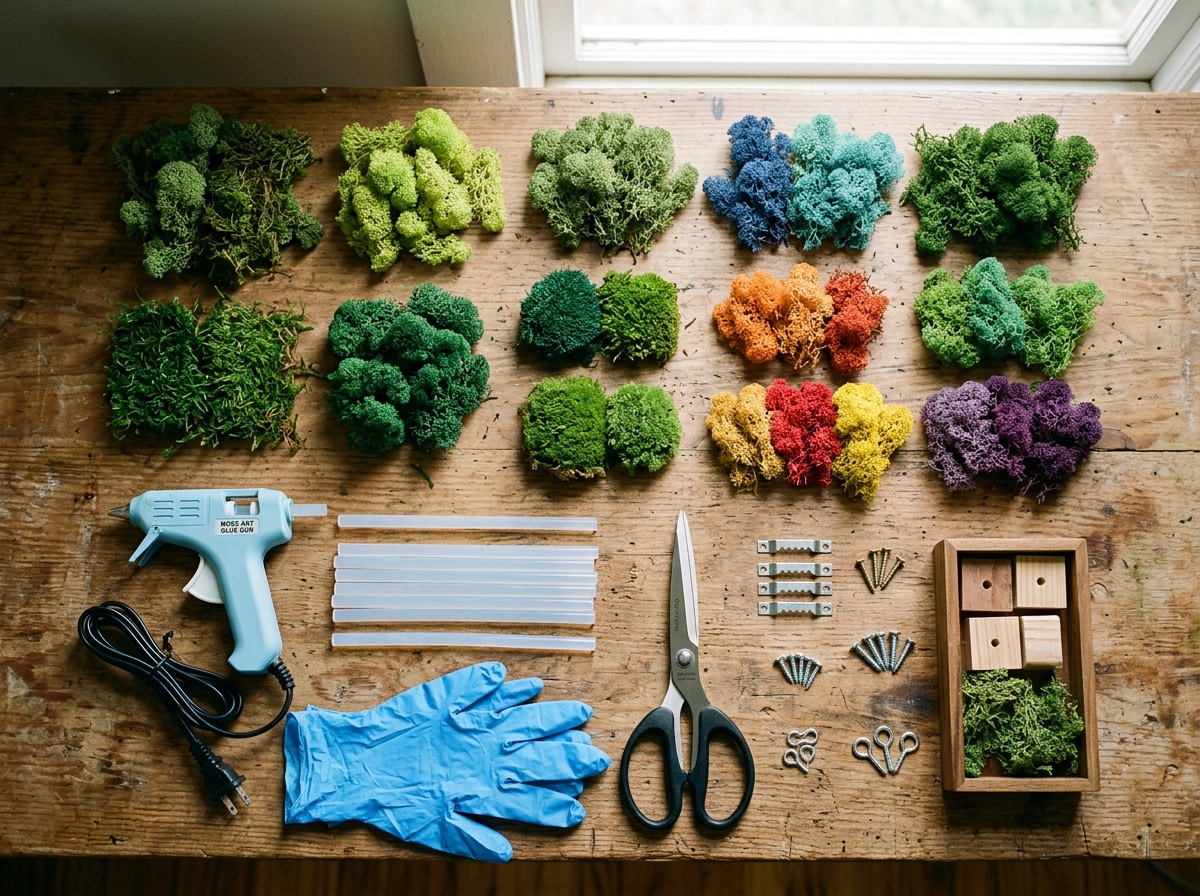
Here is your master shopping list:
- Protective Gear: Nitrile gloves are non-negotiable. Preserved moss is heavily dyed, and without gloves, you will look like Shrek by the end of the hour.
- Adhesives: A Hot glue gun and a bulk pack of Glue sticks are the industry standards for speed and reliability.
- Hardware: A Power drill for mounting and Silicone bumpers to protect your wall from scuffs.
- The Foundation: You can use Wood trays for a framed look or Corrugated plastic for a lightweight, frameless “floating” panel.
- Fillers: Neoprene foam is a pro-tip for building up the base of deep trays so you use less expensive moss.
Sourcing Moss for Your DIY Preserved Moss Wall
Not all moss is created equal. To get that professional, high-end look, we recommend mixing at least three different varieties to create depth and contrast.
- Reindeer moss: Technically a lichen, this is the fluffy, sponge-like moss that comes in every color imaginable. It’s great for filling gaps.
- Sheet moss: This acts as your “carpet.” It covers large areas quickly and provides a flat, natural background.
- Mood moss: Also known as Dicranum, this grows in thick, velvet-like clumps that add wonderful 3D “hills” to your design.
- Pole moss: These are premium, round cushions that look like little green boulders.
- Spanish moss: A trailing moss that adds a “wild” or “overgrown” feel to the edges of your frame.
If you are looking for specific shades or bulk quantities, you can Shop Preserved Moss on Etsy for artisanal varieties.
Adhesives for Your DIY Preserved Moss Wall
Choosing the right glue depends on your patience and the size of your project.
- Hot Glue: Best for beginners. It dries in seconds, which is great because you don’t have to wait to see if a piece will fall off.
- Liquid nails: Ideal for very large panels where you need a permanent, industrial-strength bond. It takes 24 hours to dry.
- Gorilla wood glue: Use this specifically if you are building or repairing the wooden frame itself.
- Superglue: Handy for tiny decorative details like attaching small pebbles or preserved leaves.
- Tacky Glue/Mod Podge: Excellent for “child-safe” projects where you want to avoid hot glue burns. Just be prepared for longer drying times—you’ll need to hold each piece for 15-20 seconds.
Step-by-Step Construction and Design
Now for the fun part! Building your diy preserved moss wall is a tactile, creative process. We suggest working in a well-ventilated area because preserved moss can have a strong earthy/chemical scent when first unpacked.
- Prep Your Workspace: Lay down old newspapers or a drop cloth.
- Frame Preparation: If you are using raw wood, sand the edges and apply your stain. We love a deep walnut stain to make the green moss pop. Let it dry overnight.
- Backing Attachment: If your frame doesn’t have a back, cut your corrugated plastic or plywood to size and secure it. Pro tip: Paint the backing dark green or black so that any tiny gaps in the moss won’t show through as white or brown.
- Cost Check: DIYing this costs about $8-$15 per square foot. A professional install can cost $75-$150 per square foot. You’re saving a fortune already!
Planning Your DIY Preserved Moss Wall Layout
Don’t start gluing yet! The biggest mistake beginners make is gluing as they go. Instead, “dry fit” your design.
- Start with Hardscape: Place Driftwood branches or large stones first. These are your anchors.
- Layer the Moss: Lay down your sheet moss as a base. Then, add your “hills” using mood or pole moss.
- Add Accents: Tuck in Faux air plants or preserved ferns.
- Color Groups: Instead of a random mix, try grouping similar colors together to create “flow” or an ombre effect. This mimics how plants grow in nature.
Assembly and Mounting Techniques
Once you are happy with the layout, take a photo with your phone. This is your reference map.
- The Gluing Sequence: Remove a section of moss, apply glue to the backing board (not the moss itself), and press the moss firmly back into place.
- Protect Your Fingers: Use Craft sticks or the end of a pen to press the moss into hot glue so you don’t get burned.
- Gap Filling: Once the main pieces are down, go back with small tufts of reindeer moss to fill every tiny hole.
- The Shake Test: After the glue has dried (about 30 minutes for hot glue), gently tilt the frame upright. If anything falls off, glue it back!
- Mounting: For small frames, Command strips work wonders. For large, heavy panels, we recommend French cleats or heavy-duty drywall anchors. Always add silicone bumpers to the bottom corners to allow air to circulate behind the frame.
Maintenance and Longevity
The beauty of a diy preserved moss wall is that it is essentially “set it and forget it.” However, “zero maintenance” doesn’t mean “zero care.”
A well-made moss wall can last 5 to 8 years before it starts to show its age. To ensure yours stays on the longer end of that spectrum, keep it out of direct sunlight. UV rays are the enemy of preserved plants; they will bleach the color and turn your vibrant green wall into a crunchy brown one in a matter of months.
Long-Term Care for Your DIY Preserved Moss Wall
- Dusting: Use an Anti-static duster or a hair dryer on the “cool/low” setting to gently blow off dust once or twice a year.
- No Water: Seriously, put the spray bottle down. Getting preserved moss wet will cause the glycerin to leak and the dyes to run, potentially staining your walls.
- Humidity: If your home is very dry (below 30% humidity), the moss might feel “crunchy.” Don’t panic. Simply run a humidifier in the room, and it will soften back up as it absorbs ambient moisture.
- Annual Checks: Once a year, give the moss a gentle “pet” to make sure no pieces are lifting. A quick dab of glue is all you need for a refresh.
Frequently Asked Questions about Moss Walls
How long does a preserved moss wall last?
With proper care (no sun, no water), your diy preserved moss wall will look great for 5 to 8 years. Over a decade, the glycerin may eventually dry out, but the piece will still look like “dried art” rather than a living plant.
Does preserved moss smell?
When you first open the box, it has a distinct “forest floor” scent mixed with a slight chemical smell from the dyes. This is completely normal! The smell usually dissipates within 24 to 48 hours once it is hanging in a ventilated room.
Can I put a moss wall in a bathroom?
This is a “maybe.” While the humidity from a shower can keep the moss soft, excessive steam or direct water splashes will ruin it. If your bathroom is large and well-ventilated, it’s fine. If it’s a tiny powder room that turns into a sauna, the dye might start “sweating” off the moss.
Conclusion
At Opcion Rural, we believe that everyone should have access to the calming power of nature, regardless of how much “green thumb” talent they possess. A diy preserved moss wall is the ultimate biophilic project — it bridges the gap between high-end interior design and accessible, sustainable crafting.
By building your own creative home ecosystem, you aren’t just decorating a wall; you’re creating a window into a maintenance-free forest. Whether you start with a tiny 5×7 frame or tackle a massive feature wall, the process is rewarding, tactile, and surprisingly easy.
Ready to bring the forest floor to your living room? Start your next project with Opcion Rural and explore more ways to blend art and nature in your home!
