
Why a DIY Garden Flower Wall Belongs in Your Space
A diy garden flower wall is one of the most rewarding nature-inspired projects you can tackle at home. It transforms a blank fence, bare wall, or empty corner into a lush, living-style focal point — without needing a large garden or a big budget.
Here’s how to make a DIY garden flower wall in 5 steps:
- Plan your design — choose a color theme, measure your space, and gather inspiration
- Build or choose a base — grid panels, foam board, chicken wire, or a wooden frame all work well
- Select your flowers — faux, fresh, dried, or sola wood; each has its own pros and cons
- Attach the blooms — use hot glue, zip ties, gaffer tape, or floral wire depending on your base
- Hang or anchor it — use heavy-duty hooks, velcro strips, or T-posts for outdoor stability
The results can be stunning. And the cost? Far less than you might think. A professionally made flower wall can run anywhere from $500 to over $10,000. A DIY version for a 4×6 ft wall can cost as little as $95–$165 using grid panels and artificial flowers — a fraction of the price.
Whether you want a backdrop for photos, a conversation piece for a party, or a permanent nature-inspired accent in a small living space, this project fits the bill. It takes roughly 3–5 hours for a basic 4×4 ft wall, and almost no special skills.

Planning Your DIY Garden Flower Wall
Before we start hammering nails or heating up glue guns, we need a solid plan. A diy garden flower wall is an extension of your personal style, and like any great art piece, it starts with a vision. We recommend starting with a mood board. Whether you use Pinterest or go old-school with magazine clippings, seeing your colors and textures together prevents a “floral hodgepodge” later on.
When choosing a design theme, consider the vibe of your space. Are you going for a romantic, “English Tea Garden” look with soft pinks and creams? Or perhaps a bold, tropical “Jungle Fever” aesthetic with vibrant greens and fiery oranges? If you’re feeling modern, a monochrome wall using different shades of a single color (like all-white roses, hydrangeas, and lilies) can look incredibly sophisticated.
Measurement is your next big step. We’ve seen many enthusiastic DIYers buy a mountain of flowers only to realize they’ve only covered half a wall. Measure the height and width of your intended area. A standard “statement” size is often 4×4 feet or 8×8 feet for events. If you’re building this for a garden fence, consider the height of the fence and how the wind might interact with a large vertical surface.
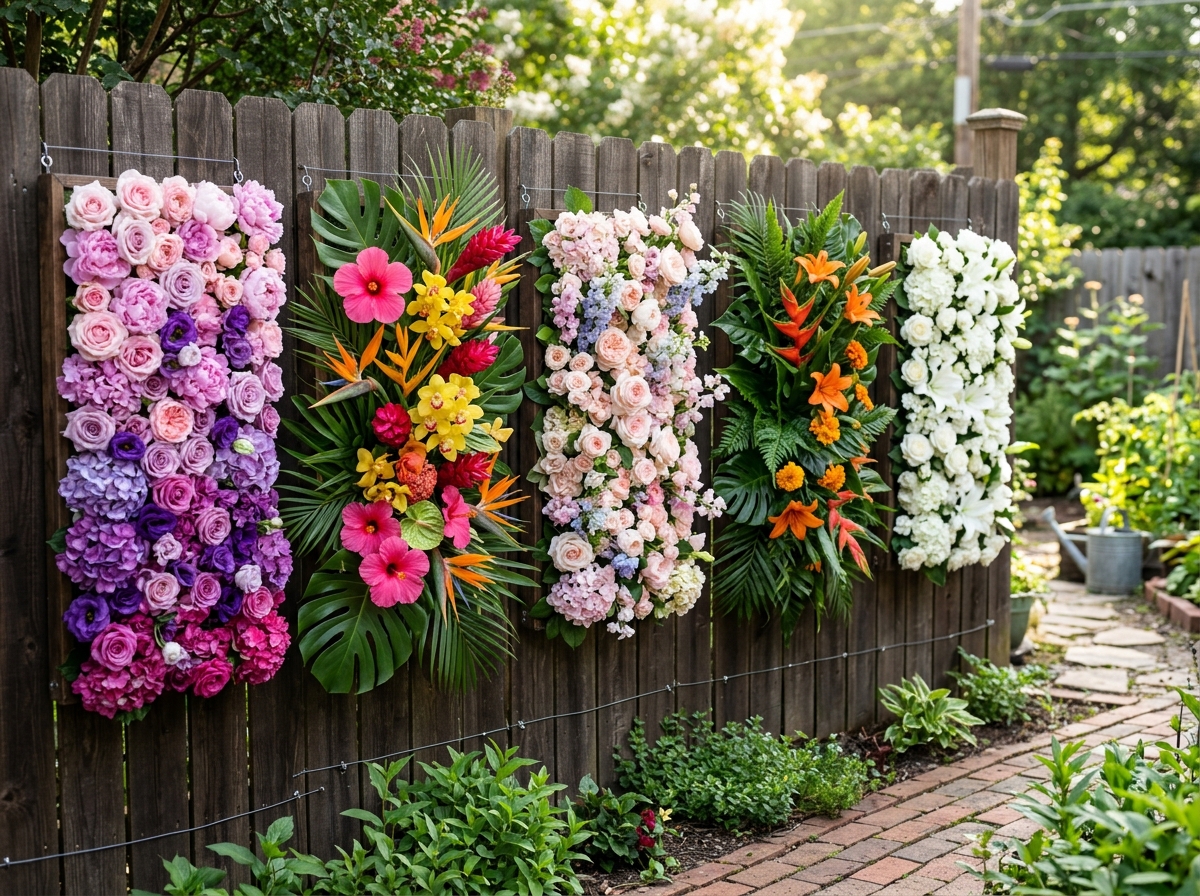
Essential Materials for a DIY Garden Flower Wall
To get that professional look, you need the right toolkit. While you can certainly “eyeball” it, having these essentials will save you hours of frustration.
- The Base: This is the skeleton of your wall. Common choices include metal grid panels (great for airflow and easy attachment), foam boards (perfect for lightweight indoor walls), or custom wooden frames.
- Cutting Tools: You’ll need floral/pruning shears for trimming stems and wire cutters if you’re using artificial blooms with wire centers.
- Adhesives: For foam boards, a high-temp hot glue gun is your best friend. For grid panels, small zip ties are much more secure. For temporary indoor installations on white walls, we suggest using white Gaffer tape because it’s strong but won’t leave a sticky residue or peel your paint.
- Safety Gear: Don’t forget gloves! Working with wire mesh or chicken wire can lead to some nasty scratches.
Choosing Between Real and Faux Flowers
This is the “to be or not to be” of the floral world. Your choice depends entirely on how long you want the wall to last and your budget.
Fresh Flowers are unparalleled for scent and natural beauty. However, they are finicky. They typically last only 24–48 hours without a water source. If you go this route, you’ll need to use floral foam or “water tubes” for each stem, which adds weight and complexity.
Faux Flowers (Silk/Polyester) are the gold standard for DIYers. They are reusable, weather-resistant, and come in every color imaginable. You can buy them in bulk or as pre-made “flower wall tiles” (which usually start around $15 each).
Sola Wood Flowers are a fantastic middle ground. These are made from the marshmallow-like pith of the sola plant. They are eco-friendly, sustainable, and can be dyed any color you like. In fact, over 50 million sola wood flowers were sold last year to people looking for long-lasting, natural-feeling alternatives.
| Feature | Fresh Flowers | Faux (Silk) Flowers | Sola Wood Flowers |
|---|---|---|---|
| Cost | High ($200-$500+) | Moderate ($50-$150) | Moderate ($60-$120) |
| Longevity | 1-7 days | Years | Years |
| Maintenance | High (misting/water) | Low (dusting) | Low (fragile) |
| Realism | Perfect | Varies | Artistic/Natural |
| Eco-Friendly | Yes | No (Plastic) | Yes (Sustainable) |
Step-by-Step Construction and Assembly
Now for the fun part! Building your diy garden flower wall is like putting together a giant, beautiful puzzle. We always recommend starting by clearing a large floor space where you can lay your base flat. It’s much easier to arrange flowers on the ground than it is to fight gravity while the wall is standing.
If you’re using a wooden frame, we suggest stapling chicken wire across the front. This creates a “mesh” that allows you to poke stems through and secure them. For a more professional touch, you can even fill the space between the chicken wire and the backboard with natural “filler” like dried vines or moss. This gives the wall depth and means you need fewer expensive flowers to make it look “full.”
Before you start gluing or tying, lay out your flowers. Group them by color and size. This “dry run” ensures you don’t end up with a huge cluster of roses in one corner and nothing but baby’s breath in the other. If you’re looking for more creative ways to bring nature indoors, check out our guide on how to create-a-statement-piece-with-a-diy-succulent-terrarium.
Building a Sturdy Base for Your DIY Garden Flower Wall
Stability is everything, especially for an outdoor diy garden flower wall. A gust of wind can turn a beautiful floral backdrop into a very expensive kite if it’s not anchored correctly.
For a free-standing 8×8 foot wall, we recommend using two 4’x8′ plywood sheets (3/8″ thick). You’ll want to brace these with 2×4 lumber. Build a “feet” system—basically two long boards extending forward and backward from the base—to prevent tipping.
If you’re installing the wall permanently in a garden, you can use a fence post driver to sink heavy-duty T-posts into the ground. You can then zip-tie your flower panels directly to these posts. This is the most secure method for windy areas. Always test the stability by giving the frame a firm (but careful) shove from both sides before you start adding the weight of the flowers.
Attaching and Layering the Blooms
The secret to a “pop” is depth. If you just slap flowers flat against a board, it looks like floral wallpaper. We want a 3D effect.
- Trim the stems: Leave about 2–3 inches of stem. This gives you enough “handle” to secure the flower but not so much that it pokes out the back.
- The “Big Guys” First: Start with your largest blooms (like peonies or large roses). Space them out evenly across the wall. These are your focal points.
- Layering: Angle the flowers slightly. Instead of pointing them all straight forward, have some look up, some down, and some to the sides. This mimics how flowers grow in nature.
- Fill the Gaps: Use “filler” flowers like baby’s breath, lavender, or thistle. This is where you can save money—filler is much cheaper than focal flowers.
- Greenery is Key: Don’t forget the leaves! Eucalyptus, ivy, or ferns tucked between the flowers add a “garden” feel and hide any visible bits of your base or zip ties.
Adding greenery is a great way to beautify-your-workspace-with-a-diy-succulent-terrarium or any other floral project you have going on.
Budget-Friendly Customization and Design Ideas
We believe that a beautiful home shouldn’t require a second mortgage. You can create a stunning diy garden flower wall on a budget by being a bit “scrappy” with your sourcing.
- Repurpose Existing Items: Do you have an old garden trellis or a wooden pallet? These make excellent ready-made bases. Just clean them up, maybe give them a coat of green paint, and start attaching your blooms.
- The “Dollar Store” Strategy: While high-end silk flowers are beautiful, budget-friendly stores often have decent greenery and filler. Use the expensive “real-touch” flowers for the focal points and the cheaper ones for the background.
- Seasonal Swaps: If you use a grid panel and zip ties, you can easily “harvest” your flowers at the end of a season. Use bright sunflowers and daisies for a summer wall, then swap them for deep reds, oranges, and dried pampas grass for a fall-themed masterpiece.
- Go Minimalist: You don’t always need a “solid” wall. A “string” flower wall—where individual blooms are tied to fishing line and hung from a rustic branch—is incredibly elegant and uses about 80% fewer flowers.
For more low-cost inspiration, take a look at our really-simple-diy-succulent-terrariums which follow the same “nature on a budget” philosophy.
Installation, Stability, and Maintenance
Once your masterpiece is assembled, you need to keep it looking fresh. For indoor faux walls, maintenance is as simple as a light dusting or using a hair dryer on a “cool” setting to blow away debris.
For an outdoor diy garden flower wall, weatherproofing is vital. If you’re using faux flowers, we recommend spraying them with a UV-resistant clear coat. This prevents the sun from bleaching your vibrant pinks into sad, dusty greys within a month. If your wall is in a rainy area, ensure your base is made of treated wood or metal to prevent rot.
Anchoring is your final step. For indoor walls, heavy-duty Command strips or Velcro strips can work for foam-based walls. For heavier grid panels, we suggest using wall anchors and “J-hooks.” If you’re building a “small ecosystem” at home, stability and proper placement are the foundations of success, much like building-a-small-ecosystem-diy-succulent-terrarium.
Frequently Asked Questions about Flower Walls
We get a lot of questions about these blooming beauties. Here are the top three things people want to know.
How long does a DIY flower wall last?
A faux flower wall can last for years if kept indoors and away from direct sunlight. For outdoor walls, expect about 1–3 seasons depending on the quality of the UV protection and the intensity of the weather. A fresh flower wall, unfortunately, is a “shooting star”—it will look glorious for about 24–48 hours before it starts to wilt.
Can I use real flowers for an outdoor wall?
Yes, but it’s a labor of love! You’ll need to use a “living wall” system or “vertical garden” planters that hold soil and water. If you’re just “taping” or “tying” cut flowers to a fence, they will dry out very quickly in the wind and sun. For a one-day event like a wedding, it’s beautiful. For permanent decor, stick to faux or potted plants.
How do I prevent the wall from tipping over in the wind?
Weight and anchoring are your best friends. For free-standing walls, place sandbags or cinder blocks over the “feet” of the frame. For walls attached to fences or buildings, use heavy-duty zip ties or “U-bolts.” If you can, leave small gaps in your floral arrangement to allow some wind to pass through—this reduces the “sail effect.”
Conclusion
Creating a diy garden flower wall is more than just a decor project; it’s an act of creative empowerment. It’s about taking a blank, uninspired space and breathing life (and color!) into it. Whether you’re building a massive 8-foot backdrop for a milestone birthday or a small, framed floral accent for your home office, the process is therapeutic and the results are undeniably “wow.”
At Opcion Rural, we love projects that blend the rugged beauty of rural living with the refined touch of artistic design. We hope this guide inspires you to get your hands a little dirty and your home a lot more colorful. Once you’ve mastered the flower wall, why not keep the momentum going? More info about our creative projects can be found throughout our site, from terrariums to sustainable garden builds. Happy crafting!
