
Turn Any Bare Wall Into a Living Garden
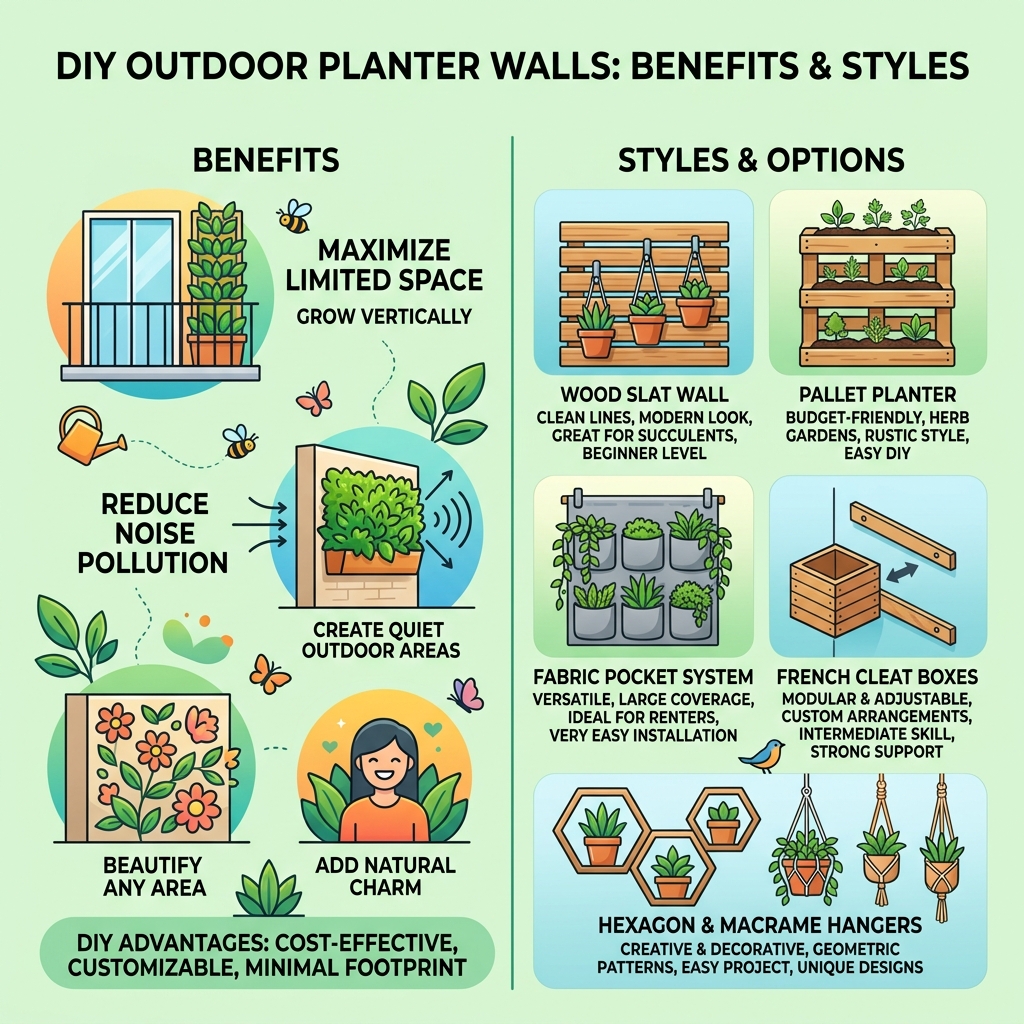
A diy outdoor planter wall lets you grow plants vertically — on fences, house walls, or freestanding frames — without needing floor space. Here’s a quick overview of your main options:
| Style | Best For | Difficulty | Approx. Cost |
|---|---|---|---|
| Wood slat wall with hooks | Curb appeal, succulents | Beginner | $20–$80 |
| Pallet planter | Budget builds, herbs | Beginner | Free–$15 |
| Fabric pocket system | Renters, large coverage | Very easy | $30–$60 |
| French cleat box wall | Modular, customizable | Intermediate | $50–$150 |
| Hexagon/macrame hangers | Decorative, creative | Easy | $20–$50 |
Whether you have a tiny balcony or a plain cinderblock fence staring back at you from your window, a vertical planter wall solves a real problem: not enough space for the greenery you want.
The good news? Some of these builds cost under $20 and take less than an hour to put together. Others are weekend projects that can completely transform an outdoor area.
This guide covers everything — from simple pallet hacks to geometric hexagon designs and macrame hangers — so you can find the right build for your space, skill level, and style.
Why Build a DIY Outdoor Planter Wall?

At Opcion Rural, we believe that blending nature with creative design is the ultimate way to elevate your home ecosystem. Building a diy outdoor planter wall isn’t just about aesthetics; it’s a functional upgrade for your lifestyle.
First, consider the property value and curb appeal. A well-executed vertical garden can turn a drab, stained cinderblock wall into a Pinterest-worthy focal point. If you’re looking out your front window at a boring fence, changing that view can significantly boost your daily mood. Research shows that vertical gardens with removable boxes have garnered over 14,000 social media shares, proving just how much people value these creative transformations.
Beyond looks, there’s the environmental and health impact. Plants act as natural air filters and can even help dampen noise in urban environments. For those of us with limited backyard real estate, going vertical is the only way to enjoy a full herb garden or a collection of succulents without sacrificing patio space for your grill or seating. It’s also a fantastic way to create a privacy screen from neighbors, using lush greenery instead of a cold, hard fence.
Essential Materials and Tools for Your DIY Outdoor Planter Wall
Before we start sawdust-making, we need to gather our supplies. Depending on the complexity of your project, your list might vary, but for a sturdy wood slat wall, these are the essentials.
- Wood: Cedar is our top choice for its natural resistance to rot and insects. Pressure-treated pine is a more budget-friendly alternative that also stands up well to the elements.
- Miter Saw: Essential for making clean, square cuts on your slats and frame.
- Impact Driver: This will make driving long exterior screws into tough wood a breeze.
- Kreg pocket-hole jig: This is a “hidden weapon” for beginners. It allows you to join boards with hidden screws, creating a professional look without advanced joinery skills.
- Wood glue: Always use an exterior-grade glue to reinforce your joints.
- Nail gun: Great for tacking trim or thinner slats in place while the glue dries.
Selecting the Right Wood and Finish
When choosing your lumber, look for the straightest boards possible. A quick tip from the pros: lift one end of the board and look down the edge like a telescope to check for bowing or warping. Redwood and cedar are the gold standards for outdoor durability.
For the finish, you have two main paths: staining or painting. Staining allows the natural grain of the wood to shine through, but it requires regular re-application. Painting, specifically using a black spray paint, provides a modern, high-contrast look that makes green plants “pop.” If you’re tackling a large slatted wall, we highly recommend using a paint sprayer. It gets into all those pesky crevices between slats much faster than a brush ever could.
Budget Tips for Your DIY Outdoor Planter Wall
You don’t need to drop a fortune to get a great result. Some of the most popular hanging wood wall planters can be built for under $20 using basic pine and a bit of rope.
- Pallet Repurposing: You can often find pallets for free in industrial areas. With a bit of sanding and a whitewash finish, they make excellent rustic herb gardens.
- Terracotta Pots: These are incredibly affordable (often just a dollar or two for 6-inch sizes) and provide excellent drainage.
- Bulk Soil and Amendments: Instead of buying tiny bags of specialty soil, buy a large bag of potting mix and a bag of perlite to mix your own high-drainage succulent soil.
Step-by-Step: Building a Modern Wood Slat Planter Wall
Ready to build? Let’s walk through a classic slat wall design. This is versatile because you can hang almost anything on it once it’s mounted.
- Visualize: Use blue painter’s tape to map out the dimensions on your wall. This helps you ensure the planter is the right scale for your space before you cut a single board.
- Measure and Cut: For a standard 6-foot wall, cut your vertical supports (usually 2x4s) and your horizontal slats (1x4s or 2x6s depending on the look you want).
- Frame Assembly: Lay your vertical supports on a flat surface. Use your Kreg screws to attach the top and bottom boards, ensuring the frame is perfectly square.
Step-by-Step Assembly of a DIY Outdoor Planter Wall
Once your frame is ready, it’s time to add the slats.
- Spacing: Use a small scrap of wood (about 1/4 inch or 1 inch depending on your preference) as a spacer between each slat. This ensures a perfectly even gap all the way up.
- Joinery: Apply wood glue to the ends of the slats and secure them to the vertical supports using your impact driver and exterior screws. For extra heavy-duty walls, add small triangle braces in the corners to prevent the frame from racking.
- Finishing: Sand the entire structure from 80-grit up to 150-grit. This is especially important if the wood has “burn” marks from the saw, as these marks will show through your stain or paint. Use a Wagner paint sprayer to apply an exterior-grade primer followed by your choice of paint or stain.
Installing Hanging Hardware and Pots
Now for the fun part: adding the plants!
- Planter pot hooks: These are brilliant. They screw directly into your wood slats and can hold standard 6-inch terracotta pots. Some heavy-duty versions can hold up to 50 lbs each!
- French Cleats: If you want removable wooden boxes, a French cleat system is the way to go. You cut a board at a 45-degree angle; one half goes on the wall, the other on the back of the box. They lock together with gravity.
- Rope Hanging: For a more rustic look, drill holes in the top of your frame and use thick rope to hang the entire structure from a heavy-duty masonry hook.
Creative Variations: From Pallets to Hexagons
If a standard slat wall feels too “square,” let’s look at some creative variations.
- Hexagon Planters: These geometric beauties are essentially small six-sided frames. They look stunning when grouped together in a honeycomb pattern on a wall.
- Macrame Hangers: You can integrate macrame by hanging hooks from your wood slats. This adds a soft, bohemian texture to the hard lines of the wood.
- Fabric Pocket Systems: These are perfect for covering large areas quickly. A typical 11-foot wall can be covered using three 5-pocket fabric units, holding about 2 cubic feet of soil. They are lightweight and great for leafy greens.
- Chalkboard Herb Walls: Paint the front of your planter boxes with chalkboard paint so you can label your basil, mint, and cilantro.
Choosing Plants for Your Vertical Garden
Not every plant loves living on a wall. Since wall planters hold less soil than the ground, they can dry out faster.
- Mini succulents: These are the champions of vertical gardening. They are drought-tolerant and have shallow root systems. Use a cactus soil mix to keep them happy.
- Culinary Herbs: Mint, oregano, and thyme do well, but remember they will need more frequent watering than succulents—sometimes daily in the heat of summer.
- Cascading Vines: Creeping Jenny or Vinca vine look beautiful spilling over the edges of your pots, softening the look of the wood.
Installation and Maintenance for Vertical Gardens
Installing a heavy wood structure requires care. If you are mounting to a brick or cinderblock wall, you’ll need masonry bits and barrel anchors. Drill your holes, tap in the anchors, and then drive your screws through the wood into the anchors. For a less permanent solution, some DIYers use high-strength landscape adhesive to attach vertical runners to a wall, though we recommend mechanical fasteners for anything holding heavy soil.
For more inspiration on making your outdoor space the talk of the town, check out our guide on creating-a-plant-wall-that-will-make-your-neighbors-green-with-envy.
Ensuring Proper Drainage and Soil Health
The number one killer of wall plants is poor drainage.
- Drainage Holes: Always ensure your pots or boxes have holes.
- The Layering Trick: Place a succulent rock mixture at the bottom of your pots before adding soil. This prevents the drainage holes from getting clogged with dirt.
- Liners: For pallet gardens or wooden boxes, use coconut coir liners or landscape fabric to keep the soil in place while letting water escape. You can even forage for moss in the woods to line wire baskets for a natural, rustic look.
Troubleshooting and Long-Term Care
A diy outdoor planter wall is a living thing, and it needs a little TLC.
- Sagging and Warping: If your slats start to sag, you likely need a center vertical support. Use pressure-treated lumber to minimize warping over time.
- Plant Failure: If plants are dying, check the sun exposure. A wall that gets “blasting” afternoon sun might be too hot for ferns but perfect for succulents.
- Safety First: A soil-filled planter wall is heavy! Always get a second pair of hands to help with the mounting process, and ensure your wall (whether it’s a fence or brick) is structurally sound enough to hold the weight.
Frequently Asked Questions about DIY Outdoor Planter Walls
What is the best wood for an outdoor planter wall?
Cedar and Redwood are the best choices because they contain natural oils that resist rot and insects. Pressure-treated pine is a great budget alternative, provided it is sealed or painted to prevent the treatment chemicals from leaching excessively.
How do you attach a planter wall to a cinder block or brick surface?
You must use a masonry drill bit to create holes in the block or mortar. Insert plastic or metal anchors (like barrel anchors) into these holes. You can then screw your wooden frame directly into these anchors for a secure, permanent hold.
How often should you water plants in a vertical wall planter?
Because vertical planters have less soil volume and are often exposed to more wind, they dry out quickly. Succulents usually need water once a week, while herbs and flowers may need a drink every day during the peak of summer.
Conclusion
At Opcion Rural, we love projects that bring a bit of the countryside’s soul into any home, no matter how small the yard. Building a diy outdoor planter wall is a rewarding way to practice your woodworking skills while creating a lush, living environment. From the modern lines of a black slat wall to the creative whimsy of macrame hangers, the possibilities are as endless as your imagination.
Ready to start your next build? More info about our DIY projects can be found on our main page, where we dive deep into everything from terrariums to rural living hacks. Stop pinning and start doing—your wall is waiting for its makeover!
