
Why a DIY Green Wall Indoor Project Is Worth Every Penny
A diy green wall indoor is a vertical arrangement of plants mounted directly on a wall — and it’s one of the most rewarding projects you can tackle in a small living space.
Here’s how to build one fast:
- Choose your method — pallet, pocket system, pegboard, or magnetic pots
- Pick your wall — needs good light, a sturdy surface, and waterproof backing
- Select your plants — pothos, ferns, and air plants are beginner-friendly
- Mount your system — frame, pockets, or hooks depending on your method
- Set up watering — manual misting or a simple drip system
- Add grow lights if natural light is limited
The idea is simple: instead of spreading plants across your floor, you grow up. It turns a bare wall into a living, breathing focal point.
And the benefits go beyond looks. NASA research found that indoor plants absorb harmful pollutants like VOCs — the kind released by paints, cleaning products, and printers. Studies also show that being around greenery reduces stress and lifts your mood.
The best part? You don’t need a huge budget. A basic faux greenery version can cost as little as $50, while a full living wall with irrigation typically runs $100 to $1,000 depending on size and complexity. Most projects take just one weekend to complete.
Whether you’re a renter with a single spare wall or a homeowner ready to go floor-to-ceiling, there’s a version of this project that fits your space, skills, and budget.
Planning Your DIY Green Wall Indoor Project
Before we start hammering nails into the drywall, we need a solid plan. A diy green wall indoor isn’t just “art”—it’s a living ecosystem. If we don’t consider the logistics, we might end up with a soggy wall or unhappy plants.
Wall Load-Bearing Capacity
Plants are light, but wet soil and wooden frames are not. A medium-sized wooden plant oasis (around 66 inches wide) can be quite heavy. We must ensure the wall can handle the weight. We always recommend finding the studs in your wall and using heavy-duty anchors. If you’re building a larger installation, you might even need to secure the frame to at least two studs using angle brackets to prevent any “timber!” moments in the middle of the night.
Natural Light Assessment
Most tropical plants used in living walls need at least 150 foot-candles of light to survive. We should observe our chosen wall throughout the day. Does it get bright, indirect sunlight? Perfect. Does it feel like a dungeon? We’ll need to plan for supplemental lighting. Avoid placing your green wall in spots with harsh, direct afternoon sun, as this can burn delicate leaves, or in drafty areas near air conditioners.
The Science of Greenery
Why are we doing this? Beyond the “Instagram factor,” there is real scientific research on the stress-relieving benefits of plants. Being near nature lowers our cortisol levels and improves productivity. It’s why so many modern offices are installing these “living lungs.”
Proximity to Electrical Outlets and Water
If we plan on using a self-watering pump or grow lights, we need an outlet nearby. We also need to think about a water-resistant backing. Whether it’s a pond liner, a plastic sheet, or specialized waterproof paint, protecting your home’s structure from moisture is non-negotiable.
Natural Sunlight vs. LED Grow Lights
| Feature | Natural Sunlight | LED Grow Lights |
|---|---|---|
| Cost | Free! | $20 – $150+ |
| Consistency | Changes with seasons/weather | 100% consistent |
| Placement | Restricted to windows | Anywhere in the house |
| Heat | Can be high in summer | Generally low/cool |
| Control | None | Can be automated with timers |
Choosing the Best Plants for a DIY Green Wall Indoor
Not every plant is a vertical athlete. For a successful diy green wall indoor, we want “team players”—plants that enjoy similar humidity and light levels.
- Pothos (Epipremnum aureum): Often called the “King of Green Walls,” it’s nearly unkillable, purifies the air, and trails beautifully.
- Heartleaf Philodendron: Similar to pothos but with elegant, heart-shaped leaves.
- Succulents: These are great for smaller, frame-style walls. If you have a sunny spot, check out these succulent varieties for small apartments that thrive in vertical setups.
- Bird’s Nest Fern: Adds a lush, tropical texture.
- Peace Lily: Great for lower-light areas and excellent at filtering toxins.
We prefer plants with shallow root systems for vertical gardens. They adapt better to small pockets or containers and don’t require deep soil to stay healthy.
Creating a Damage-Free DIY Green Wall Indoor for Renters
We know the struggle: you want the jungle vibes, but your landlord wants the security deposit. You can still have a green wall!
- Command Hooks & Wire Grids: Lightweight pots can be hung from wire grids attached to the wall with heavy-duty adhesive hooks.
- Freestanding Wooden Ladders: Lean an old ladder against the wall and use S-hooks to hang mini succulents for indoor gardening.
- Tension Rods: If you have a recessed wall or a window nook, a tension rod can hold several hanging planters.
- Portable Living Frames: These are self-contained units that hang like a heavy picture frame. They often have built-in reservoirs that hold up to four weeks of water, making them easy to move when your lease is up.
Popular DIY Methods and Materials
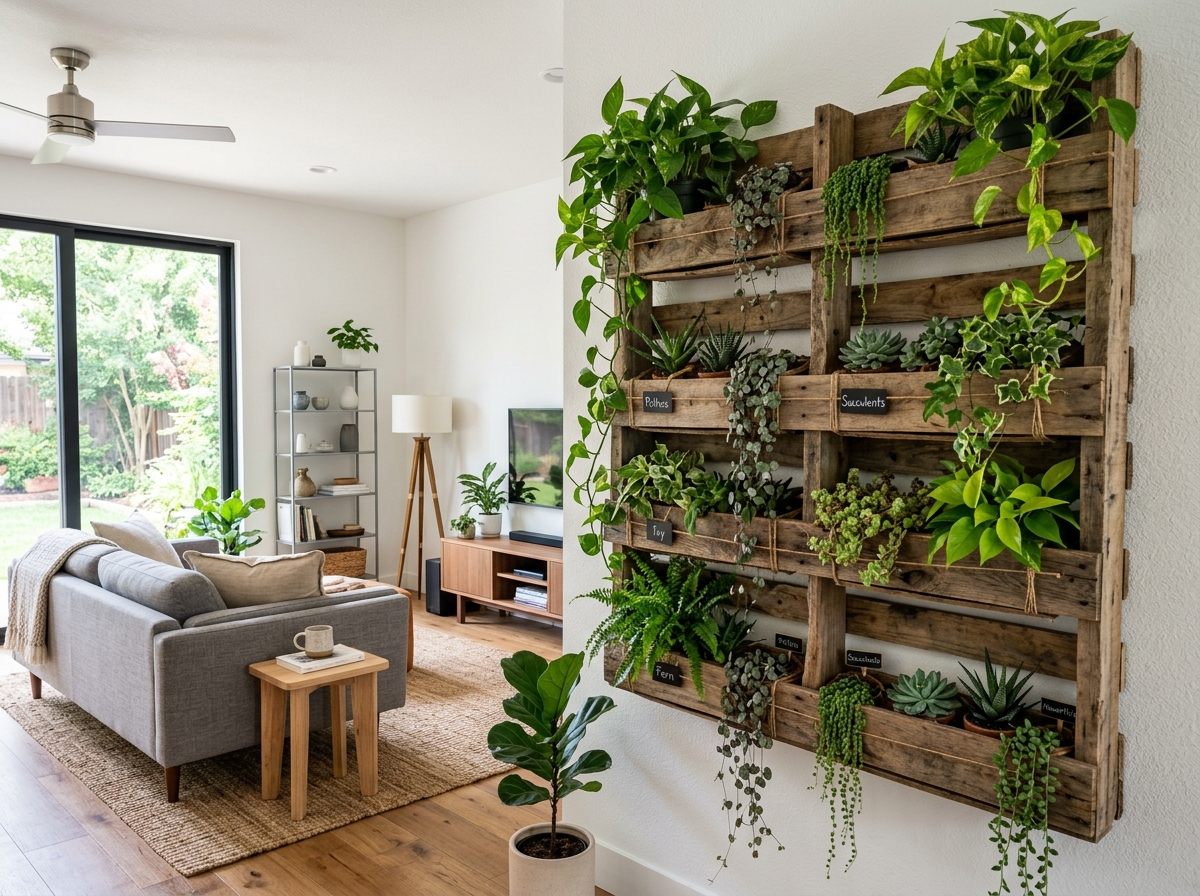
There are many ways to skin a… well, let’s say “to plant a wall.” Here are the methods we love most:
- Upcycled Wooden Pallets: The classic DIY choice. We staple landscape fabric to the back and bottom of the pallet to create “pockets” for the soil. It’s rustic, affordable, and looks incredibly lush once the plants fill in.
- Felt Pocket Systems: These are flexible “shoe organizer” style sheets made of breathable felt. They allow roots to breathe and are very easy to mount.
- PVC Pipe Planters: For a modern, industrial look, half-cut PVC pipes can be mounted horizontally to create long “gutters” for plants.
- Magnetic Pot Systems: Perfect for the kitchen! These use magnetic boards and pots to create a modular herb garden on your backsplash or fridge.
- Geometric Wall Planters: These are individual “vessels” that you can arrange in patterns. They are great for a “deconstructed” green wall look.
Essential Tools for Assembly
Before you head to the hardware store, make sure you have these in your kit:
- Tape measure
- Level (a long level is best for straight lines)
- Drill and screwdriver
- Staple gun (essential for pallets and felt)
- Sharp scissors or a utility knife
- Sanding block (if working with wood)
- Waterproofing material (pond liner or plastic sheeting)
Low-Maintenance and Faux Alternatives
If you’re worried about your “black thumb,” or if you have a windowless hallway, don’t worry. We have options.
Preserved Moss Art: This is real moss that has been treated with glycerin to keep it soft and green without needing water or light. It’s essentially “zero maintenance” and looks stunning in geometric frames.
Faux Greenery Panels: High-quality UV-rated polyethylene (PE) panels are the way to go. They have a realistic, waxy feel and won’t fade. These are great for dampening sound in home offices. According to Certified Green Roof Professional standards, integrating greenery—even faux—can improve the biophilic quality of a space.
Silk Foliage: While softer than PE, silk is best for areas with no direct sun, as it can fade. To keep these looking real, we suggest “fluffing” the leaves at the seams and mixing in a few real trailing plants at the edges to trick the eye.
Step-by-Step Guide to Building a Simple Living Wall
Ready to get your hands dirty? Let’s build a basic framed living wall.
Step 1: Measuring and Marking
Choose your wall and mark the dimensions. Use a laser level if you have one to ensure your frame will be perfectly straight. Remember to leave space for growth at the top!
Step 2: Frame Construction
Build a simple box frame using 1×2 or 1×4 cedar or treated pine. Cedar is excellent because it naturally resists rot. If you’re using cheaper wood, make sure to seal it with a non-toxic, waterproof stain.
Step 3: Waterproofing
This is the most important step. Line the back of your frame with a heavy-duty pond liner or 3-mil plastic. Staple it securely to the inside of the frame. This prevents moisture from seeping into your drywall and causing mold.
Step 4: Mounting the Planting System
You can buy pre-made plastic “cassettes” or use felt pockets. If you’re going full DIY, you can create a grid of wire or wood cleats to hold individual pots. If you find paper instructions confusing, you can watch our helpful video to guide you through the assembly process from start to finish.
Step 5: Soil and Planting
We recommend using a soil-less growing medium like coco coir mixed with perlite, or a high-quality peat-free compost. These are lighter and retain moisture better than standard garden soil. Tilt your frame slightly back while planting to keep everything in place.
Irrigation and Long-Term Plant Care
A diy green wall indoor needs consistent hydration. Because the soil volume is small, it can dry out faster than a traditional pot.
Watering Systems
- Drip Irrigation Kits: For larger walls, a small pump and tubing system can automate the process. You can even use a battery-operated timer.
- Integrated Reservoirs: Some DIY systems use a “passive wicking” method where a reservoir at the bottom or top slowly feeds water to the plants via fabric strips.
- Manual Misting: If you have air plants or moss, a simple spray bottle is your best friend.
Professional Standards
Following Fitwel standards for indoor environments can help you create a space that truly promotes health. This includes ensuring your plants aren’t overwatered (which leads to mold) and that they receive enough light to actually perform air purification.
Fertilizing and Pruning
Indoor plants need “food.” We suggest a half-strength liquid fertilizer once a month during the growing season. Also, don’t be afraid to prune! Trimming back long vines encourages the plant to grow “bushier,” which helps cover any gaps in your wall. If you’re just starting out, learning the basics with an easy DIY succulent terrarium for beginners is a great way to practice your plant care skills before scaling up to a full wall.
Frequently Asked Questions about Indoor Green Walls
How much does a DIY indoor green wall cost?
The cost varies wildly based on your ambition. A simple faux greenery wall using panels can cost between $50 and $200. A living wall with a wooden frame and manual watering usually falls in the $100 to $300 range. If you want a large, self-watering system with custom lighting, expect to pay $600 to $1,200. Compared to professional installations that can cost thousands, DIY is a massive bargain!
Do indoor living walls attract bugs?
They can, but only if they are poorly maintained. Overwatering is the main culprit, as it attracts fungus gnats. To prevent pests:
- Use sterilized, high-quality potting mix.
- Treat your plants with a diluted neem oil solution once a month.
- Ensure proper drainage so water doesn’t sit and stagnate.
- If you see a few “hitchhikers,” use insecticidal soap immediately.
What are common mistakes to avoid?
- Inadequate Lighting: This is the #1 reason green walls fail. Plants will “reach” for the light and become leggy and thin.
- Poor Waterproofing: Never skip the backing. A ruined wall is much more expensive than a roll of plastic liner.
- Crowding Plants: It’s tempting to pack them in for an “instant” look, but plants need room to breathe and grow. Leave a few inches between them.
- Ignoring the Weight: Always use wall anchors or mount directly into studs.
Conclusion
At Opcion Rural, we believe that everyone should have access to a “slice of paradise,” no matter how small their home is. Building a diy green wall indoor is more than just a home improvement project; it’s a way to bring sustainable living and art into your daily routine.
From the air-purifying benefits of a lush Pothos wall to the zen-like calm of a preserved moss frame, these vertical gardens transform our homes into creative ecosystems. Whether you start with a single magnetic pot or a floor-to-ceiling masterpiece, the journey to a greener home is incredibly rewarding.
Ready to get started? Start your green journey today and explore more of our guides on creative home projects. Happy planting!
