
Transform Any Space With a DIY Hanging Flower Wall
A diy hanging flower wall is one of the easiest and most affordable ways to add a bold, nature-inspired statement to any room or event space. You can build a beautiful one in just 1-2 hours for around $20.
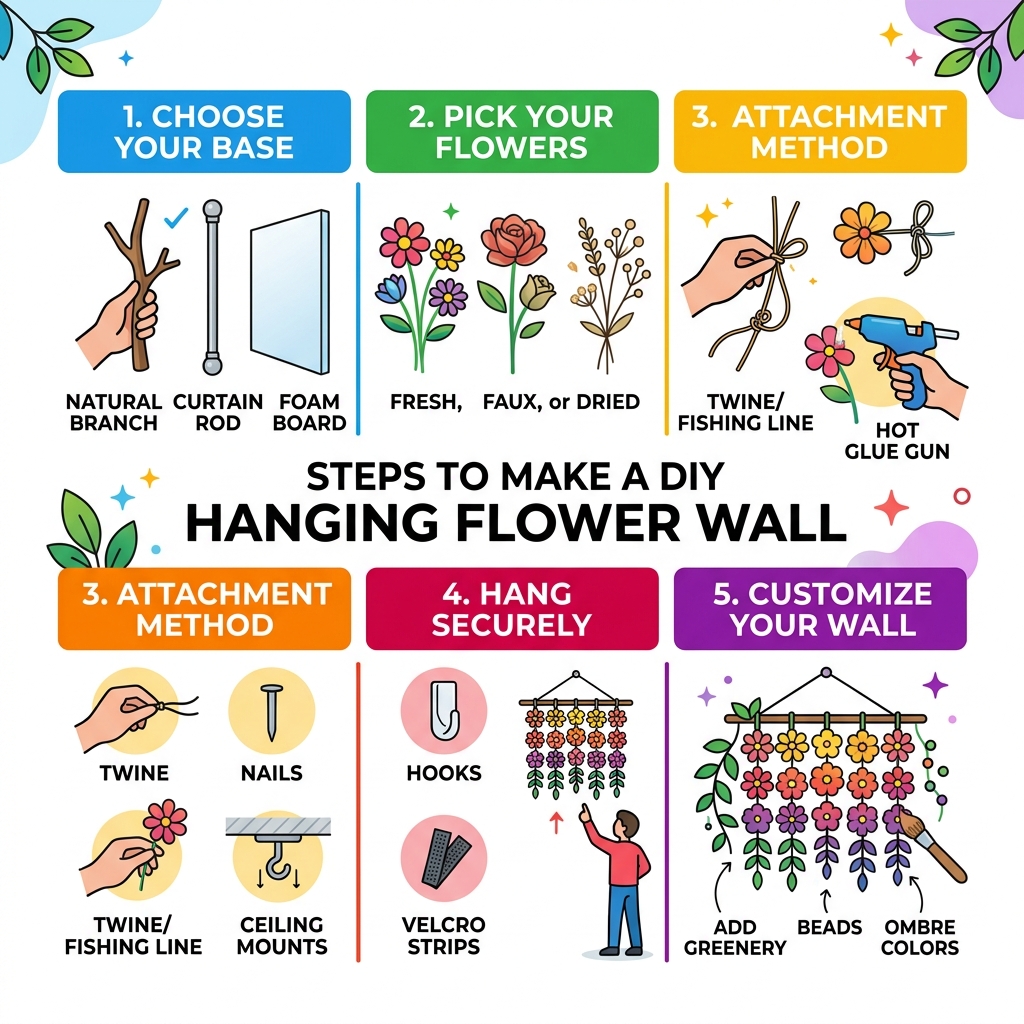
Here’s a quick overview of how to make one:
- Choose your base – a natural branch, curtain rod, or foam board
- Pick your flowers – fresh, faux, or dried all work well
- Attach blooms to strings or the base – using twine, fishing line, or hot glue
- Hang it securely – with hooks, nails, velcro strips, or ceiling mounts
- Customize – add greenery, beads, or ombre color effects
Whether you’re decorating a bedroom accent wall, setting up a wedding backdrop, or creating a boho photo booth, a hanging flower wall fits almost any occasion and style.
The best part? You don’t need advanced craft skills. If you can tie a knot and use a hot glue gun, you can make one.
Real flowers give the most natural look but last only about a week. Faux or dried flowers are low-maintenance and can last for years – a great choice if you want something permanent without the upkeep.
Why the DIY Hanging Flower Wall is the Ultimate Decor Trend
At Opcion Rural, we love projects that blend art with the natural world, and few things capture that “home ecosystem” vibe better than a diy hanging flower wall. This trend has exploded in popularity because it strikes the perfect balance between high-end aesthetics and DIY accessibility.
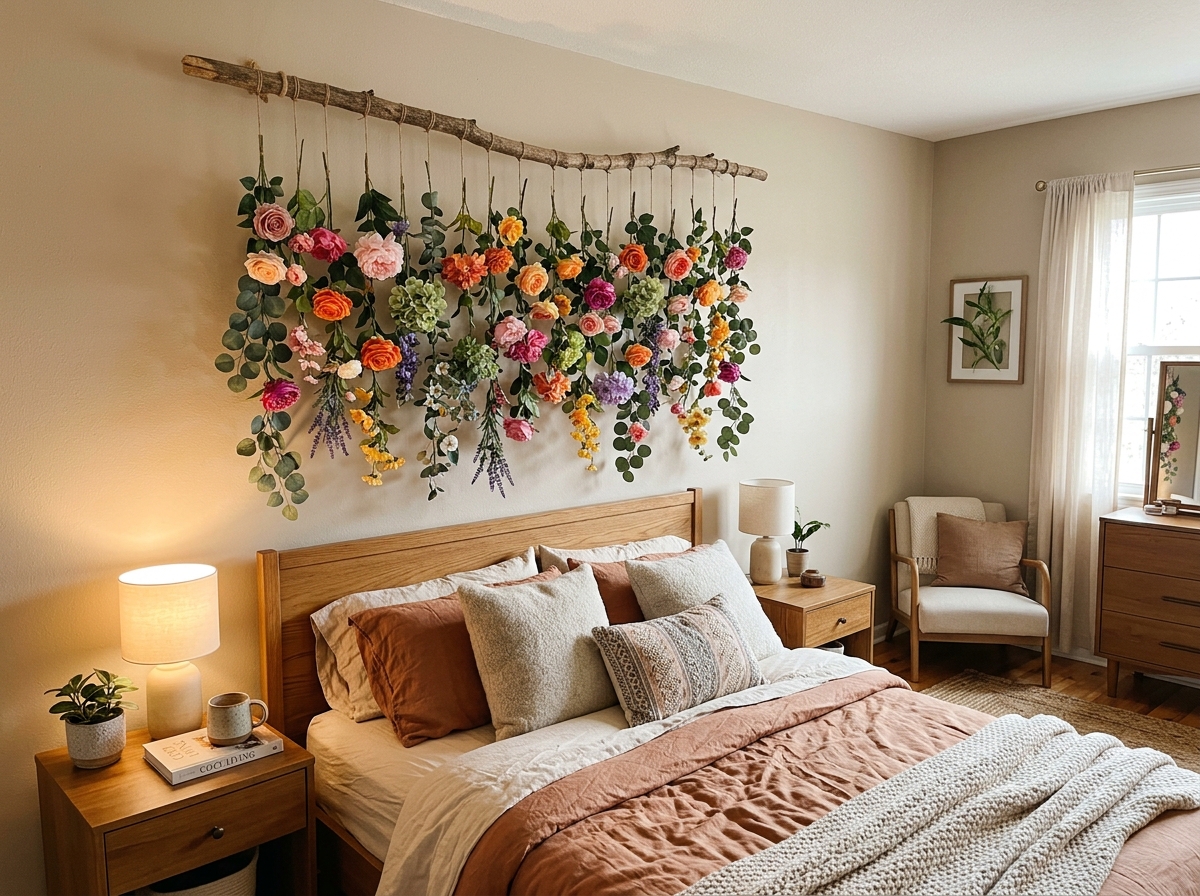
Whether you are aiming for a whimsical boho style in a nursery or a sophisticated wedding backdrop for a sweetheart table, the hanging flower wall is incredibly versatile. It acts as a three-dimensional piece of art that adds texture, color, and warmth to a space in a way a flat print simply cannot.
For many of us, it’s the ultimate budget-friendly solution for event decor. Instead of spending hundreds on professional floral installations, we can create a stunning photo booth or Zoom background for the price of a few bunches of blooms and some twine. It’s also a fantastic way to bring the outdoors in, creating a serene, garden-like atmosphere in a bedroom or living room.
Essential Materials and Tools for Your diy hanging flower wall
Before we dive into the assembly, let’s get our “tool belt” ready. Depending on whether you want a rustic look or a modern, floating effect, your materials will vary slightly.
Base Options Comparison
| Base Type | Aesthetic | Best For |
|---|---|---|
| Natural Branch | Rustic, Boho, Organic | Home decor, whimsical weddings |
| Curtain/Dowel Rod | Clean, Modern, Structured | Modern interiors, nurseries |
| Foam Board | Hidden base, Lush, Full | Heavy floral “curtains,” permanent walls |
The Toolkit
To ensure your project goes smoothly, we recommend having these items on hand:
- Cutting Tools: High-quality floral/pruning shears are essential for clean cuts on stems.
- Adhesives: A hot glue gun is your best friend for faux flowers. For attaching flowers directly to a white wall, Gaffer tape is preferred as it’s less visible and easier on paint.
- Lines: Use fishing line for a “floating” look or twine/jute for a rustic feel.
- Hardware: Screw eye hooks for ceiling mounts or velcro strips for foam board attachments.
Choosing the Perfect Blooms: Real, Faux, or Dried?
The soul of your diy hanging flower wall lies in the flowers you choose. Each type has its own set of pros and cons.
Faux Flowers
If you want a permanent installation, faux flowers are the way to go. Modern artificial botanicals look incredibly realistic and won’t wilt or attract bugs. We often suggest mixing different textures to give the wall more depth.
Real Flowers
Fresh blooms offer an unmatched fragrance and vibrancy. However, keep in mind they typically last about a week. If you’re using real flowers, choose “hardy” varieties that can survive out of water for several hours, such as:
- Carnations: Affordable and very resilient.
- Peonies: Lush and dramatic, perfect for focal points.
- Dahlias: Bold colors and sturdy stems.
- Baby’s Breath: The perfect “filler” that actually looks great as it dries.
Dried Flowers
Dried flowers are a wonderful middle ground. They offer a vintage, romantic aesthetic and can last for months. You can even dry your own flowers using methods like air-drying upside down or using silica sand for faster results.
For more inspiration on incorporating nature into your home, check out our guide on creative plant projects.
Step-by-Step Guide to Assembling Your Project
Now for the fun part! Creating a diy hanging flower wall is a rhythmic, almost meditative process. Put on your favorite podcast and let’s get building.
Step 1: Preparing Your diy hanging flower wall Base
First, measure the space where you intend to hang your masterpiece. If you are using a natural branch, look for one that is roughly 24 to 36 inches long and has a bit of character. If you prefer a more “invisible” look, cut a piece of foam board to your desired dimensions.
For those using a foam board, we recommend drilling two small holes near the top corners and supergluing metal eyelets into them. This prevents the hanging wire from ripping through the foam later. If you’re going for a greenery-heavy look, you might want to see our tips on hanging greenery.
Step 2: Attaching Blooms to Your diy hanging flower wall
There are several ways to get those flowers hanging:
- The Fishing Line Method: Use a needle to thread fishing line through the base of the flower (the calyx). To stop the flower from sliding down, use a small crimp tube or tie a double knot directly under the bloom.
- The Twine/Jute Method: Tie the stems of the flowers directly to the twine. This works beautifully for a “flower curtain” look.
- The Hot Glue Method: If you are using foam board, you can simply snip the stems to about an inch and push them into the foam, securing them with a dab of hot glue.
- The Taping Method: For a temporary wall display, use gaffer tape to stick individual stems directly to the wall. To prevent drooping, tape the stem as close to the flower head as possible.
Pro Tip: For a professional look, try an ombre effect. Start with your darkest blooms at the top (or one side) and gradually transition to lighter shades.
Creative Customization and Styling Tips
Don’t be afraid to make this project uniquely yours! We’ve seen some incredible variations that go beyond just flowers:
- Gold Leaf: Apply a bit of gold leaf to the edges of your petals or leaves for a touch of elegance.
- Wooden Beads: Thread large wooden beads onto your twine between flowers to add a boho-chic texture.
- Greenery Accents: Use eucalyptus or ivy to fill in gaps and add a lush, “secret garden” feel.
- Freestanding Versions: If you can’t hang anything from the walls or ceiling (common at event venues), you can build an 8’x8′ freestanding plywood stand. It requires a bit more lumber and some basic power tools, but it provides a massive, stable backdrop for photos.
Common Mistakes and Maintenance Tips
To keep your diy hanging flower wall looking fresh (or to keep your faux one from falling down), keep these tips in mind:
- Prevent Drooping: If using real flowers, they will eventually lose their “perk.” Taping or tying them closer to the bloom helps them stay upright longer.
- Hydration: For real flowers, hydrate them in a bucket of water for 24 hours before you start building. Once they are hung, a light misting with water can help, but avoid soaking them.
- Secure Anchoring: If your wall is heavy (especially foam board versions with many flowers), ensure you are using sturdy hooks or even finding a stud in the wall.
- Avoid Sunlight: Direct sunlight will cause real flowers to wilt faster and can cause faux flowers to fade over time.
- Storage: If you’ve made a faux flower wall for seasonal use, store it in a large, flat box or hang it in a closet with a garment bag over it to prevent dust buildup.
Frequently Asked Questions about Flower Walls
How much does a DIY flower wall typically cost?
On average, a basic diy hanging flower wall costs about $20. You can save money by using foraged branches for the base and sourcing flowers from thrift stores or the “clearance” section of craft stores. If you use real flowers, sticking to seasonal blooms from a local market is the most cost-effective route.
How long do real flowers last in a hanging display?
Real flowers usually have a one-week lifespan once they are removed from water and hung. To extend this, you can choose flowers that naturally dry well, like lavender or baby’s breath. If you want to preserve a sentimental bouquet, consider using silica sand to dry the blooms before hanging them.
Can I make a freestanding version for events?
Yes! For large events, a freestanding 8-foot by 8-foot backdrop is popular. This usually involves two 4’x8′ pieces of plywood and a frame made of 2×4 lumber. While it’s a bigger project than a simple hanging branch, it’s a great way to create a dedicated photo zone without needing to attach anything to the venue’s walls.
Conclusion
At Opcion Rural, we believe that creating a beautiful home doesn’t have to be expensive or complicated. A diy hanging flower wall is a testament to that—it’s a simple project that yields a massive visual reward. By blending a bit of nature with your own creative flair, you can transform a plain room into a vibrant, living ecosystem.
Whether you’re celebrating a milestone or just want to brighten up your daily view, we hope this guide inspires you to pick up some shears and start blooming!
