
Why a Beginner Succulent Ecosystem Setup Is the Easiest Way to Bring Nature Indoors
A beginner succulent ecosystem setup is a layered, open-container garden that mimics the dry, rocky conditions succulents naturally thrive in — and it takes less than an hour to build.
Here’s what you need to get started:
- A clear, open glass container (bowl, jar, or vase)
- Drainage layer — 1-2 inches of gravel or small pebbles
- Activated charcoal — a thin layer to filter water and prevent odor
- Sphagnum moss — acts as a barrier between gravel and soil
- Cactus/succulent potting mix — 2+ inches deep
- 2-5 small succulents — compact varieties like Echeveria or Zebra plant
- Decorative stones or sand — optional top dressing
Basic care rules:
- Water only when soil is completely dry (roughly every 1-2 weeks)
- Place in bright, indirect light for at least 6 hours a day
- Never use a closed lid — succulents need airflow and low humidity
There is something deeply satisfying about a tiny desert world sitting on your windowsill. Succulents have thick, fleshy leaves that store water, which means they evolved to survive on neglect — making them ideal for busy people who still want living greenery in their homes.
Unlike closed terrariums (which trap humidity for tropical moss and ferns), a succulent ecosystem stays open. That airflow is essential. Without it, moisture builds up, roots rot, and the whole setup fails quickly.
The good news? When done right, a succulent terrarium is practically self-sustaining. Succulents can go 2-4 weeks without water, and a well-built setup can look great for a year or two before needing a refresh.
Think of it as living art that almost takes care of itself.
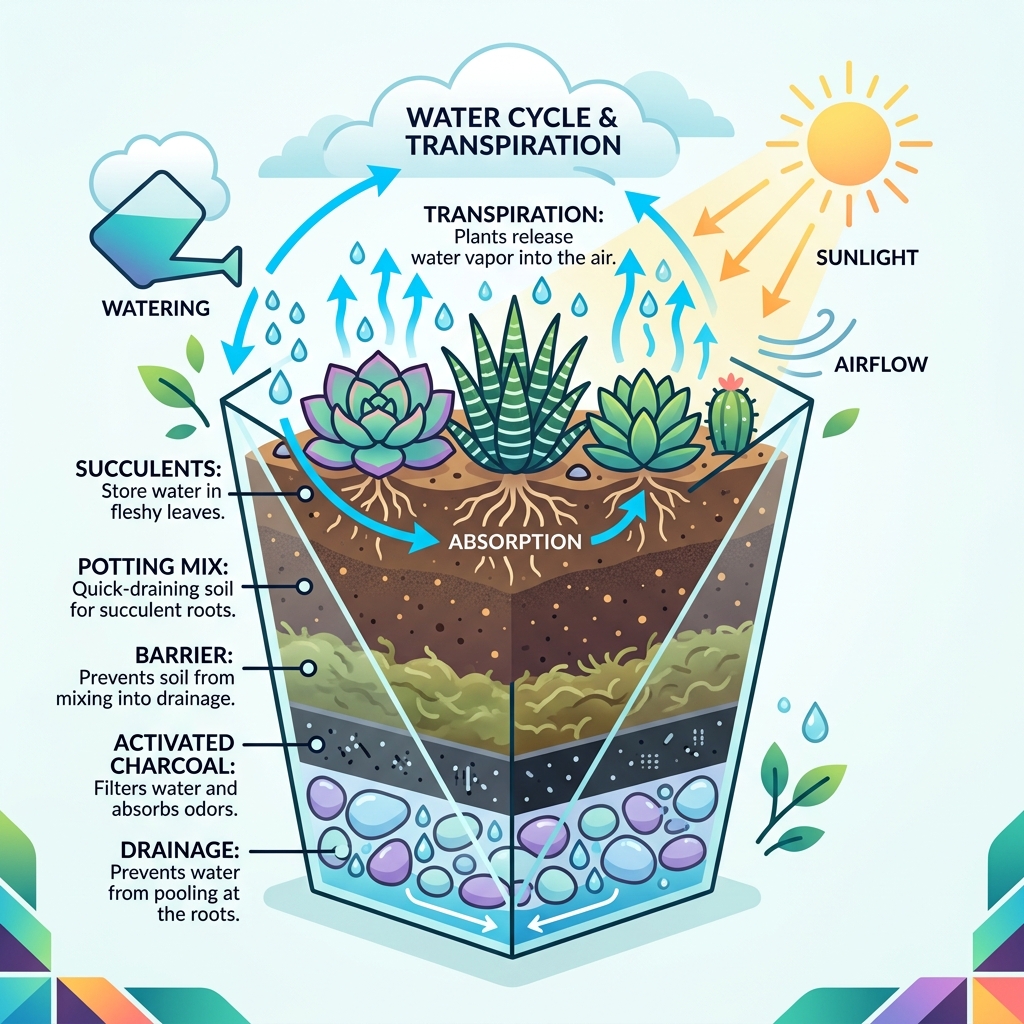
Understanding the Beginner Succulent Ecosystem Setup
When we talk about a beginner succulent ecosystem setup, we are essentially building a miniature, self-contained environment. However, unlike a traditional tropical terrarium, this is an “open system.” This means the container has a wide opening that allows for constant air circulation and low humidity.
Why is this so important? Succulents are native to arid, desert-like regions. They have evolved biophilia-triggering aesthetics—those geometric shapes and vibrant colors—specifically to handle harsh, dry climates. In a closed jar, the humidity would cause these desert dwellers to turn into mush within days. By keeping the system open, we allow the plants to perform photosynthesis and transpiration in a way that mimics their natural habitat.
To ensure your plants thrive, you need to master the basics of Indoor Succulent Care Tips for Beginners. The goal is to reach an ecosystem equilibrium where the soil dries out at a healthy pace and the plants receive enough light to grow slowly and steadily.
| Feature | Open Succulent Terrarium | Closed Tropical Terrarium |
|---|---|---|
| Plant Types | Succulents, Cacti, Air Plants | Ferns, Moss, Nerve Plants |
| Humidity | Low (Dry) | High (Moist) |
| Watering Frequency | Every 1-2 weeks (or less) | Every 4-6 months |
| Airflow | High | Minimal/Recycled |
| Light Needs | Bright, Direct/Indirect | Medium, Indirect |
A common question we hear is: “Can succulents be used in closed terrariums?” The short answer is a resounding no. In a closed environment, the water cycle is too intense for succulents. They store water in their leaves, and when the air is saturated with moisture, they cannot “breathe” or release excess water, leading to rapid root rot.
Essential Materials for Your Arid Forest Floor
Before we get our hands dirty, we need to gather the right supplies. Using the correct materials is the difference between a thriving ecosystem and a glass bowl full of dead plants.

1. The Container
We recommend clear glass or plastic containers. Fish bowls, wide-mouthed mason jars, or even vintage glass lanterns work beautifully. The key is a wide opening. Avoid tinted glass, as it can block the specific light spectrum succulents need to thrive.
2. Drainage Gravel
Since most terrariums don’t have holes at the bottom, we must create a “false bottom.” A 1-2 inch layer of gravel, river stones, or pebbles allows excess water to settle away from the roots. This prevents the dreaded “wet feet” that kills most indoor plants.
3. Horticultural Charcoal
This is the “insurance policy” for your ecosystem. A thin layer of activated charcoal (about 1/4 inch) filters the water as it trickles down. It prevents odors and stops fungi or bacteria from growing in the stagnant water at the bottom. You can find this at nurseries or even pet stores (it’s the same stuff used in fish filters!).
4. Sphagnum Moss or a Filter Layer
To keep your soil from washing down into your beautiful gravel layer and making a muddy mess, we use a barrier. Dried sphagnum moss is perfect, but some crafters even use a coffee filter or a piece of fine mesh. This keeps the layers distinct and professional-looking.
5. Specialized Soil
Never use regular garden soil. It is too heavy and retains far too much water. You need the Best Soil for Indoor Succulents, which is usually a mix of potting soil, coarse sand, and perlite or pumice. This ensures water moves through the root zone quickly.
6. The Plants
For a beginner succulent ecosystem setup, stick to 2-5 small plants. Choose varieties that share similar light and water needs. We’ll dive deeper into specific species shortly!
7. Decorative Elements
This is where you can let your creativity shine. Use heat-treated bark, polished river stones, or even tiny figurines to create a “forest floor” or “desert oasis” theme.
Designing Your Beginner Succulent Ecosystem Setup
Now for the fun part: assembly! Building your terrarium is like creating a 3D painting. We follow a specific layering process to ensure the long-term health of the plants.
Step 1: The Foundation
Start by cleaning your glass container thoroughly. Any residue can encourage mold growth later. Add your 1-2 inch layer of drainage gravel. If you’re feeling fancy, you can use different colors of stones to create stripes.
Step 2: The Filter
Add your layer of activated charcoal. If you’re using a narrow-necked bottle, a paper funnel can help you place it precisely. Follow this with your sphagnum moss barrier. Make sure the moss covers the gravel entirely so no soil can leak through.
Step 3: Adding the Soil
Pour in your succulent soil mix. We usually aim for about 2-3 inches of soil, or enough to comfortably cover the root balls of your chosen plants. A great rule of thumb for aesthetics is the “1/3 filled, 2/3 space” ratio. This allows for proper airflow and gives your plants room to grow. For more tips on this, check out our Easy DIY Succulent Terrarium for Beginners.
Step 4: Planting
This is a delicate process. Before planting, we recommend “teasing” the roots. Gently squeeze the nursery pot to loosen the plant, and use your fingers to brush away some of the old soil. This encourages the roots to reach out into their new home.
Create a small hole in the soil, place the plant, and gently tamping down the soil around it to remove air pockets. If you’re moving plants from other pots, follow our guide on Repotting Indoor Succulents Step by Step to avoid damaging the stems.
Step 5: The Finishing Touches
Add your decorative accents. A top dressing of fine gravel or sand doesn’t just look good—it also keeps moisture away from the base of the succulent leaves, which prevents rot. If you want to create a truly Guide to Creating a Self-Sustaining Succulent Terrarium, ensure you leave about an inch of space between each plant to allow for air circulation.
Selecting Hardy Species for Your Beginner Succulent Ecosystem Setup
Not all succulents are created equal. Some are “divas” that require perfect conditions, while others are incredibly hardy. For your first setup, we recommend these “all-stars”:
- Echeveria: These look like beautiful green or purple roses. They are very popular but do need plenty of light to keep their tight shape.
- Jade Plant (Crassula ovata): These are incredibly resilient and can grow into miniature trees over time. They are symbols of good luck in many cultures!
- Zebra Cactus (Haworthia fasciata): These are perfect for beginners because they can handle slightly lower light levels than other succulents. They have striking white horizontal stripes.
- Panda Plant (Kalanchoe tomentosa): These have fuzzy, silver-green leaves with brown spots on the edges. They add a great texture to your “forest floor.”
For a deeper dive into these varieties, read The Beginners Guide to Easy Indoor Succulents.
Maintenance and Long-Term Care
Once your beginner succulent ecosystem setup is complete, the goal is to do as little as possible. Succulents thrive on a bit of healthy neglect.
The Watering Routine
The number one killer of succulents is overwatering. We use the “Soak and Dry” method. This means you water the soil until it is damp (but not swimming in water), and then you do not water again until the soil is bone-dry all the way to the bottom.
In a terrarium without drainage holes, you have to be extra careful. We often use a spray bottle or a turkey baster to apply water directly to the soil, avoiding the leaves. Generally, you’ll only need to water once every 7-14 days in the summer, and even less in the winter. For a customized plan, see our Indoor Succulent Watering Schedule.
Lighting and Location
Succulents are sun-worshippers. They need at least six hours of bright light daily. A south or east-facing window is usually the best spot. If your plants start to stretch out and look “leggy,” they are telling you they need more light! If you have a dark apartment, don’t worry—a simple LED grow light can save the day.
If you’ve chosen Echeveria, you’ll want to check out our Echeveria Care Guide for Beginners for specific lighting tips to keep those colors vibrant.
Pruning and Propagation
As your plants grow, they might start to outgrow their container. This usually happens after 12-24 months. You can prune back leggy stems with clean scissors.
The best part? You can turn those trimmings into new plants! Succulents are incredibly easy to propagate from leaf cuttings or offsets (the “babies” that grow next to the mother plant). Learn the secrets in our guide on How to Propagate Succulents Indoors.
Troubleshooting Your Beginner Succulent Ecosystem Setup
Even the best plant parents run into trouble sometimes. Here is how to spot and fix common issues:
- Root Rot: If the leaves turn yellow, mushy, or translucent, you are likely overwatering. Stop watering immediately and allow the soil to dry out completely. You may need to repot in fresh, dry soil.
- Etiolation (Legginess): If your succulent is growing tall with wide gaps between the leaves, it’s searching for light. Move it to a sunnier spot.
- Pests: Keep an eye out for mealybugs (they look like tiny bits of white cotton). If you see them, isolate the plant and treat it with a cotton swab dipped in rubbing alcohol. For a full strategy, read Pests vs Indoor Succulents: A Comprehensive Battle Plan.
- Dusty Leaves: Succulents breathe through their leaves. Use a soft brush or a damp cloth to gently wipe away dust once a month.
Avoid the most common pitfalls by reviewing Beginner Mistakes in Succulent Care and keep our Common Succulent Diseases and Their Cures: A Handy Guide bookmarked for emergencies.
Frequently Asked Questions about Succulent Terrariums
Can succulents survive in a closed terrarium?
We cannot stress this enough: No. While it might look pretty for a week, the lack of air circulation and the high humidity will cause succulents to rot. Succulents need to dry out between waterings, and a closed system keeps them permanently damp. If you want a closed terrarium, stick to mosses and ferns!
How much light does a succulent ecosystem need?
The “six-hour rule” is the standard. Most succulents need at least six hours of bright, indirect sunlight. Some varieties, like the Zebra plant, can handle slightly less, but if you want those vibrant reds and purples to stay bright, sun is your best friend. If your home is dim, consider running a grow light for 10-12 hours a day.
Why is charcoal necessary for a succulent setup?
Because your terrarium doesn’t have drainage holes, water can sit at the bottom. Over time, this water can become “stagnant” and grow bacteria. Activated charcoal acts as a natural filter, absorbing toxins and preventing the “rotten egg” smell that can sometimes occur in old terrariums. It’s a small investment that adds years to your ecosystem’s life.
Conclusion
Building a beginner succulent ecosystem setup is more than just a DIY project; it’s a way to reconnect with the natural world from the comfort of your living room. By following the layering techniques we’ve discussed and choosing the right plants, you can create a stunning piece of living art that thrives on minimal care.
At Opcion Rural, we believe that everyone can have a green thumb—it just takes a little bit of knowledge and the right tools. Whether you are upcycling an old mason jar or designing a large glass centerpiece, the principles remain the same: drainage, light, and a little bit of neglect.
Ready to start your next project? Check out our detailed guide on Building a Small Ecosystem DIY Succulent Terrarium for more inspiration. Visit Opcion Rural for more DIY guides and join our community of creative nature lovers today! Happy planting!
