
Why a DIY Moss Wall Hanging Belongs on Your Wall
A DIY moss wall hanging is a piece of wall art made by attaching preserved moss to a frame, canvas, or backing board. It brings natural texture and color indoors with zero ongoing maintenance.
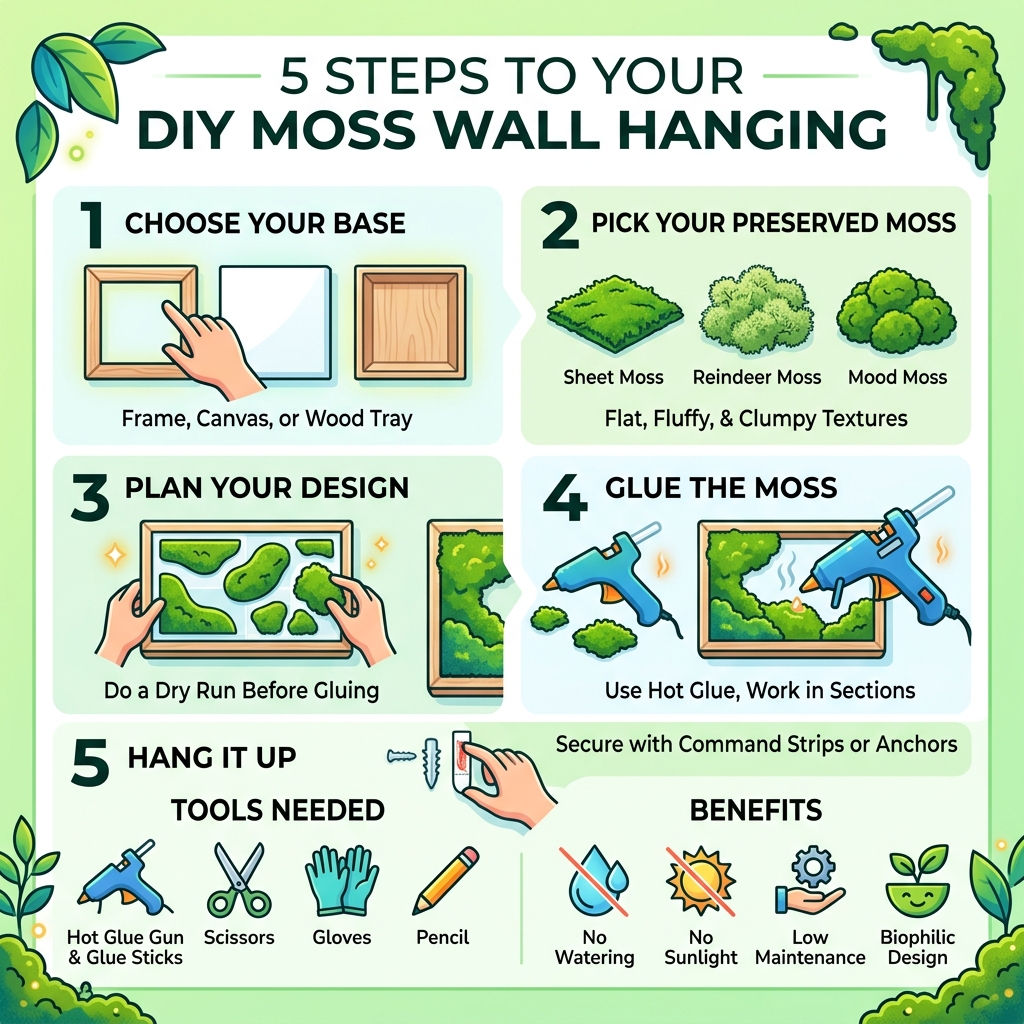
Here’s how to make one in 5 simple steps:
- Choose your base – a wooden frame, stretched canvas, or wood tray
- Pick your preserved moss – sheet moss, reindeer moss, mood moss, or a mix
- Plan your design – do a dry run before gluing anything down
- Glue the moss – use a hot glue gun, working section by section
- Hang it up – use command strips or wall anchors depending on weight
No watering. No sunlight. No upkeep.
Moss is one of those materials that looks like it took real skill to work with — but it’s actually one of the most forgiving crafts you can try. The organic shapes and rich green tones do most of the work for you.
The appeal goes beyond looks. Designers call it biophilic design — the idea that bringing natural elements indoors improves mood, reduces stress, and makes a space feel more alive. Even a small moss panel on a blank wall can completely shift the energy of a room.
The secret behind modern moss wall art is preserved moss. Unlike live moss, which needs constant humidity and risks mold indoors, preserved moss has had its water content replaced with a substance like glycerol. It holds its shape, keeps its color, and requires nothing from you after it’s hung.
For anyone with limited space, a busy schedule, or just a blank wall that needs something interesting — a moss wall hanging is one of the best projects you can tackle on a weekend.
Choosing Your Materials for a diy moss wall hanging
Before we dive into the “how-to,” we need to talk about the “what-with.” The quality of your materials determines how professional your finished diy moss wall hanging looks and how long it lasts.
When we source our supplies, we always look for high-quality preserved moss. This isn’t just “dried” moss, which can become brittle and brown. Preserved moss undergoes a process where the natural sap is replaced by a solution of glycerol and dyes. This keeps the moss soft to the touch and maintains that vibrant, forest-green hue for years.
Selecting the Best Preserved Moss Types
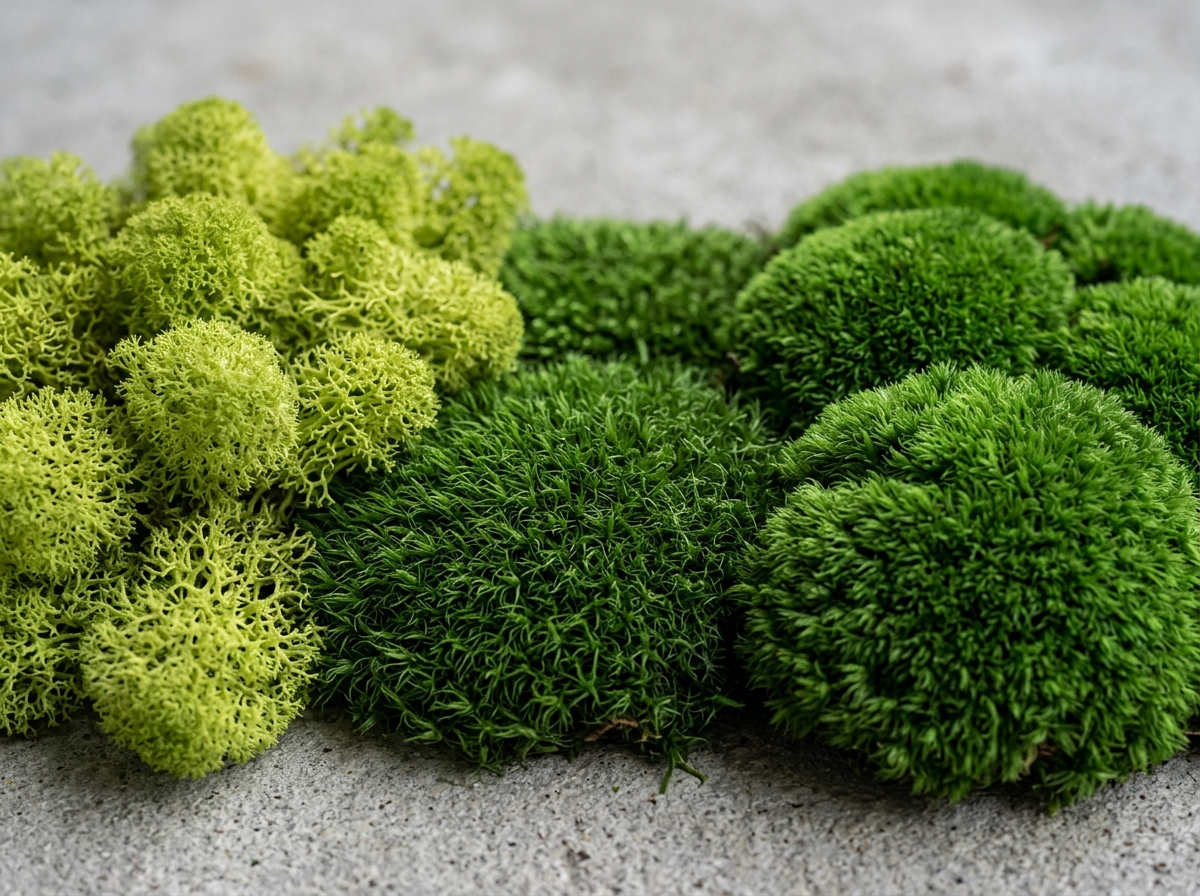
Not all moss is created equal. To get a professional, textured look, we recommend using a variety of types. This creates depth and mimics how moss grows in the wild—rarely as a flat, uniform carpet.
| Moss Type | Texture & Appearance | Best Use |
|---|---|---|
| Sheet Moss | Flat, carpet-like, large pieces. | Great for covering large background areas quickly. |
| Reindeer Moss | Spongy, branching, coral-like structure. | Adding pops of bright color and unique texture. |
| Mood Moss | Thick, velvety “clumps” or mounds. | Creating 3D hills and focal points. |
| Cushion Moss | Dense, round balls of moss. | Adding significant depth and a premium feel. |
Pro Tip: When working with preserved moss, always wear nitrile gloves. The dyes used in the preservation process are non-toxic but can leave your hands looking like Shrek’s for a few days if you aren’t careful!
Essential Adhesives for Your diy moss wall hanging
To keep your greenery on the wall and off the floor, you need the right “stick.” We have found that a high-temperature hot glue gun is the most efficient tool for this project. It bonds almost instantly, which is vital when you’re working on a vertical surface or a deep tray.
For larger projects or if you are attaching heavy “hardscape” elements like branches or stones, Gorilla’s wood glue or a strong superglue can provide extra security. If you are a beginner, stick to glue sticks and a reliable glue gun—it’s the most forgiving method for placing small moss tufts.
Step-by-Step Guide to Your diy moss wall hanging
Creating your own wall art is a meditative process. At Opcion Rural, we love projects that blend nature and art, much like our easy-fun-project-diy-hanging-succulent-terrarium. The key is preparation.
Preparing the Frame and Backing
You can use almost anything as a base, but wood trays are a fantastic starting point for beginners because the “lip” of the tray hides the messy edges of the moss.
- Clean the surface: Ensure your frame or backing is free of dust.
- Build up the base: If your tray is deep, you don’t want to waste expensive moss filling the bottom. Use neoprene foam or even scrap cardboard to build up the base. This saves glue and moss while giving you a flatter surface to work on.
- Paint it green: A sneaky trick we use is painting the backing material a dark forest green. This ensures that if there are any tiny gaps in your moss later, they won’t be noticeable.
- Hardware first: Use a power drill to attach your hanging hardware before you add the moss. It’s much harder to hammer or screw into a frame once it’s covered in delicate greenery!
Arranging and Securing Your diy moss wall hanging
Now for the fun part: the design.
The Dry Run: Before you touch the glue, lay your moss out on the frame. This is your “rough draft.” Group different colors together to create “flow” or “drift” patterns. Think about how moss grows on a damp log—it’s never perfectly symmetrical.
Adding Hardscape: For a truly professional look, integrate natural elements like driftwood, bark, or even sponge mushrooms. Glue these larger items down first using wood glue, then build the moss around them.
Gluing Technique: Work in small sections. Apply the glue to the frame/backing, not the moss itself. This prevents you from burning your fingers and keeps the moss from getting “matted” with glue. Press the moss down firmly but gently.
Finishing Touches: Once the frame is full, hold it upright and give it a gentle shake. Any loose bits will fall off now rather than later on your carpet. Fill any remaining gaps with tiny tufts of reindeer moss. Finally, add silicone bumpers to the back corners of the frame to protect your wall and allow for a bit of airflow.
Preserved vs. Live Moss: Which is Right for You?
We often get asked if “living” moss is better. While a living wall is a stunning feat of engineering, it is rarely practical for a standard indoor diy moss wall hanging.
Live Moss:
- Requires constant misting (multiple times a day).
- Needs very specific high-humidity environments.
- Risks mold and mildew growth on your drywall.
- Attracts more insects because it is a living ecosystem.
- Better suited for outdoor vertical gardens or specialized hanging succulent terrariums.
Preserved Moss:
- Zero maintenance: No water, no light, no soil.
- Durable: Stays vibrant for years in standard indoor conditions.
- Safe: The preservation process makes it less attractive to pests.
- Flexible: Can be placed in dark hallways or windowless bathrooms where live plants would die.
For 99% of home DIYers, preserved moss is the clear winner for interior decor.
Maintenance and Care for Long-Lasting Moss Art
“No maintenance” doesn’t mean “ignore it forever,” but it’s pretty close! To ensure your diy moss wall hanging lasts the typical 5 to 8 years (or even longer), follow these simple rules:
- Avoid Direct Sunlight: UV rays are the enemy of preserved moss. Constant sunlight will bleach the color and make the moss brittle. Keep your art in indirect light or shade.
- Never Water It: This is the hardest rule for plant lovers! Adding water to preserved moss will actually wash away the preservation glycerol and cause the dyes to run. If the moss feels a bit dry, don’t mist it; it’s simply reacting to the humidity in your home.
- Dust Gently: Use a soft anti-static duster or a hair dryer on the “cool/low” setting to blow away dust every few months.
- Color Restoration: If a section fades after several years, you can actually touch up moss by lightly dabbing it with a mixture of water-based food coloring or floral dye.
Frequently Asked Questions about Moss Walls
How long does a preserved moss wall last?
In a standard indoor environment away from direct heat and sunlight, a preserved moss wall typically lasts between 5 and 8 years. Some high-quality installations can look great for over a decade. If it starts to look “tired,” you can easily glue fresh tufts of moss over the old ones to refresh the piece.
Do moss walls attract bugs or spiders?
Generally, no. Because the moss is preserved (essentially “pickled” in glycerol), it no longer provides the moisture or nutrients that living moss does. It isn’t a food source for pests. However, like any wall-hung item, a spider might decide to spin a web in a corner. Regular dusting prevents this.
Can I hang my moss wall in a bathroom?
Yes! In fact, the bathroom is one of our favorite places for a diy moss wall hanging. The natural steam from showers can actually help keep the preserved moss feeling soft and supple. Just ensure the piece isn’t in a spot where it will get splashed directly with water.
Conclusion
At Opcion Rural, we believe that everyone should have a connection to the natural world, even if they live in the heart of a city. A diy moss wall hanging is more than just a craft project; it’s a way to bring the serenity of the forest into your daily life. It’s affordable, beginner-friendly, and provides an instant “wow” factor to any room.
Whether you are building a small 12×12 frame or a massive floor-to-ceiling installation, the process is the same: visualize, glue, and enjoy.
Ready for your next nature-inspired project? Explore more creative projects at Opcion Rural and start building your own indoor ecosystem today!
