
What It Really Means to Build a Mini Indoor Ecosystem
Build a mini indoor ecosystem by layering a glass container with drainage pebbles, activated charcoal, soil, moisture-loving plants, and a lid — then letting nature’s water cycle do the rest.
Quick-start steps:
- Choose a clear, sealable glass container
- Add 2-3 cm of pebbles for drainage
- Add a thin layer of activated charcoal
- Place a mesh barrier on top
- Fill with 6-10 cm of humid, rich substrate
- Plant small, slow-growing, humidity-loving plants and moss
- Mist lightly, seal the lid, and place in bright indirect light
On your desk, in a sealed glass jar, a tiny private forest can take care of itself. Water rises, condenses, drips back down. Plants grow. Moss spreads. You don’t touch a thing.
That’s the quiet magic of a self-sustaining terrarium.
Unlike a typical houseplant that wilts the moment you forget to work it, a well-built mini ecosystem runs itself. It recycles its own water, feeds its own soil, and gets more beautiful over time — not less.
And the best part? You don’t need a green thumb to build one. You just need a jar, a few simple materials, and about an afternoon.
Whether you’re working with a tiny apartment shelf or a corner of your home office, a mini indoor ecosystem fits almost anywhere and asks for almost nothing in return.
Why You Should Build Mini Indoor Ecosystem Displays
If you have ever felt the “houseplant guilt” that comes with a yellowing leaf or a dried-out pot, we have good news: a mini ecosystem is the ultimate low-maintenance solution. Beyond just looking like a piece of living art on your desk, these projects offer a wealth of benefits that go far beyond aesthetics.
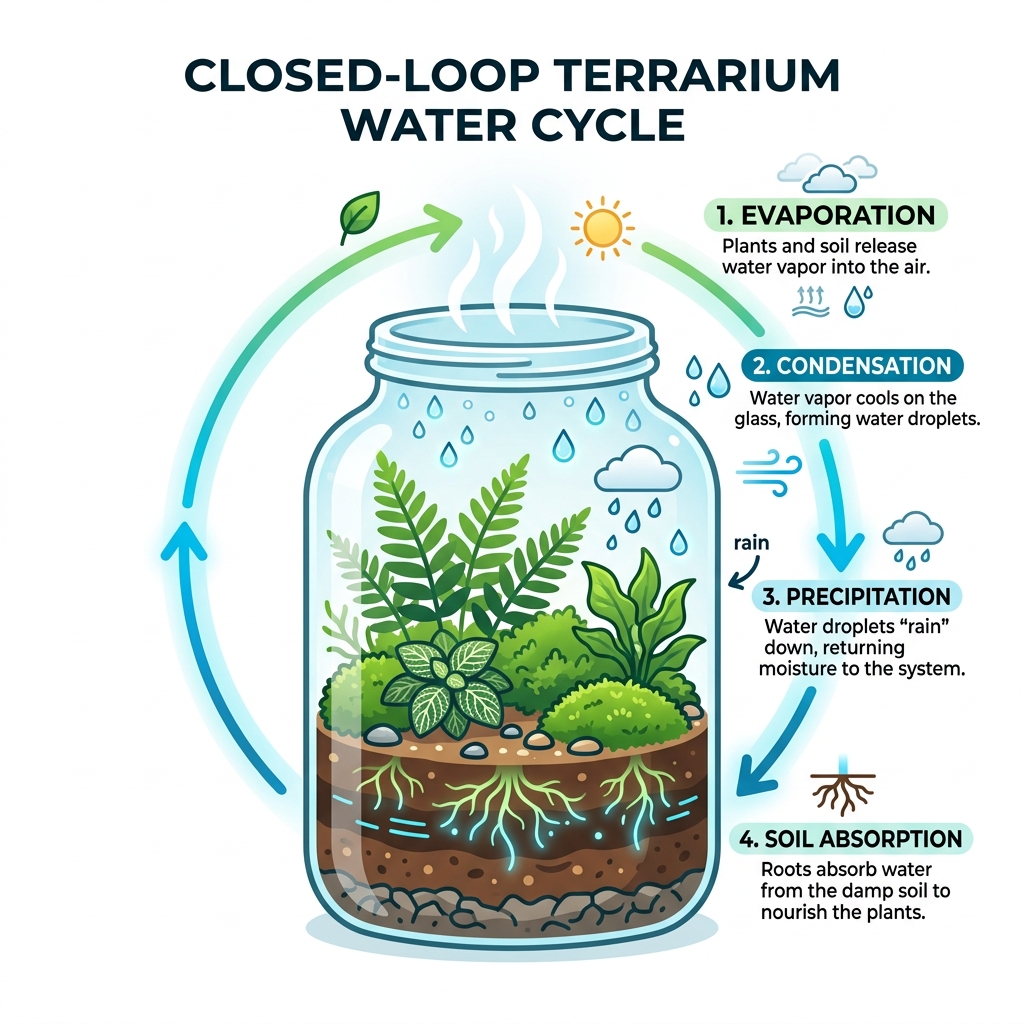
First, they are incredible educational tools. For families, there is no better way to teach children about earth sciences. In a single jar, they can witness the water cycle in real-time—seeing how water evaporates from the soil, condenses on the glass, and “rains” back down to sustain the plants. It is a functional, tiny version of our own planet.
From a wellness perspective, we find that building and observing these systems provides significant stress relief. There is something deeply therapeutic about tucking moss into soil and watching a tiny world thrive. Furthermore, because these systems involve live plants, they contribute to better air quality and a sense of biodiversity within your home.
If you are limited on space, these projects are perfect. You don’t need a backyard to be a gardener. By utilizing mini-succulents for indoor gardening, you can create desert-inspired open systems, or you can go the tropical route with a sealed jar. They also champion water conservation; once a closed system is balanced, it may not need additional water for months or even years!
Essential Materials to Build Mini Indoor Ecosystem Environments
Before we get our hands dirty, we need to gather the right “ingredients.” Think of this as composing a symphony of light, water, and life. To build mini indoor ecosystem success, the quality of your materials matters.

- Glass Container: Clear glass is essential. It allows light to reach the plants and lets you observe the internal world. While plastic works, glass looks nicer and doesn’t scratch as easily. Old pickle jars, vases, or even chemistry flasks make excellent vessels.
- Airtight Lid: For a self-sustaining system, you need a lid that seals well to trap moisture.
- Drainage Pebbles: A 2-3 cm layer of rinsed pebbles or LECA (lightweight expanded clay aggregate) at the bottom prevents the soil from becoming waterlogged, which protects the roots from rot.
- Activated Charcoal: This is the “filter” of your ecosystem. A thin layer over the pebbles helps remove odors and prevents the buildup of mold and bacteria.
- Mesh Barrier: A piece of plastic mesh or even a cut-up window screen keeps the soil from sifting down into the drainage layer, keeping your system clean.
- ABG Substrate: This stands for “Atlanta Botanical Gardens” mix. It’s a specialized soil blend (often containing coco coir, orchid bark, and peat) designed to resist breaking down in high-humidity environments.
For those who want a head start without hunting down every individual component, we recommend looking into a Complete 4×4″ DIY Vivarium Starter Kit | MiceDirect, which provides a perfectly balanced foundation for beginners.
Selecting Plants to Build Mini Indoor Ecosystem Diversity
Not every plant wants to live in a glass jar. To ensure your ecosystem thrives, you must choose plants that love humidity and grow slowly. You don’t want a “jungle” that outgrows its home in two weeks!
We love using Fittonia (Nerve Plants) because of their vibrant leaf patterns and love for moisture. Ferns, such as the Lemon Button or Maidenhair, add a soft, prehistoric texture. Mosses are the backbone of any build; they act as a moisture buffer and can grow on almost anything, even rocks.
If you prefer a sunnier, drier look, you might explore an easy-diy-succulent-terrarium for beginners. Just remember that succulents require an open container because they cannot handle the high humidity of a sealed jar. Other great tropical options include Selaginella (Spike Moss) and Peperomia, which stay compact and lush.
Using Microfauna to Build Mini Indoor Ecosystem Stability
To truly make your ecosystem “self-sustaining,” you might want to invite some tiny “janitors” to the party. This is what we call a bioactive setup.
- Springtails: These tiny, white, wingless insects are the ultimate mold-fighters. They eat decaying plant matter and fungi, preventing your jar from turning into a fuzzy mess.
- Isopods: Also known as pill bugs or roly-polys, these larger decomposers help cycle nutrients back into the soil by eating dead leaves.
- The Role of Critters: These microfauna provide stability. They aerate the soil as they move and ensure that waste is recycled into food for your plants. Without them, you are the janitor; with them, the ecosystem takes care of itself.
Step-by-Step Guide to Your First DIY Project
Ready to build? Let’s walk through the process of creating your own miniature world.
- Sterilization: Wash your container thoroughly with mild soap and water. Any lingering bacteria can ruin a closed system quickly.
- The Drainage Layer: Pour in 2-3 cm of pebbles. This is where excess water will sit so your plants don’t get “wet feet.”
- Charcoal and Mesh: Sprinkle a thin layer of activated charcoal over the stones, then lay down your mesh barrier.
- Substrate Application: Add 6-10 cm of your soil mix. We like to slope the soil—higher in the back, lower in the front—to create a sense of depth and “terrain.” If you’re interested in different styles, check out our guide on building-a-small-ecosystem-diy-succulent-terrarium.
- Plant Arrangement: Use a long pair of tweezers or a spoon to make small holes. Gently tuck your plants in, pressing the roots firmly into the soil. Place taller plants in the back and moss in the foreground.
- Initial Misting: Give the system a few sprays of distilled water. You want the soil to feel like a wrung-out sponge—moist, but not muddy.
- Sealing: Wipe any dirt off the inside glass, pop the lid on, and you’re done!
Comparing Ecosystem Types
Depending on your style and the light in your home, you might choose between a tropical “jungle” or a desert “oasis.” Here is how they stack up:
| Feature | Closed Tropical Terrarium | Open Succulent Garden |
|---|---|---|
| Humidity | High (80-90%) | Low (Room humidity) |
| Watering | Rarely (Months/Years) | Weekly or Bi-weekly |
| Light | Bright Indirect | Bright Direct |
| Maintenance | Very Low | Moderate |
| Best Plants | Ferns, Moss, Fittonia | Echeveria, Haworthia, Cacti |
For a deeper dive into the arid side of things, see our article on creating-your-own-jungle-with-a-diy-succulent-terrarium.
Maintenance, Placement, and Troubleshooting
Once your ecosystem is sealed, your role shifts from “builder” to “observer.” However, the first few weeks are a “tuning” period.
Placement is everything. You must avoid direct sunlight. A closed glass jar acts like a greenhouse; direct afternoon sun will “cook” your plants. Instead, place it in a spot with bright, indirect light—near a north or east-facing window is usually perfect.
Monitoring Condensation: This is the heartbeat of your ecosystem. Ideally, you should see a light fog on the glass in the morning that clears up by midday. If the glass is always fogged and you can’t see the plants, it’s too wet. Open the lid for a few hours to let some moisture escape. If there is never any condensation, add a teaspoon of distilled water.
Troubleshooting Common Issues:
- Mold: If you see white fuzzy patches, don’t panic. Remove the affected leaf and consider adding more springtails.
- Yellowing Leaves: This often means too much water or not enough light. Adjust the placement or vent the jar.
- Pruning: If a plant touches the glass and starts to look crowded, use long scissors to trim it back. This keeps the air flowing.
- Odor Check: A healthy terrarium should smell like a fresh forest floor—earthy and clean. If it smells sour or rotten, something is wrong with the drainage or there is too much water.
For more specific care tips, our guide-to-creating-a-self-sustaining-succulent-terrarium offers excellent advice on balancing light and moisture.
Frequently Asked Questions about Mini Ecosystems
How long do self-sustaining mini ecosystems last?
With the right balance, they can last for years! The most famous example is David Latimer’s bottle garden, which was planted in 1960 and sealed in 1972. It is still thriving today on nothing but sunlight. For most home builds, a lifespan of several years is very achievable if you keep them out of direct sun and don’t overwater.
What are the signs of a healthy closed terrarium?
A healthy system has a visible water cycle (morning condensation), plants with bright, firm leaves, and an earthy scent. If you have microfauna, seeing active springtails darting across the soil is a great sign that the “clean-up crew” is on the job.
Why is my terrarium getting moldy?
Mold usually happens because of three things: overwatering, lack of airflow during the initial setup, or dead leaves left to rot. To fix it, remove the moldy bits, vent the container for a day, and ensure you have springtails to eat the fungal spores.
Conclusion
At Opcion Rural, we believe that everyone should have the chance to connect with nature, regardless of how much space they have. Learning how to build mini indoor ecosystem projects is more than just a hobby—it’s a way to bring a sense of calm and natural balance into your daily life. It’s a creative challenge that rewards you with a living, breathing piece of art that grows alongside you.
By following these steps and choosing the right materials, you can create a vibrant, self-sustaining world that thrives with minimal help. Whether you are building a “Dinosaur Garden” with the kids or a sleek, modern vivarium for your office, the joy of watching a tiny ecosystem succeed is unmatched.
Are you ready to bring the forest indoors? Start your ecosystem journey today and see what kind of miniature world you can create!
