
Why Algae Keeps Ruining Your Closed Terrarium (And How to Stop It)
Easy algae free terrariums are absolutely achievable — but only if you understand what causes algae in the first place.
Here’s a quick answer if you’re short on time:
How to keep a closed terrarium algae-free:
- Control light — use bright indirect light only; never direct sun
- Go soilless — use lava rock or LECA instead of nutrient-rich potting soil
- Don’t overwater — overwatering drives over 90% of early terrarium failures
- Add activated charcoal — filters bacteria and absorbs excess nutrients
- Introduce springtails — these tiny cleanup crew members suppress mold and algae naturally
- Use distilled water — tap water adds minerals that feed algae
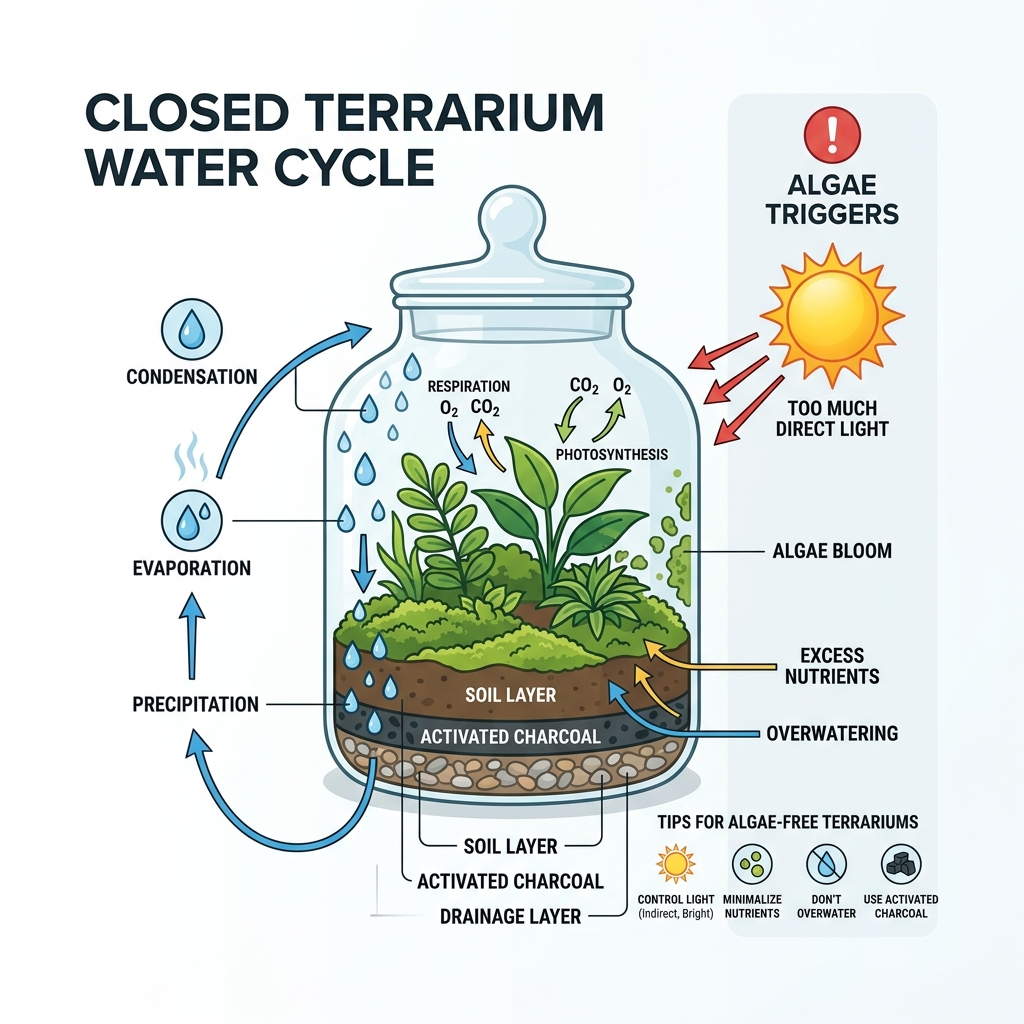
Algae isn’t random. It shows up when three things line up: too much light, too many nutrients, and too much moisture. Closed terrariums create a self-contained water cycle — moisture evaporates, condenses on the glass, and drips back down. That’s beautiful when it’s balanced. But tip the scale even slightly, and algae moves in fast.
The good news? A few smart choices at the build stage can prevent almost all of it — no scrubbing required.
The Science Behind Easy Algae Free Terrariums
To master easy algae free terrariums, we have to think like a scientist. In a closed glass container, we are essentially creating a tiny version of Earth. This means we have to manage the “climate” inside. Algae are simple organisms that thrive on photosynthesizing light and soaking up excess nutrients. If we give them a buffet of direct sun and decaying organic matter, they will happily take over your glass walls.
The first rule of thumb is managing light. While plants need energy to grow, algae crave high-intensity light. Placing your terrarium in direct sunlight acts like a magnifying glass, spiking the internal temperature and providing the perfect wavelength for an algae bloom. Instead, aim for bright, indirect sunlight. A spot 3-4 feet away from an east or north-facing window is usually the “sweet spot” for stability.
If you don’t have a good window, a 6500K LED grow light is a fantastic alternative. These lights provide the full spectrum of “daylight” that plants love but allow you to control the duration precisely—usually 12 to 14 hours a day.
Temperature also plays a massive role. Most tropical terrarium plants and beneficial microbes thrive in the 65-80°F range. When the temperature spikes above this, plants can become stressed and begin to rot, releasing nutrients that algae then consume. By keeping the environment stable, we support the building-a-small-ecosystem-diy-succulent-terrarium approach, where every element works in harmony.

Furthermore, understanding nutrient cycles is vital. In a standard setup, decaying leaves turn into “food.” If there is no one to eat that food (like a cleanup crew) and no way to filter the water, the system becomes “eutrophic”—a fancy word for over-fertilized and oxygen-poor. This is exactly where algae wins. To dive deeper into how these biological cycles work, check out this How to Make a Bioactive Terrarium: Step-by-Step Guide.
Why Soilless Substrates are Key to Easy Algae Free Terrariums
One of the biggest “hacks” we’ve discovered for easy algae free terrariums is ditching traditional dirt entirely. Why? Because soil is packed with organic matter. While that’s great for a garden, in a sealed glass jar, soil can easily become waterlogged, leading to anaerobic pockets (areas without oxygen) where nasty bacteria and algae thrive.
By using a soilless substrate like lava rock or LECA (lightweight expanded clay aggregate), we create a much cleaner environment. Lava rock is highly porous, meaning it has a massive surface area for beneficial bacteria to grow. These “good” bacteria compete with algae for nutrients, effectively starving the algae out.
Using a step-by-step-guide-diy-water-wise-succulent-terrarium mindset, we prioritize drainage. Lava rock doesn’t break down or compact over time like soil does. This prevents the “muddy mess” syndrome that ruins so many builds. Plus, lava rock has a high cation exchange capacity, which is a technical way of saying it can hold onto minerals and release them slowly to plant roots without letting them float freely in the water to feed algae.
Another benefit of a soilless build is mold suppression. Research shows that bioactive setups can reduce organic debris by up to 83%. When you’re experimenting-with-layers-in-your-diy-succulent-terrarium, a soilless base is much easier to sanitize and reuse if you ever decide to redesign your ecosystem.
Choosing the Best Plants for Easy Algae Free Terrariums
Not all plants are created equal when it comes to fighting algae. For a truly low-maintenance, algae-free experience, we love using aquatic epiphytes. These are plants that usually grow in aquariums but can easily transition to “emersed” life (growing out of water) in a high-humidity terrarium.
Plants like Anubias, Bucephalandra, and Java moss are absolute champions. Because they are slow-growing, they don’t demand a ton of nutrients, which helps keep the ecosystem lean and clean. They also don’t need to be buried in soil; you can simply wedge them into crevices in your lava rock or glue them to decorative wood. This keeps their rhizomes (the thick horizontal stems) out of the wet substrate, preventing rot.
When you are creating-your-own-jungle-with-a-diy-succulent-terrarium, consider these hardy species. They are farmed in high-humidity greenhouses, so they are already adapted to the “rainforest” vibes of a closed jar. Their thick, waxy leaves are also harder for algae to attach to compared to softer, more delicate plants. Following a guide-to-creating-a-self-sustaining-succulent-terrarium will help you select the right balance of slow and fast growers to maintain stability.
Essential Materials and Layering Techniques
The foundation of easy algae free terrariums lies in the “drainage sandwich.” Most beginners make the mistake of putting soil directly at the bottom of the jar. Without a place for excess water to go, the roots sit in a swamp, rot begins, and algae moves in to feast on the decay.
Here is the layering order we recommend for a bulletproof build:
- The Drainage Layer (The Reservoir): Use 1.5 to 2 inches of LECA or coarse gravel. This acts as a basement where excess water can sit without touching your plant roots.
- The Barrier: A piece of mesh or geotextile fabric. This is crucial! It prevents the smaller substrate particles from falling down into the drainage layer and clogging it.
- Activated Carbon: A thin layer of charcoal. This is the “liver” of your terrarium. It filters the water as it cycles, absorbing odors and toxic chemicals that could otherwise fuel algae or bacteria.
- The Substrate: This is where we use our lava rock or a high-quality soilless mix (like coco coir, orchid bark, and charcoal).
When experimenting-with-layers-in-your-diy-succulent-terrarium-2, always use distilled or demineralized water. Tap water contains chlorine and minerals like phosphates which are basically “algae juice.” Using pure water keeps the glass clear and the plants healthy.
Open vs. Closed Terrariums: Algae Risk Comparison
| Feature | Closed Terrarium | Open Terrarium |
|---|---|---|
| Humidity | High (60-80%) | Low (Room Humidity) |
| Algae Risk | Higher (due to moisture) | Lower (drier environment) |
| Maintenance | Low (self-watering) | Moderate (regular watering) |
| Best Plants | Ferns, Moss, Anubias | Succulents, Cacti |
| Airflow | Limited | Maximum |
Step-by-Step Guide to a Beginner-Friendly Soilless Build
Ready to get your hands dirty (or rather, “lava-rocky”)? Follow these steps to create your own easy algae free terrariums.
Step 1: Sanitization Before you start, clean your glass container with hot soapy water. For extra insurance, wipe it down with a 3% hydrogen peroxide solution. This kills any lingering spores or bacteria. Hydrogen peroxide is a favorite in the hobby because it breaks down into simple water and oxygen.
Step 2: The Drainage Layer Add your LECA or pebbles to the bottom. If you want a more aesthetic look, you can use colorful stones, but ensure they are clean.
Step 3: The Barrier and Charcoal Cut your mesh to fit the jar and place it over the rocks. Sprinkle a layer of activated charcoal on top. If you’re how-to-make-a-closed-diy-succulent-terrarium, don’t skip the charcoal—it’s your best defense against “stinky jar syndrome.”
Step 4: Hardscape and Substrate Add your larger pieces of lava rock first to create a “mountain” or “cliff” look. Then, fill in the gaps with smaller black lava rock. This creates a stunning, high-contrast look that makes green plants pop.
Step 5: Planting Using long-handled tweezers is a game-changer. It allows you to place tiny plants like moss or Anubias into tight crevices without knocking over your hardscape. When turning-glass-containers-into-diy-succulent-terrariums, remember to leave about 30% of the surface area open for airflow.
Step 6: The Initial Mist Give the terrarium a few squirts of distilled water. You want the substrate to be damp, but you shouldn’t see a pool of water at the very bottom. Seal the lid and place it in its new home!
Long-Term Maintenance and Biological Controls
The secret weapon for easy algae free terrariums isn’t a chemical—it’s a “cleanup crew.” In the wild, tiny bugs called springtails and isopods eat mold, decaying leaves, and even some types of algae.
Adding 50-100 springtails to your terrarium is the best thing you can do for its long-term health. These tiny white specks are harmless to your plants but are relentless cleaners. Statistics show that bioactive terrariums with springtails have a 91% lower incidence of mold compared to sterile ones. They turn waste into “frass” (bug poop), which is a natural, gentle fertilizer for your plants.
Maintenance is mostly about observation. If you notice a leaf turning yellow, prune it immediately using long scissors. Letting it rot inside the jar is an invitation for algae. You can also beautify-your-workspace-with-a-diy-succulent-terrarium by cleaning the glass walls once a month with a damp microfiber cloth to keep that crystal-clear view.
really-simple-diy-succulent-terrariums thrive on stability. Don’t move the jar around too much, and avoid the urge to fertilize. In a closed system, the plants grow slowly, which is exactly what we want.
Frequently Asked Questions about Algae Control
How do I remove algae already growing on the glass?
If algae has already made an appearance, don’t panic. You can use a clean toothbrush or a specialized terrarium scraper to gently scrub it off the glass. After scrubbing, use a paper towel to wipe away the debris. To prevent it from coming back, reduce the light intensity or the number of hours the light is on.
Can I use tap water in my closed terrarium?
We strongly recommend against it. Tap water contains minerals, fluoride, and chlorine. As the water evaporates and condenses, these minerals stay behind, creating “hard water spots” on the glass and providing a mineral-rich environment that algae love. Stick to distilled, RO (reverse osmosis), or rainwater.
Why is my terrarium foggy every morning?
A little bit of fog in the morning is perfectly normal! It shows that your water cycle is working. However, the glass should clear up by the afternoon. If it stays foggy all day, it means there is too much moisture inside. Simply open the lid for a few hours to let some of that excess water evaporate, then seal it back up.
Conclusion
At Opcion Rural, we believe that building a terrarium is more than just a DIY project—it’s an exercise in ecosystem stewardship. By choosing the right materials, such as soilless substrates and hardy epiphytes, you can create a stunning piece of living art that remains clear and vibrant for years.
Easy algae free terrariums are the perfect way to bring a slice of the rainforest into your home without the stress of constant maintenance. Whether you are a seasoned gardener or a complete beginner looking for an easy-diy-succulent-terrarium-for-beginners, the key is to work with nature, not against it.
Start small, observe your tiny world, and enjoy the peace that comes with a perfectly balanced ecosystem. Happy planting!
