
Why Tabletop Cactus Garden Ideas Are the Smartest Way to Bring the Desert Indoors
Tabletop cactus garden ideas are one of the easiest ways to add living greenery to a desk, shelf, or coffee table — no yard, no big pots, no complicated care routine needed.
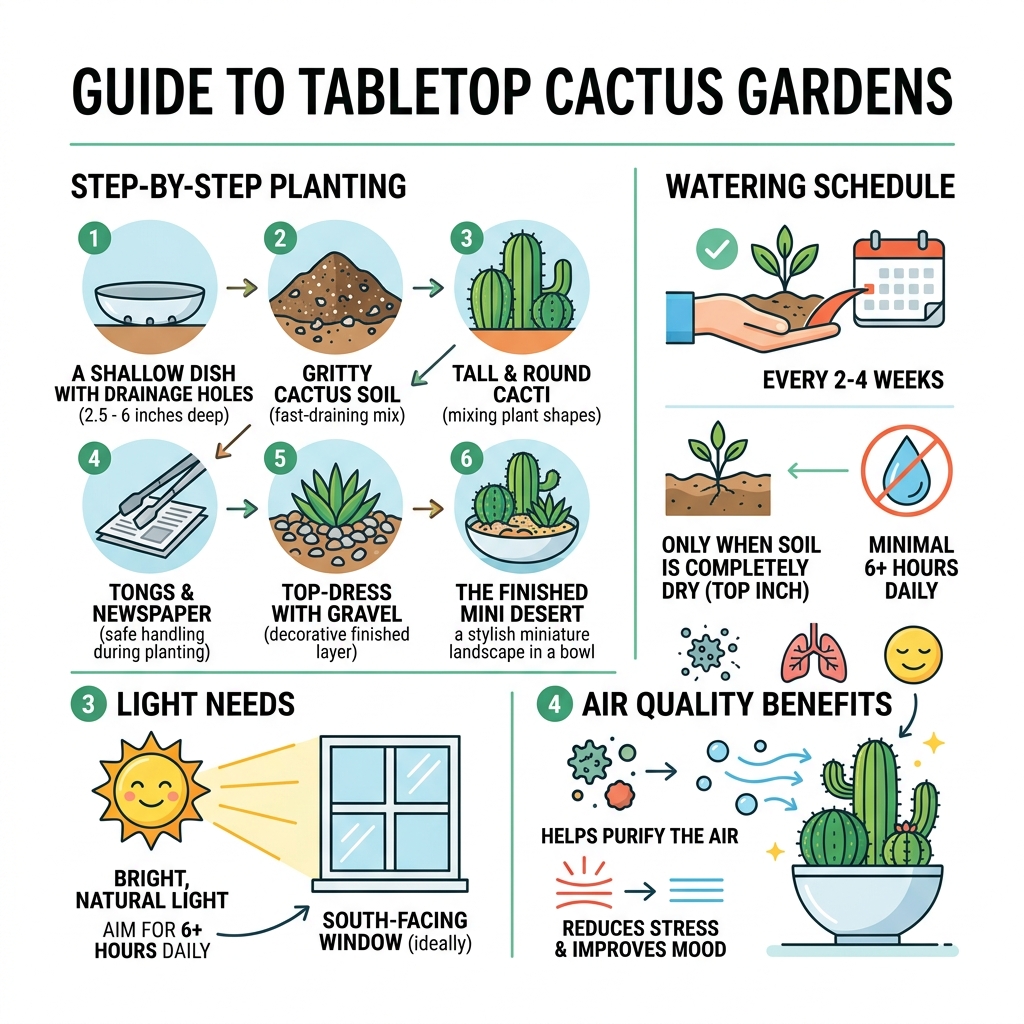
Here are the core ideas at a glance:
- Shallow bowl or dish — choose a wide, shallow container (2.5 to 6 inches deep) with drainage holes
- Gritty cactus soil — use a fast-draining mix made for cacti and succulents
- Mix plant shapes — pair tall columnar cacti with round globular ones for visual contrast
- Use tongs or newspaper strips — handle spiny cacti safely during planting
- Top-dress with gravel or pebbles — finish with a thin decorative layer for a polished look
- Water every 2–4 weeks — only when the top inch of soil is completely dry
- Place in bright light — aim for at least 6 hours of natural light near a south-facing window
One cactus in one pot is rarely enough. Grouping several small plants — each sold in 2″, 3″, or 4″ nursery pots — into a single shallow dish instantly creates a miniature desert landscape that looks far more striking than any single specimen.
The best part? Cacti grow very slowly. That means you can plant them close together today, and they won’t crowd each other out for years.
Beyond looks, research shows that indoor plants can reduce stress and help purify the air. For anyone working from a small apartment or a busy desk, a cactus bowl is a low-effort way to bring a little nature into your space.
Essential Materials for Your Tabletop Cactus Garden Ideas
Before we get our hands dirty (or prickly!), we need to gather the right gear. Creating a successful mini-desert isn’t just about the plants; it’s about the foundation. Because cacti are susceptible to root rot, the “what” and “how” of your materials can make or break your garden.
The Foundation: Shallow Containers
We often get asked, “Do cacti need deep pots?” The answer is usually no. For tabletop cactus garden ideas, we prefer shallow planters, bowls, or dishes. A depth of 2.5 to 6 inches is the “sweet spot.” This depth allows the shallow root systems of mini cacti to anchor themselves without holding onto a massive reservoir of damp soil that could cause rot.
When choosing a material, consider the following:
| Material | Breathability | Moisture Retention | Aesthetic Style |
|---|---|---|---|
| Terra Cotta | High (Porous) | Low (Dries fast) | Classic, rustic, earthy |
| Ceramic/Glazed | Low | Medium | Modern, colorful, sleek |
| Glass/Clear | None | High | Terrarium-style, visual layers |
| Wood/Troughs | Medium | Low | Natural, DIY, architectural |
While terra cotta is the gold standard for plant health because it lets the soil “breathe,” you can use glazed ceramic or glass as long as you are extra careful with your watering. For more help picking the right vessel, check out our guide on the best pot for indoor succulents.
The Soil: Gritty and Fast-Draining
Regular potting soil is too heavy for a cactus. It holds water like a sponge, which is a death sentence for desert plants. We recommend a specialized mix. You can buy a commercial cactus blend or mix your own using:
- 2 parts potting soil
- 1 part coarse sand
- 1 part pumice or perlite
This creates a well-aerated, light environment where water flows right through. For a deeper dive into DIY recipes, see our article on the best soil for indoor succulents.
Safety Tools: Tongs and Bubble Wrap
Handling a 2-inch Pincushion cactus with your bare fingers is a mistake you’ll only make once! To keep your hands spine-free, we suggest:
- Kitchen Tongs: Our “secret weapon” for precisely placing small cacti.
- Newspaper Strips: Fold a long strip of newspaper to wrap around the plant like a sling.
- Bubble Wrap: Excellent for grabbing larger or rounder cacti without damaging the plant or your skin.

Selecting the Best Plants for Tabletop Cactus Garden Ideas
Not all cacti are created equal when it comes to living on a desk. We want plants that stay small, grow slowly, and look interesting even when they aren’t blooming.
Choosing Slow-Growing Species
When browsing your local nursery, look for “specimen” cacti in 2-inch to 4-inch grow pots. Some of our favorite tabletop cactus garden ideas involve these reliable performers:
- Mammillaria (Pincushion Cactus): These are usually small, globe-shaped, and often produce a “crown” of tiny flowers.
- Golden Barrel (Echinocactus grusonii): Even as a baby, its bright yellow spines provide incredible color.
- Star Cactus (Astrophytum): These are spineless, making them great for high-traffic desks.
- Rebutia: Known for being very hardy and producing vibrant blooms even at a young age.
If you are working with a truly tiny space, you might want to explore mini succulents for indoor gardening to fill in the gaps between your prickly friends.
Combining Cacti and Succulents
Can you mix and match? Absolutely! However, you must ensure they have similar lighting and watering needs.
- Zebra Haworthia (Haworthia fasciata): This is a favorite for tabletop gardens. It looks like a pointed aloe with white stripes and can handle slightly lower light than a desert cactus.
- Echeveria: These rosette-shaped succulents add a soft, floral look to balance out the sharp spines of a cactus.
When combining plants, keep the “water compatibility” in mind. Don’t pair a thirsty tropical succulent with a desert cactus that only wants a drink once a month. For office environments, we have a curated list of easy succulent types for office desks and specific succulent varieties for small apartments that play well with others.
Step-by-Step Guide to Planting Your Mini Desert
Now that we have our materials and our “cast of characters,” it’s time to build.
- Prepare the Container: If your bowl doesn’t have a drainage hole, add a 1-inch layer of pumice or gravel at the bottom. If it does have a hole, cover it with a coffee filter or a piece of landscape fabric to keep the soil from washing out.
- Add a Base of Soil: Fill the bowl about two-thirds full with your gritty cactus mix.
- Clear the Roots: Gently remove each cactus from its nursery pot. We like to tickle the roots to remove as much of the old, peat-heavy nursery soil as possible. This allows the roots to sit flush in the new shallow dish.
- Arrange Before Planting: Place the plants (still in their root balls) on top of the soil to test the layout. Put taller plants toward the back or center and “trailers” or smaller rosettes near the edges.
- Plant from the Center Outward: Use your tongs to set the central plant first. Dig a small hole, set the roots, and gently press the soil around the base. Work your way toward the edges.
- The “Sweet Spot” Depth: Ensure the base of the cactus is slightly above the soil level. If the green flesh of the plant is buried in dirt, it can lead to stem rot.
- Top Dressing: This is where the magic happens. Add a layer of decorative gravel, pebbles, or glass chips. This isn’t just for looks; it keeps the base of the plants dry and prevents soil from splashing during watering.
- The Initial Dry Period: Do not water your new garden immediately! The roots may have tiny “micro-fractures” from the move. Let the garden sit in a bright spot for about a week to callouse over before giving it its first light drink.
For a more decorative approach, you might also enjoy our guide on stylish and simple DIY succulent terrariums.
Creative Tabletop Cactus Garden Ideas and Layouts
A cactus garden is a piece of living art. You can go beyond a simple arrangement and create a whole world in a bowl.
Themed Miniature Landscapes
One of the most unique tabletop cactus garden ideas is the “themed” landscape.
- Crystal Gardens: We love using minerals like rose quartz, amethyst, or raw pyrite as “boulders” in the garden. It adds a touch of glam to the rugged desert look.
- HO Scale Realism: If you’re a hobbyist, you can take a cue from model railroading. You can use 35mm film canisters as hidden pots to keep cacti dwarf-sized, then integrate them into a Styrofoam base. This creates a hyper-realistic scene. For expert tips on this specific niche, read about layout landscaping with live cactus plants.
- The “Thriller, Filler, Spiller” Method:
- Thriller: A tall, striking cactus like a Peruvian Apple Cactus sprout.
- Filler: Round, mounding cacti like Pincushions.
- Spiller: Something that hangs over the edge, like a String of Pearls (though keep an eye on its higher water needs!).
Centerpieces and Gift Arrangements
Tabletop gardens make incredible centerpieces. Because they are low-profile, they don’t block conversation across a dining table.
- Symmetry vs. Asymmetry: A round bowl often looks best with an asymmetrical “cluster” of plants on one side and an open “sandy” area on the other.
- Color Theory: Pair the blue-green of a Columnar cactus with the bright pink of a grafted “Moon Cactus” for a pop of color.
- Humor: Add a tiny “Camel Crossing” sign or a miniature figurine of a hiker. These small touches make the garden feel “alive” and often spark a smile from guests.
Long-Term Care and Maintenance for Desk Arrangements
The beauty of a cactus garden is that it thrives on neglect. However, “low maintenance” doesn’t mean “no maintenance.”
Lighting: The 6-Hour Rule
Cacti are sun-worshippers. They need at least 6 hours of bright, direct sunlight to stay healthy. A south-facing window is usually the best spot. If your office is a bit dim, your plants might start to “stretch” (a process called etiolation). If you notice them getting skinny and pale, it’s time to move them closer to a window or invest in a small LED grow lamp.
Watering: Quality Over Frequency
In a shallow container, the soil dries out faster than in a deep pot. Even so, the golden rule remains: When in doubt, don’t water.
- Spring/Summer: Water every 2–3 weeks.
- Fall/Winter: Cacti go dormant. You might only need to water once every 4–6 weeks.
- The Method: Use a watering can with a narrow spout or a squeeze bottle. Direct the water onto the soil, not the plant itself. Water until it starts to drip from the drainage holes, then stop.
For more detailed troubleshooting, see our indoor cactus and succulent care tips.
Maintenance Tasks
- Rotation: Turn your bowl a quarter-turn every week so all sides of the plants get equal light.
- Cleaning: Use a soft paintbrush to whisk away dust or cat hair from the spines.
- Fertilizing: Once or twice during the summer, use a diluted cactus fertilizer at half-strength.
- Repotting: Since cacti grow so slowly, you likely won’t need to repot for 2 or 3 years. If you see roots pushing out of the drainage hole, it’s time for a slightly larger bowl.
New to succulents? Our indoor succulent care tips for beginners will get you up to speed.
Frequently Asked Questions about Tabletop Cactus Gardens
Can different types of cacti be planted together in one bowl?
Yes, you certainly can! Most desert cacti share the same love for gritty soil, high light, and infrequent watering. The only thing to watch for is growth rate. If one plant is significantly faster than the others, it might eventually overshadow its neighbors. Stick to small, globular species for the best long-term results.
How often should I water a cactus in a shallow container?
Because there is less soil mass in a shallow dish, it will dry out more quickly than a traditional pot. Check the soil every 2 weeks. If you can stick a toothpick or your finger an inch deep and it comes out completely dry, it’s time for a drink. If there’s any moisture at all, wait another few days.
What are the best tabletop cactus garden ideas for low-light offices?
True desert cacti will struggle in a windowless office. If you don’t have a sunny window, we recommend:
- Haworthia species: These are much more tolerant of indirect light.
- Rotation: Keep two gardens — one on your desk and one on a sunny windowsill at home — and swap them every week.
- LED Grow Lights: Many modern desk lamps now come with full-spectrum bulbs that can keep a cactus happy even in a cubicle.
Conclusion
At Opcion Rural, we believe that gardening shouldn’t be restricted by the size of your home or the amount of free time in your schedule. Tabletop cactus garden ideas offer the perfect intersection of art and nature, providing a “mini ecosystem” that brings calm and beauty to your workspace.
Whether you are building a rugged desert scene with minerals or a sleek, modern arrangement in a ceramic bowl, the key is to prioritize drainage and light. With just a little bit of grit (both in your soil and your DIY spirit!), you can create a prickly throne that lasts for years.
Ready to start your next project? Explore our favorite low-maintenance indoor succulents or Visit Opcion Rural for more DIY inspiration and creative home guides. Happy planting!
