
What Is a Moss and Fern Terrarium (and Why You’ll Love Building One)
A moss and fern terrarium is a miniature woodland ecosystem built inside a glass container, combining moisture-loving mosses and ferns to recreate the look and feel of a forest floor.
Here’s what you need to know at a glance:
- What it is: A sealed or semi-sealed glass vessel layered with drainage material, activated charcoal, and substrate, then planted with moss and small ferns
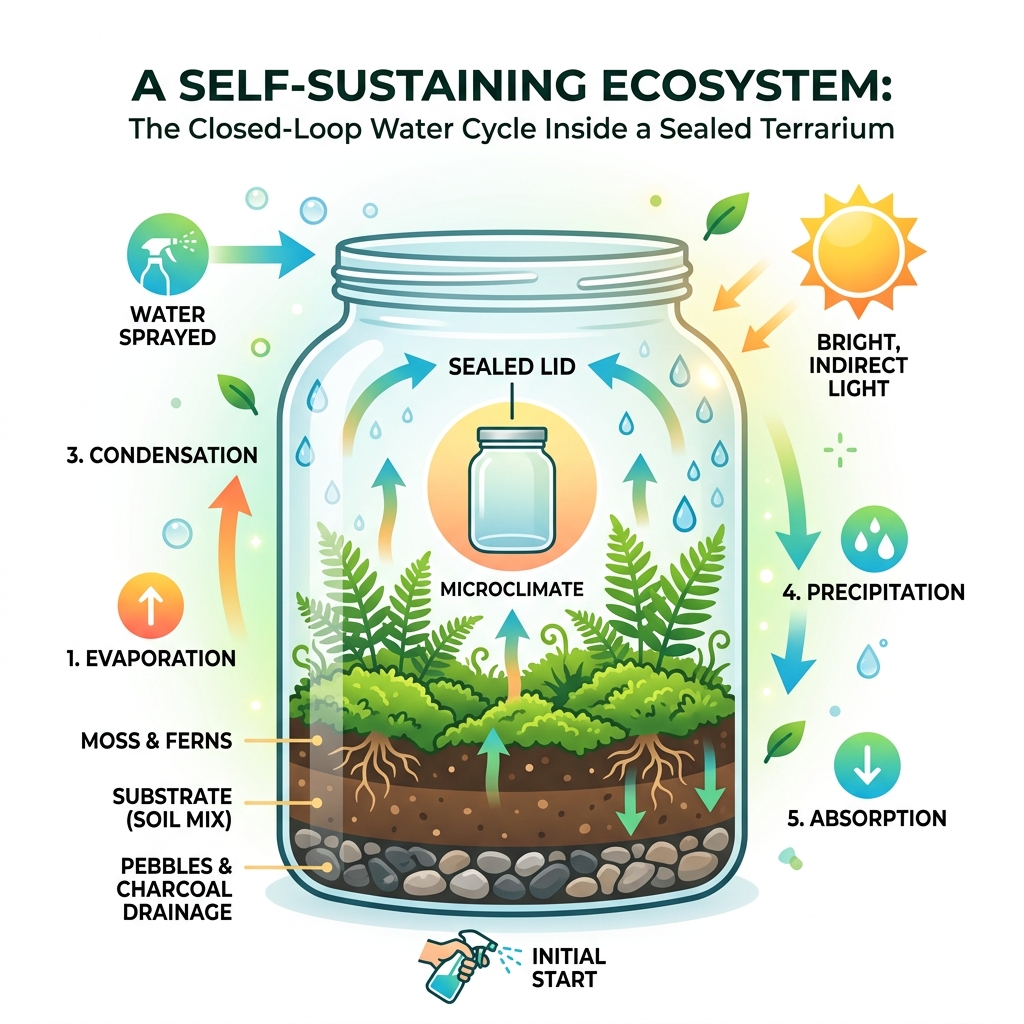
- Best setup: Closed terrarium — it recycles moisture automatically, so plants stay humid with minimal watering
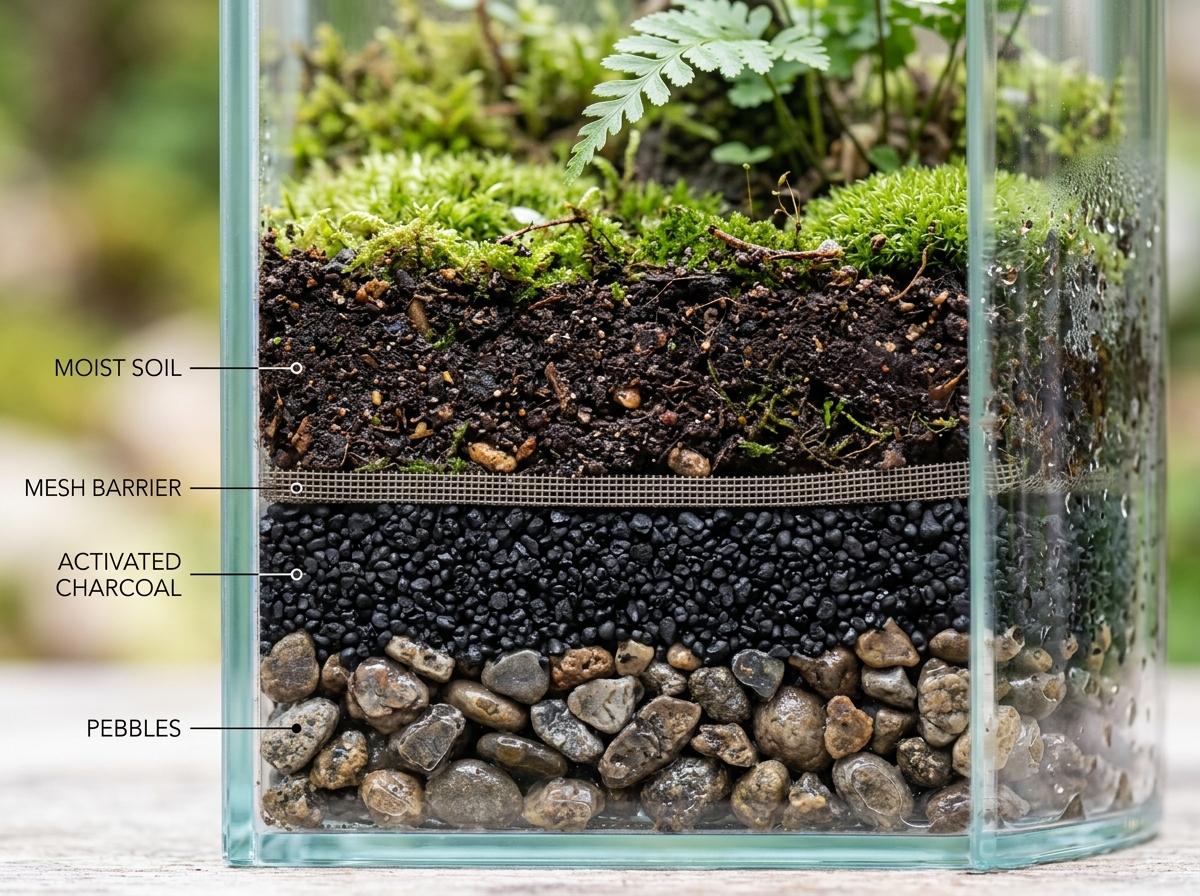
- Key layers: Pebbles -> activated charcoal -> mesh barrier -> soil -> plants and moss
- Best plants: Mood moss, cushion moss, maidenhair fern, blue star fern, rabbit’s foot fern
- Light needs: Bright, indirect light — never direct sun
- Lifespan: Two to three years on average, often longer with proper care
There’s something quietly magical about a patch of forest floor sitting on your windowsill. The deep green textures, the earthy smell, the sense that something alive is quietly thriving inside a glass jar.
The appeal goes beyond looks. A well-built moss and fern terrarium is nearly self-sustaining. Water evaporates from the soil, condenses on the glass walls, and drips back down to the roots — a tiny, closed water cycle that does most of the work for you.
For anyone who loves plants but struggles with space, time, or a tendency to forget watering schedules, this is one of the most rewarding projects you can take on.
And here’s the honest truth: it takes a little effort to get right. The layering matters. The moss preparation matters. The choice of container matters. But once it’s built and balanced, a moss and fern terrarium largely takes care of itself.
This guide walks you through every step — from choosing your glass vessel to troubleshooting browning moss — so you can build something that lasts.
Essential Materials for Your Moss and Fern Terrarium
Building a moss and fern terrarium is like building a house; if the foundation is weak, the whole thing eventually collapses. We aren’t just putting plants in a jar; we are creating a life-support system. Because moss doesn’t have true roots (they have “rhizoids” that anchor them but don’t drink like roots do), they rely on the environment we provide.
To get started, you’ll need:
- A Glass Vessel: Clear glass is a must.
- Drainage Stones: Pea gravel, LECA (clay balls), or aquarium sand.
- Activated Charcoal: This is your “secret weapon” for a fresh-smelling ecosystem.
- Mesh Barrier: A piece of window screen or fine mesh to keep the soil from falling into the rocks.
- High-Quality Substrate: A mix that retains moisture but doesn’t turn into a swampy mess.
- Hardscape Elements: Rocks (like Seiryu or Dragon stone) and driftwood (like Azalea roots).
When you begin Experimenting with Layers in Your DIY Succulent Terrarium, you’ll notice that succulent setups focus on dryness. For moss and ferns, we are doing the exact opposite. We want moisture, but we don’t want the roots sitting in a stagnant pool of water.
Choosing the Right Glass Container
The container dictates how much maintenance you’ll have to do. We generally recommend a closed container for a moss and fern terrarium. Why? Because most homes have a humidity level of 30-50%, while moss species thrive best at 70-90% relative humidity.
- Fishbowl Styles: These are great because the narrow neck helps retain 40-60% more humidity than a wide, flat bowl.
- Apothecary Jars: Beautiful and classic, these usually come with a lid, making them perfect for a How to Make a Closed DIY Succulent Terrarium style adapted for moisture-loving plants.
- Thrifted Jars: We love a good thrift find! Just ensure the glass is clear (not tinted) so light can penetrate to the bottom.
The Role of Activated Charcoal
We often hear people ask if they can skip the charcoal. While it’s an extra expense (around $35 for 500g in some regions), we consider it “cheap insurance.” In a closed ecosystem, organic matter eventually breaks down. Without airflow, this can lead to “swampy” smells and toxic gas buildup.
Activated charcoal acts as a filter, absorbing toxins and odors. It keeps the water clean as it cycles through the system, which is crucial for the long-term health of your bryophytes (mosses) and ferns. This is supported by scientific research on bryophyte conservation and ecology which emphasizes the importance of clean, stable environments for these non-vascular plants. It ensures your little forest smells like fresh rain rather than a stagnant pond.
| Feature | Open Terrarium | Closed Terrarium |
|---|---|---|
| Humidity | Low (30-50%) | High (70-90%) |
| Watering Frequency | Daily/Every other day | Every few months |
| Best Plants | Succulents, Air plants | Moss, Ferns, Tropicals |
| Maintenance | High (misting required) | Low (self-sustaining) |
Selecting the Best Moss and Fern Varieties
There are more than 12,000 species of mosses worldwide, but not all of them want to live in your jar. Some mosses love the sun and dry out quickly; others are “aquatic” and want to be submerged. For a woodland-style moss and fern terrarium, we want the ones that thrive in damp, shady conditions.
Our Favorite Mosses:
- Mood Moss (Dicranum scoparium): Known for its dreamy, windswept look. It grows in thick, wavy tufts.
- Cushion Moss (Leucobryum glaucum): Grows in round, silvery-green mounds. It’s perfect for creating “rolling hills” in your landscape.
- Fern Moss (Thuidium delicatulum): It looks like tiny, microscopic fern fronds. It’s great for ground cover.
Preparing and Cultivating Moss
One of the biggest mistakes beginners make is taking moss from the backyard and putting it straight into a jar. We recommend a two-week quarantine and cultivation period.
- Check for “Seeding”: If the moss has little stalks with balls on the end, it has gone to seed. These often turn brown and die shortly after being placed in a terrarium. Avoid these!
- The Cleaning Soak: Soak your moss in a bowl of filtered water for 10-30 minutes. This hydrates the plant and helps dislodge any tiny bugs or hitchhikers.
- The Two-Week Test: Place your moss in a shallow container (about 5-7cm tall) with a lid. Watch it for two weeks. If mold appears, you can treat it before it infects your whole terrarium. If it stays green and lush, it’s ready for its permanent home.
- Ethical Sourcing: Commercial harvesting of moss from public lands can result in heavy fines (up to $5,000 in some areas). Always buy from reputable sellers or harvest responsibly from your own property with permission.
Best Ferns for a Moss and Fern Terrarium
Ferns are the “trees” of our miniature world. Because they love high humidity, they are the perfect roommates for moss. Scientific research on fern growth in high-humidity environments highlights how these vascular plants utilize moisture for reproduction and growth. When selecting ferns, look for “tropical” varieties that stay small.
- Maidenhair Fern: Delicate and airy, but be warned — they are the “divas” of the fern world. If they dry out even once, they may drop their leaves.
- Blue Star Fern: These have a beautiful silvery-blue hue and are much hardier than Maidenhairs.
- Rabbit’s Foot Fern: These have “furry” rhizomes that grow over the soil and rocks, adding a fantastic prehistoric feel.
- Asparagus Fern: Though not technically a true fern, its wispy foliage creates a wonderful forest canopy.
We’ve found that Building a Small Ecosystem DIY Succulent Terrarium teaches you a lot about plant resilience, but ferns are even more forgiving of “rough” planting. If you accidentally break a stem while tucked into a tight corner, don’t panic! Most ferns grow new fronds very quickly once they settle into a humid environment.
Step-by-Step Guide to Building a Woodland Moss and Fern Terrarium
Now for the fun part: assembly. We like to follow the “Magic Ratio”: 1/3 filled space and 2/3 empty space. This allows for proper airflow and gives your ferns room to grow toward the light.
Layering for Drainage and Health
- The False Bottom: Start with 1 to 1.5 inches of stones or LECA. This is where excess water will sit so it doesn’t rot your plant roots.
- The Charcoal Layer: Add a thin layer (about a quarter-inch) of activated charcoal over the stones.
- The Barrier: Place your mesh or a thin layer of dried sphagnum moss. This prevents the soil from washing down into the rocks and making a muddy mess.
- The Substrate: Add 2-3 inches of high-quality potting soil. We prefer a mix of coco coir, orchid bark, and pumice for aeration.
- Sculpting: Don’t just make it flat! Use your hands to create hills, valleys, and slopes. This makes the moss and fern terrarium look much more natural and provides different vantage points for your plants.
For more on the science of self-sustaining systems, check out our Guide to Creating a Self-Sustaining Succulent Terrarium.
Designing Your Moss and Fern Terrarium Landscape
Design is where you can let your creativity shine. We suggest placing your “hardscape” (rocks and wood) before the plants.
- Hardscape Anchors: Place a large piece of Seiryu stone or driftwood first. This acts as the “mountain” or “fallen log” of your forest.
- The Island Method: You can even create a “moss island” by gluing driftwood to a volcanic rock base using aquarium-safe glue and filling gaps with clay.
- Pebble Ravines: Use small pebbles to create the illusion of a dried-up stream or a path winding through the moss.
- Planting the Ferns: Use tweezers to create a hole, insert the fern’s rootball, and gently firm the soil around it.
- Tucking the Moss: Press your moss firmly onto the soil. A pro tip: tuck any brown “rhizoids” (the bottom of the moss) underneath so only the green part is visible.
If you enjoy the artistic side of moss, you might also be interested in The Step-by-Step Guide to Creating a Moss Wall Art Installation.
Maintenance and Troubleshooting for Longevity
Once your moss and fern terrarium is sealed, it begins its life as an independent ecosystem. However, you are still the “guardian” of this world.
Managing Humidity and Light
- The Light Test: Place your terrarium in a spot with bright, indirect light. A north or east-facing window is usually perfect. Never put it in direct sun. The glass will act like a magnifying glass and literally cook your plants.
- Reading the Condensation: You should see a light mist on the glass in the morning that clears up as the day goes on. If the glass is constantly covered in heavy droplets, it’s too wet — open the lid for a few hours. If there’s no condensation at all, it’s too dry — give it 1-2 squirts of water.
- Water Quality: This is huge. Tap water contains chlorine (0.5-2.0 ppm), which can turn moss yellow within 48 hours. Always use distilled water, rainwater, or filtered water.
Dealing with Mold and Pests
Mold is the most common “villain” in a new terrarium. It usually appears as white fuzz on driftwood or decaying leaves.
- Airflow: If you see mold, open the lid for a day to let the ecosystem breathe.
- Springtails: These tiny, harmless springtails are the “janitors” of the terrarium world. They eat mold and decaying matter, keeping your ecosystem bioactive and healthy.
- Pruning: If a fern leaf turns yellow or a patch of moss dies, remove it immediately. Decaying matter invites mold.
If you’re looking for more ways to bring nature indoors, you can also Create a Statement Piece with a DIY Succulent Terrarium.
Frequently Asked Questions about Moss and Ferns
How long does a moss and fern terrarium last?
With proper care, a moss and fern terrarium can last for years. Two to three years is a very common average, but we have seen well-balanced systems thrive for five years or more! Eventually, the plants may outgrow the space and require a “reset” or heavy pruning.
Can I use tap water to mist my moss?
We strongly advise against it. The minerals and chlorine in tap water can build up on the glass (making it cloudy) and chemically burn the delicate moss tissues. Stick to distilled or rainwater to keep your greens vibrant.
Why is my moss turning brown or mushy?
- Brown and Crispy: Not enough humidity or too much direct light.
- Brown and Mushy: Overwatering. If the moss feels like a wet sponge, it’s likely rotting. Open the lid and let it dry out.
- Yellowing: Often a sign of chlorine sensitivity or poor light.
Conclusion
Creating a moss and fern terrarium is more than just a DIY project; it’s a way to reconnect with the slow, steady rhythm of nature. Whether you’re building a “moss island” or a dense woodland ravine, these miniature ecosystems bring a sense of peace and creativity to any room.
At Opcion Rural, we believe in the power of blending art and nature to create accessible home ecosystems. By following these steps — from the “Magic Ratio” to the “Two-Week Moss Test” — you’re well on your way to a thriving, green masterpiece.
Ready to dig in? Start your next green project with Opcion Rural and bring the magic of the forest floor into your home today!
