
Why Artistic Plant Terrarium Designs Are the Ultimate Creative Home Project
Artistic plant terrarium designs are miniature landscapes built inside glass containers, combining plants, stones, soil, and decorative objects to create living works of art. Unlike a basic houseplant, they blend ecosystem science with visual design — making them equal parts nature and creativity.
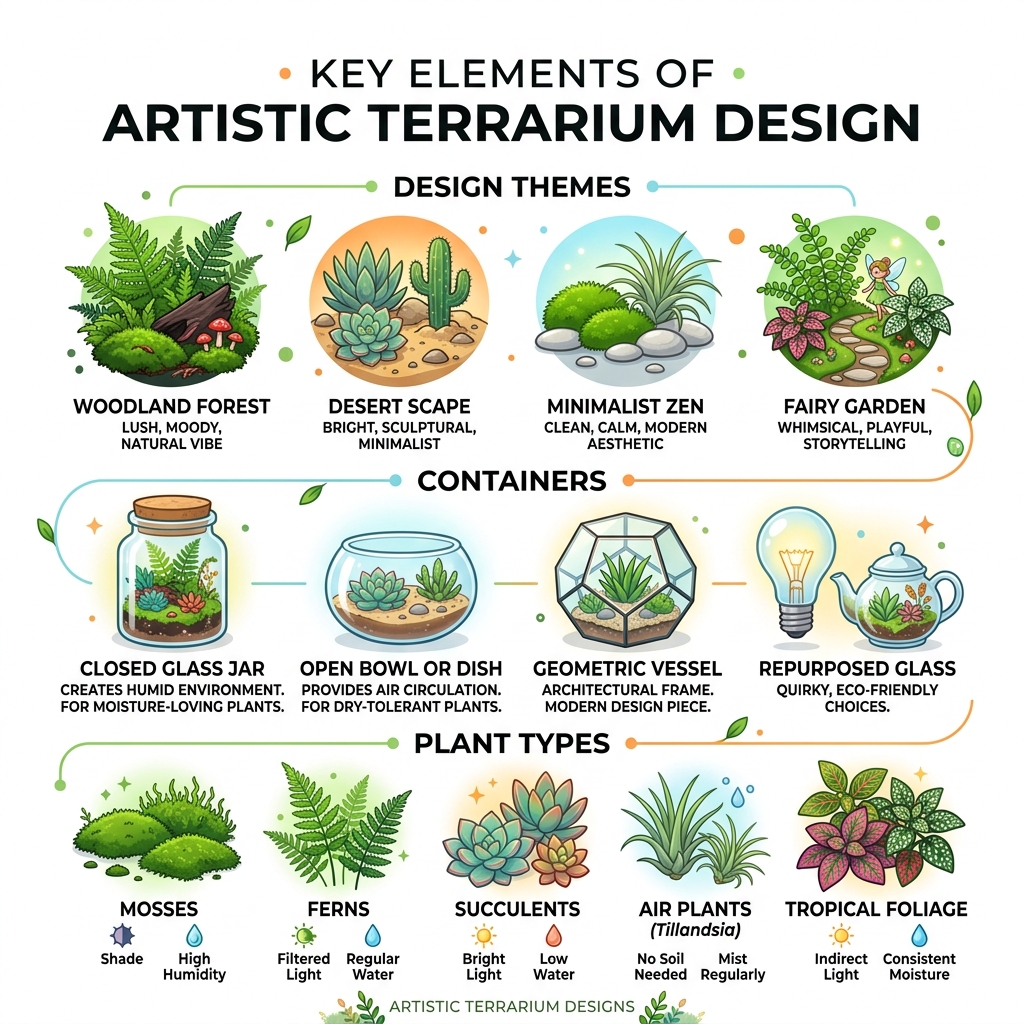
Quick overview of popular artistic terrarium styles:
| Style | Container Type | Best Plants | Vibe |
|---|---|---|---|
| Woodland Forest | Closed glass jar or tank | Ferns, moss, Fittonia | Lush, moody, natural |
| Desert Scape | Open bowl or dish | Succulents, cacti | Bright, sculptural, minimal |
| Fairy Garden | Wide glass bowl | Small ferns, polka dot plant | Whimsical, playful |
| Minimalist Zen | Geometric glass vessel | Moss, air plants | Clean, calm, modern |
| Repurposed Vessel | Lightbulb, teapot, candle holder | Moss, trailing plants | Quirky, eco-friendly |
Think of a terrarium as a tiny world you get to design from scratch. You choose the landscape, the plants, the mood. It can look like a foggy forest floor, a sun-baked desert, or something straight out of a fairy tale.
The best part? You don’t need a big space or a big budget.
A glass jar, a handful of plants, some pebbles, and a little imagination are enough to start. And once you understand a few simple design principles — like layering, scale, and plant selection — the results can look genuinely stunning.
Terrariums also do something most decor can’t: they stay alive. A closed terrarium even recycles its own water, creating a self-sustaining mini-ecosystem that practically takes care of itself.
Whether you’re working with a windowsill or a whole shelf, there’s an artistic terrarium style that fits your space, your skill level, and your aesthetic.
Defining Artistic Plant Terrarium Designs: Beyond the Glass Jar
When we talk about artistic plant terrarium designs, we are moving past the idea of just “plants in a pot.” An artistic terrarium is a living canvas. While a conventional terrarium might simply hold a collection of plants, an artistic one seeks to tell a story or recreate a specific geographical moment. We like to think of them as 3D botanical postcards—capturing the essence of a temperate rainforest or a sun-drenched Patagonian corner.

The Evolution of Artistic Plant Terrarium Designs
The history of these designs dates back to the Victorian era with the invention of the Wardian case. Originally used to transport exotic plants across oceans, these glass cases became high-society “it” accessories. Today, the medium has evolved into a sophisticated art form. Modern designers are pushing the boundaries, using everything from old clocks to specialized LED-lit tanks that can simulate the seasons. We aren’t just growing plants anymore; we are curating biomes.
Mastering Scale in Artistic Plant Terrarium Designs
One of the most important factors in making a terrarium look “artistic” rather than “cluttered” is scale. You want to create a sense of visual weight that draws the eye. This involves choosing a focal point—perhaps a tall fern or a jagged piece of driftwood—and arranging smaller elements around it to create balance. By experimenting with layers in your DIY succulent terrarium, you can build vertical interest that mimics the natural stratification of a forest or desert.
Core Principles of Miniature Landscape Architecture
To create a truly compelling design, we need to think like landscape architects, just on a much smaller scale. This means considering how the viewer’s eye moves through the glass. We use the concepts of foreground, middle-ground, and background to create depth perception.
| Feature | Open Terrarium (Desert) | Closed Terrarium (Woodland) |
|---|---|---|
| Humidity | Low | High |
| Airflow | High | Minimal (Self-Sustaining) |
| Watering | Soak & Dry (Infrequent) | Recycled Condensation |
| Substrate | Gritty, sandy mix | Moisture-retentive soil |
By experimenting with layers in your DIY succulent terrarium 2, you can use different colors of sand and stone to create “waves” or geological strata that add a major “wow factor” to your display.
Creating Depth with Hardscape and Substrate
Hardscape—the non-living elements like rocks and wood—sets the tone before a single plant is tucked into the soil. We recommend placing your “feature stones” first. These act as anchors for the entire scene. To make the landscape look grounded, try burying the bases of your stones slightly so they look like they are emerging from the earth rather than just sitting on top of it. Using materials like serpentine crystals or dragon stone can add unique textures that feel ancient and natural.
5 Creative Themes for Your Next Artistic Terrarium
The beauty of artistic plant terrarium designs is the ability to explore different concepts. Here are five of our favorite themes to get your creative juices flowing:
- The Sunny Desertscape: Perfect for those who love bright light and sculptural shapes. By creating a mini desert DIY succulent terrarium, you can use cacti and succulents to mimic a rocky canyon.
- The Woodland Forest: A lush, green escape filled with ferns and mosses that smell like a fresh rain.
- Whimsical Fairy Scenes: By using crafty and creative DIY succulent terrarium ideas, you can add miniature figurines, tiny benches, or “fairy” houses to create a playful narrative.
- Minimalist Zen: Focus on a single, beautiful rock and a patch of pristine moss to create a space for meditation.
- Seasonal Holiday Themes: You can swap out small accessories—like tiny pumpkins for Halloween or dried eucalyptus for spring—to keep your “living art” relevant all year round.
Designing a Self-Sustaining Woodland
A woodland terrarium is usually a closed system. This means it creates its own weather! Moisture evaporates from the leaves, condenses on the glass, and “rains” back down into the soil. To succeed, you’ll need moisture-loving plants like the Lemon Button Fern or Mood Moss. Following a guide to creating a self-sustaining succulent terrarium (or in this case, a woodland one) ensures you pick the right humidity-loving species that won’t rot in the damp air.
Whimsical and Repurposed Vessel Concepts
Art doesn’t have to live in a standard fish tank. We love turning glass containers into DIY succulent terrariums, including vintage teapots, old lightbulbs, or even glass butter dishes. A sophisticated vase typically meant for flowers can be repurposed to create an unexpected and fun “pantry” or “office” terrarium. These stylish and simple DIY succulent terrariums prove that sustainability and artistry go hand in hand.
Essential Elements: Choosing Plants and Hardscape for Visual Impact
The plants you choose are the stars of the show, but the hardscape provides the stage. When selecting plants, look for a mix of heights, textures, and colors. Research shows that indoor plants can reduce stress and improve mental health, so we recommend choosing a palette that makes you feel calm and inspired. You might even beautify your workspace with a DIY succulent terrarium to help you stay focused during the day.
Selecting the Perfect Succulents and Cacti
For open terrariums, Echeveria, Haworthia, and Gasteria are fantastic choices because they stay relatively small and have striking geometric patterns. If you are an easy DIY succulent terrarium for beginners enthusiast, start with “air plants” (Tillandsia) as they don’t even require soil! The most important rule for succulents is drainage; they hate “wet feet,” so always ensure your design allows for plenty of airflow.
Incorporating Natural and Found Objects
To truly create a statement piece with a DIY succulent terrarium, look beyond the nursery. We love using found objects like weathered driftwood, interesting fossils, or even small animal skulls (cleaned, of course!) to add a touch of the “Cabinet of Curiosities” aesthetic. These elements add a layer of history and mystery to your miniature world.
Specialized Techniques for Building and Maintaining Living Art
Building artistic plant terrarium designs requires a bit more than just dumping in dirt. We follow a specific layering technique to ensure the health of the ecosystem. When building a small ecosystem DIY succulent terrarium, we start with a drainage layer of pebbles, followed by a thin layer of activated charcoal to act as a filter against odors and mold.
A layer of sphagnum moss or horticultural sand is then added as a “bouncer” to prevent the soil from washing down into the drainage rocks. For watering, we swear by the “Soak & Dry” method for open designs. Using a step-by-step guide DIY water-wise succulent terrarium approach, you only water when the soil is bone-dry, stopping before the water pools in the pebbles.
Precision Planting and Tool Use
Working in tight glass spaces requires specialized tools. You don’t need fancy gear; a long-handled iced tea spoon, a pair of long tweezers, and even a potato masher (for tamping soil) work wonders. For really simple DIY succulent terrariums, we recommend washing the soil off the roots of your plants before placing them. This prevents “smearing” dirt on the inside of the glass, keeping your view pristine. Don’t be afraid to prune your plants hard—just like a bonsai—to keep them in scale with their glass home.
Long-Term Care and Troubleshooting
Maintenance is the key to preserving your intended design. Most terrariums thrive in bright, indirect light. Direct sun can “cook” a closed terrarium, turning it into a tiny sauna. If you notice white mold, don’t panic! You can scrape it off and increase airflow. Some advanced builders even add “springtails”—tiny, harmless insects that act as a “clean-up crew” by eating mold and decaying matter. When how to make a closed DIY succulent terrarium (or tropical one), keep an eye on the condensation. A light fog in the morning is perfect; constant heavy water droplets mean it’s time to leave the lid off for a day to let it breathe.
Frequently Asked Questions about Artistic Terrariums
What is the difference between an open and closed terrarium?
An open terrarium has no lid and allows for constant airflow, making it ideal for dry-loving plants like succulents and cacti. A closed terrarium has a lid that traps moisture, creating a humid, self-sustaining cycle perfect for ferns, mosses, and tropical plants.
Which plants are best for a low-maintenance artistic design?
For open designs, Haworthia and air plants are incredibly hardy. For closed designs, “Mood Moss” and “Nerve Plants” (Fittonia) are great because they “tell” you when they need water by drooping slightly, then perking right back up once hydrated.
How do I prevent mold from growing in my terrarium?
Use activated charcoal in your base layers to absorb impurities. Avoid overwatering—the soil should be moist like a wrung-out sponge, not muddy. If you have a closed terrarium, occasionally open the lid to let fresh air circulate.
Conclusion
At Opcion Rural, we believe that bringing nature indoors shouldn’t just be about decoration—it should be about creative expression. Artistic plant terrarium designs offer a unique way to build a sustainable, living ecosystem that reflects your personal style. Whether you are crafting a tiny desert in a bubble bowl or a lush jungle in a vintage jar, these projects remind us of the beauty and resilience of the natural world.
If you are looking for a meaningful project, DIY succulent terrariums make a great gift idea for friends and family, offering them a piece of “living art” that grows along with them. Start small, experiment with your layers, and let your imagination take root!
