
A Tiny Ecosystem That Waters Itself (Yes, Really)
Building a diy closed terrarium system means creating a self-watering, self-sustaining miniature garden inside a sealed glass jar — no daily watering, no complicated care routines.
Here’s the quick version of how it works:
- Add layers — drainage gravel, activated charcoal, and potting substrate
- Plant moisture-loving plants like ferns, moss, or nerve plants
- Mist lightly, then seal the jar with a lid
- Place in bright, indirect light and let the ecosystem do its thing
Once sealed, water evaporates from the soil, condenses on the glass walls, and drips back down to the roots — a miniature rain cycle that can keep your plants alive for years with almost zero effort. Some well-built terrariums have thrived for nearly a decade.
It’s one of the most satisfying DIY projects for small spaces. You get living greenery, a creative outlet, and a conversation piece — all in one glass jar.
But getting it right does take a little know-how. The layering system matters. Plant choice matters. And the first few days after sealing are critical for dialing in the right moisture balance.
This guide walks you through every step.
Understanding the DIY Closed Terrarium System
At its heart, a diy closed terrarium system is a scientific marvel in a bottle. It is what scientists call a Closed Ecological System (CES). In this tiny world, matter is completely recycled. While we provide the initial “ingredients”—soil, water, and plants—the system takes over the management from there.
The magic happens through a balance of three main cycles:
- The Water Cycle: Water is absorbed by roots, released through leaves (transpiration), evaporates into the air, condenses on the glass, and “rains” back down into the soil.
- The Nutrient Cycle: As old leaves fall, microorganisms in the soil break them down, turning waste back into food for the plants.
- The Gas Exchange: During the day, plants use light to turn CO2 into oxygen (photosynthesis). At night, they use some of that oxygen and release CO2 (respiration). It’s a perfectly balanced breathing rhythm.
The only thing this system needs from the outside world is energy in the form of light. Without light, the engine stops. But with the right placement, these “living snow globes” can thrive for five to ten years, and in some legendary cases, even longer!
The Difference Between Closed and Open Systems
When you’re browsing for inspiration, you’ll see two main types of glass gardens. Understanding the difference is crucial because putting the wrong plant in the wrong jar is the number one reason terrariums fail.
Closed Systems are high-humidity environments. They are sealed with a lid or cork to trap moisture. These are perfect for tropical plants, ferns, and mosses that love damp “jungle” conditions.
Open Systems have no lid. They allow for airflow and lower humidity. These are designed for arid species like cacti and succulents. If you try to put a cactus in a closed jar, the humidity will cause it to rot within days. For those interested in the desert aesthetic, check out our guide-to-creating-a-self-sustaining-succulent-terrarium to see how those requirements differ.
How the Water Cycle Functions in a Jar
The engine of your diy closed terrarium system is moisture equilibrium. When you first mist your plants and close the lid, you are setting the “water budget” for the ecosystem.
If you have the perfect amount of water, you will see a light fog on the glass in the morning that clears up as the day gets warmer. This shows that the cycle of evaporation, condensation, and precipitation is active. If the glass is constantly bone-dry, your plants will eventually wilt. If the glass is so foggy you can’t see the plants, you have too much water, which invites mold and root rot.
Essential Materials for Your DIY Closed Terrarium System
Before we get our hands dirty, we need to gather our supplies. Think of this as building a house; you wouldn’t start without a solid foundation.
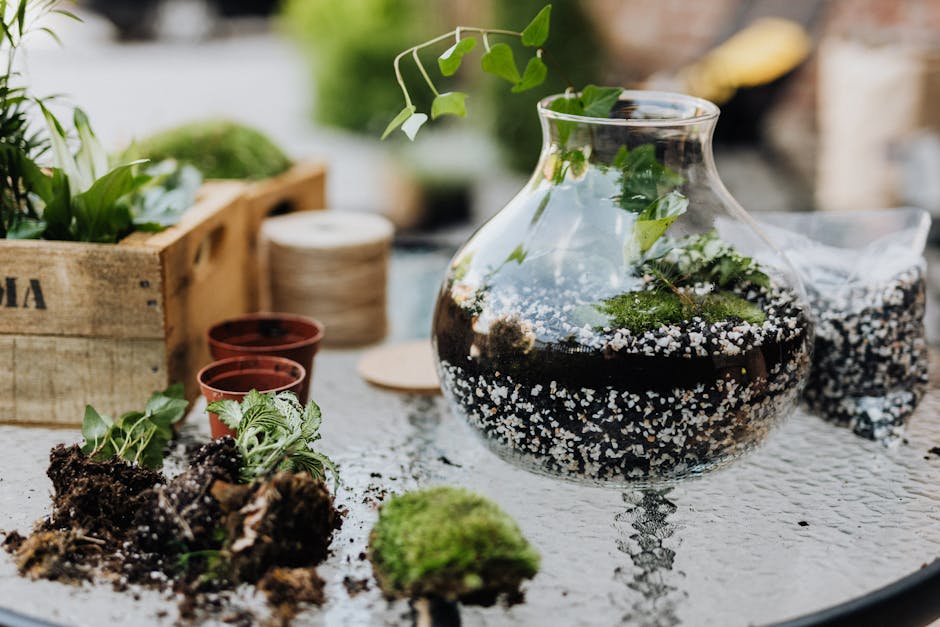
The Shopping List:
- Glass Container: Must be clear and have a lid.
- Drainage Material: Small stones, pea gravel, or LECA (lightweight expanded clay aggregates).
- Horticultural Charcoal: This is the “secret sauce” that keeps the system from smelling like a swamp.
- Substrate: A sterile, high-quality tropical potting mix.
- Plants: Small, slow-growing tropical varieties.
- Tools: Long tweezers, a spoon, and a spray bottle.
Choosing the Right Glass Vessel and Lid
Your container is the boundary of your world. While you can buy fancy geometric cases, some of the best terrariums come from turning-glass-containers-into-diy-succulent-terrariums or even repurposing old pickle jars and cookie jars.
What to look for:
- Clarity: Use clear glass, not tinted or cloudy glass, so the plants get maximum light.
- Access: Ensure the mouth of the jar is wide enough for your hand or at least your tools. No one wants to spend three hours trying to move a pebble with a pair of chopsticks because the opening is too small!
- The Seal: A tight-fitting lid is best. If the lid is especially tight, you might only need to water once every four to six months. If it’s a bit loose, you’ll just need to mist more frequently.
Selecting Plants for High-Humidity Environments
Success starts with the right green roommates. You want plants that stay small (under 12 inches) and love a good steam room.
Top Picks:
- Ferns: Lemon Button Ferns or Maidenhair Ferns add a lush, prehistoric feel.
- Nerve Plants (Fittonia): These are the “drama queens” of the plant world; they’ll wilt if they need water but perk up instantly, and their pink or white veins look stunning against green moss.
- Polka Dot Plants (Hypoestes): Great for a splash of color.
- Moss: Essential for that “forest floor” look.
If you are a fan of desert plants, they belong in open containers. You can learn how-to-make-a-closed-diy-succulent-terrarium here, but keep in mind that “closed” in that context usually refers to the container style rather than a hermetic seal!
Step-by-Step Construction of the DIY Closed Terrarium System
Now for the fun part! Building your diy closed terrarium system is a meditative process. Set aside about 30 minutes, put on some music, and let’s build a world.
Layering for Optimal Drainage and Health
The most common mistake beginners make is putting soil directly on the bottom of the jar. Without a drainage layer, water pools at the bottom, the soil becomes stagnant, and the roots literally drown.
The Golden Ratio of Layers:
- The Drainage Base (1 inch): Fill the bottom with stones or gravel. This acts as a reservoir for excess water.
- The Charcoal Layer (1/4 inch): Sprinkle a thin layer of horticultural charcoal over the stones. This filters the water and absorbs odors.
- The Barrier (Optional): Some pros use a piece of mesh or dried sphagnum moss here to keep the soil from falling into the rocks.
- The Substrate (3-4 inches): Add your soil. A good rule of thumb is that the soil should be roughly 1/3 of the total container height. We recommend a mix of equal parts sand, sphagnum moss, and potting soil.
| Material | Pros | Cons |
|---|---|---|
| Gravel/Stones | Cheap, easy to find, looks natural. | Heavy, can be messy if moved. |
| LECA (Clay Balls) | Very lightweight, excellent water absorption. | Usually bright orange/brown, more expensive. |
For more on getting these ratios right, check our guide on experimenting-with-layers-in-your-diy-succulent-terrarium.
Planting and Designing Your Miniature Landscape
Before you plant, think about the “viewing angle.” Will the terrarium sit against a wall or in the center of a table? If it’s against a wall, put the tallest plants in the back. If it’s a centerpiece, put the tall plants in the middle.
The Planting Process:
- Dig a small hole in the substrate using a spoon or your finger.
- Prepare the plant: Remove it from its nursery pot and gently tease the roots. If the root ball is too big, you can prune it slightly.
- Place and secure: Set the plant in the hole and firm the soil around it. Ensure no leaves are touching the glass, as this can lead to rot.
- Add “Hardscape”: This is where you bring the art. Add a piece of heat-treated bark, a cool rock, or even a tiny figurine. This is how you go about creating-your-own-jungle-with-a-diy-succulent-terrarium style—by adding personality!
Maintenance and Troubleshooting Your Ecosystem
Once the lid is on, your job is mostly done—but not entirely. The first two weeks are the “calibration phase.”
Establishing Moisture Equilibrium
Watch your jar daily for the first week.
- Perfect Balance: A light misting on the glass in the morning that disappears by noon.
- Too Wet: Large water droplets rolling down the glass all day. Fix: Open the lid for 24 hours to let some moisture escape.
- Too Dry: No condensation at all and the soil looks light brown. Fix: Give it 2-3 sprays with your mister and reseal.
Solving Common Problems: Mold and Decay
Don’t panic if you see a little white fuzz! Mold is common in new terrariums as the ecosystem settles.
The Fixes:
- The Manual Way: Remove the affected leaf or wipe away the mold with a Q-tip dipped in diluted cinnamon water (a natural fungicide).
- The Bioactive Way: This is our favorite method! Introduce Springtails. These tiny, harmless insects are the “janitors” of the terrarium world. They eat mold and decaying plant matter, keeping your system pristine. This is the key to building-a-small-ecosystem-diy-succulent-terrarium that truly lasts for years.
Frequently Asked Questions about Closed Terrariums
How long can a closed terrarium last?
While a typical display life is 1-2 years before plants outgrow the space, a well-balanced diy closed terrarium system can last a decade. You can extend the life by pruning the plants back when they hit the lid and refreshing the top inch of soil every few years.
Where is the best place to put my terrarium?
Bright, indirect light is the gold standard. An east-facing window is perfect. Never put a closed terrarium in direct sunlight. The glass acts like a magnifying glass, and you will literally cook your plants in a “greenhouse effect” gone wrong.
Do I ever need to fertilize my terrarium?
Generally, no. We want the plants to grow slowly so they don’t outgrow their home. If the plants look a bit pale after a year, you can use an organic water-soluble fertilizer at 1/4 of the recommended strength once in the spring.
Conclusion
At Opcion Rural, we believe that everyone should have a little piece of the wild indoors. Building a diy closed terrarium system is more than just a craft project; it’s a lesson in how nature sustains itself. Whether you’re decorating a dark office corner or looking for a sustainable gift, these bottled worlds offer a unique blend of art and science.
If you enjoyed this project, you might also like our guide on really-simple-diy-succulent-terrariums for a different take on indoor gardening. For more rural living tips and creative ecosystem builds, visit us at https://www.opcionrural.com/. Happy planting!
