
The Best Succulents for Beginners: Your Quick-Start Guide
The best succulents for beginners are forgiving, low-maintenance plants that store water in their leaves and can survive a missed watering (or several). Here are the top picks to start with:
- Snake Plant (Dracaena trifasciata) – thrives in low light, nearly impossible to kill
- Zebra Haworthia (Haworthiopsis attenuata) – compact, non-toxic, tolerates shade
- Jade Plant (Crassula ovata) – long-lived, easy to prune, drought-resistant
- Echeveria Elegans – beautiful rosette shape, minimal care needed
- Haworthia (various species) – small, spineless, very forgiving of neglect
If you’ve ever killed a houseplant and sworn off greenery forever, succulents might change your mind.
There are over 219 easy-to-grow succulent varieties available to beginners, and more than 101 of them are specifically labeled “hard to kill.” That’s not marketing fluff — it’s a reflection of how these plants actually work.
Succulents evolved in harsh, dry environments. They store water in their thick leaves and stems, which means they’d rather you forgot to water them than watered them too often. For small-space DIY enthusiasts who want living greenery without constant upkeep, that’s a game-changer.
The single biggest mistake beginners make? Overwatering. Most succulents only need water when the soil is completely dry and the leaves start to feel slightly flexible. It’s the opposite of what most plant instincts tell you.
The good news: once you understand a few simple rules, succulents are genuinely easy to keep alive — and even easier to love.
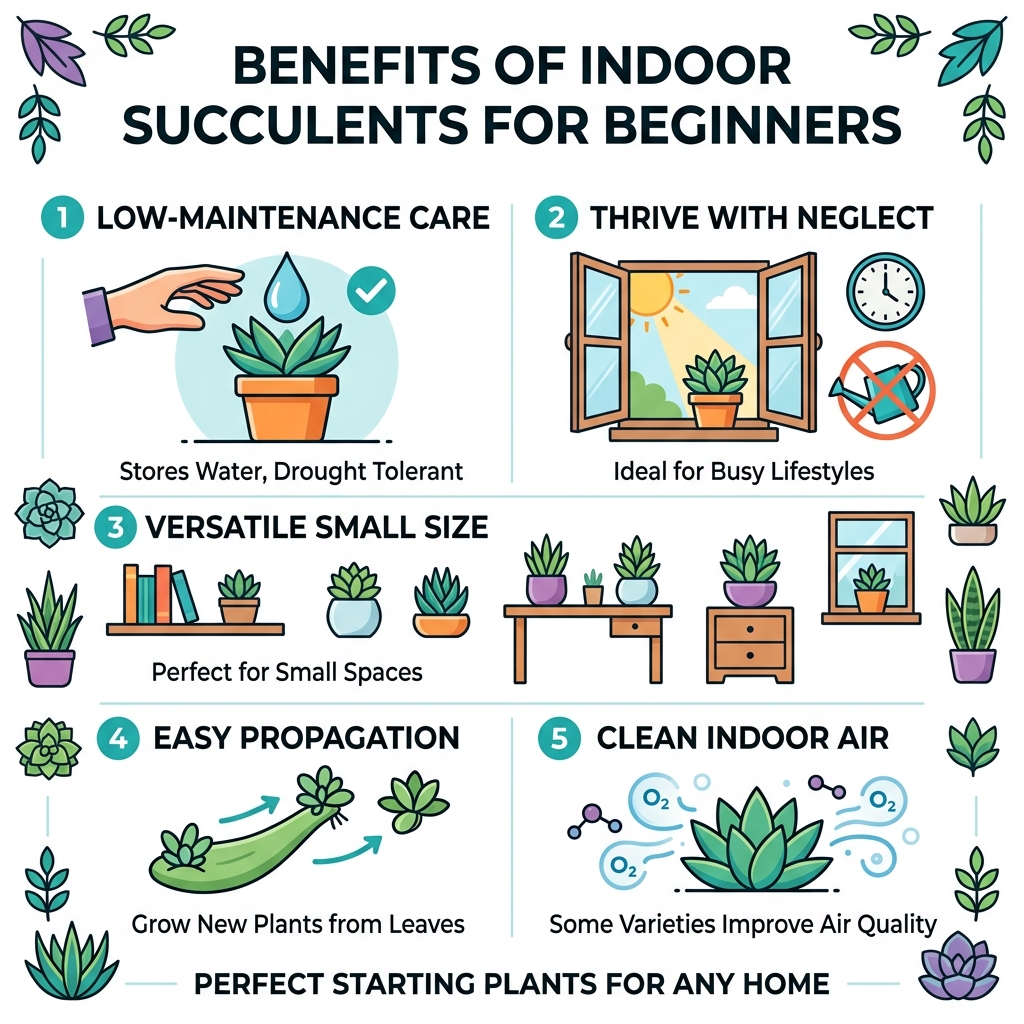
What Makes the best succulents for beginners?
When we talk about the best succulents for beginners, we are looking for plants that are essentially the “survivalists” of the botanical world. At Opcion Rural, we love these plants because they allow anyone to blend art and nature without needing a degree in horticulture.
The fundamental characteristic that makes a succulent “beginner-friendly” is neglect tolerance. These plants have evolved specialized structures to store water in their thick, fleshy leaves, stems, or roots. This adaptation allows them to survive long periods of drought, which is perfect if you have a busy lifestyle or a tendency to forget your watering can.

The Importance of the Right Container
One of the first things a beginner should consider is the pot. While a cute plastic planter might look nice, the material of the pot significantly impacts the health of your plant.
| Pot Type | Pros | Cons |
|---|---|---|
| Unglazed Clay/Terracotta | Porous, allows soil to breathe, wicks away excess moisture. | Can be heavy, dries out faster in very hot climates. |
| Plastic/Ceramic | Lightweight, comes in many colors, holds moisture longer. | Non-porous, increases the risk of root rot if overwatered. |
Regardless of the material, the most critical feature is drainage holes. Without a way for excess water to escape, the roots will sit in soggy soil, leading to the dreaded root rot. For more detailed advice, check out our indoor succulent care tips for beginners.
Soil and Texture
The best succulents for beginners won’t survive in standard garden soil. They require a “gritty” texture that facilitates rapid drainage. A good mix usually consists of 50% organic matter (like potting soil) and 50% inorganic matter (like perlite, coarse sand, or pumice). This ensures that oxygen can reach the roots even after a deep watering.
Top Low-Maintenance Varieties for Your Home
Starting your collection can be overwhelming when you realize there are 167 varieties commonly sold in 2.0″ pots—the perfect starter size. However, focusing on specific growth habits can help you choose. For instance, there are 73 rosette-forming types that are incredibly popular because they look like living sculptures.
If you are looking for indoor succulent plants for low maintenance, these four varieties are our top recommendations.
Snake Plant (Dracaena trifasciata)
Formerly known as Sansevieria, the Snake Plant is the undisputed king of low-maintenance greenery. It is one of the few succulents that can thrive in low light conditions, making it ideal for bedrooms or offices.
- Air Purification: It is famous for converting CO2 into oxygen at night and removing toxins like formaldehyde from the air.
- Drought Resistance: It can go weeks—sometimes even a month or two in winter—without water.
- Growth: It features striking vertical, sword-like leaves that can reach up to 48 inches tall.
Zebra Haworthia: A Striking best succulents for beginners Choice
If you want something small for a desk or windowsill, the Zebra Haworthia (Haworthiopsis attenuata) is perfect. It features dark green leaves adorned with white, horizontal stripes (called tubercles) that give it a “zebra” appearance.
- Compact Size: It rarely grows taller than 6 inches, making it a great succulent variety for small apartments.
- Non-Toxic: Unlike many other succulents, Haworthias are safe for pets and children.
- Light: It prefers bright, indirect light rather than the scorching afternoon sun. You can learn how to grow and care for Zebra Haworthia to ensure those white stripes stay vibrant.
Jade Plant (Crassula ovata)
The Jade Plant is often passed down through generations because of its incredible longevity. It develops thick, woody stems that make it look like a miniature tree.
- Symbolism: In many cultures, it is considered a symbol of good luck and prosperity.
- Water Needs: These are classic indoor succulents that need little water. Only water when the leaves feel slightly soft to the touch.
- Pruning: It is very easy to prune to maintain a specific shape, and the clippings can be easily used for propagation.
Echeveria Elegans: The best succulents for beginners Seeking Rosettes
Often called the “Mexican Snowball,” Echeveria Elegans is the quintessential rosette succulent. It features tight, blue-grey leaves that can take on a pinkish hue when “stressed” by bright light or cool temperatures.
- Offset Production: This plant is a “mother” that produces many “pups” or offsets around its base.
- Care: It requires more light than the Snake Plant or Haworthia. To prevent it from stretching (etiolation), place it in a sunny south-facing window. For a deep dive into this genus, see our echeveria care guide for beginners.
Essential Care: Watering and Lighting Best Practices
The most common mistakes beginners make involve the “Big Two”: Water and Light.
The “Soak and Dry” Method
The best way to water your succulents is to mimic a desert rainstorm. Drench the soil thoroughly until water runs out of the drainage holes at the bottom. Then—and this is the hard part—do not water again until the soil is bone-dry from top to bottom.
In the summer, this might be every 2 weeks. In the winter, when the plant is dormant, it might be once a month. A great trick is the “leaf flexibility test”: gently squeeze a leaf. If it’s firm, the plant has plenty of water. If it’s slightly wrinkled or flexible, it’s thirsty. Avoiding common beginner mistakes in succulent care starts with putting that watering can down!
Lighting and Placement
Most succulents need 3 to 6 hours of bright light daily.
- Indoor: South or east-facing windows are usually best.
- Color Clue: If your colorful succulent (red, purple, or orange) starts turning plain green, it’s telling you it needs more light.
- Etiolation: If your plant starts growing tall and “leggy” with wide spaces between leaves, it is stretching for light. This is a sign to move it to a brighter spot or invest in a small grow light.
Simple Propagation: Growing Your Collection for Free
One of the most rewarding parts of succulent gardening is that you can often grow new plants for free. There are 98 easy-to-propagate varieties ideal for beginners.
- Offsets (Pups): Plants like Haworthia and Echeveria grow “babies” next to the mother plant. Once they have a few roots of their own, you can gently snip them off and pot them separately.
- Leaf Cuttings: For Jades and Echeverias, you can gently wiggle a leaf until it snaps off cleanly.
- The Callousing Process: Never put a fresh cutting directly into moist soil. Let it sit on a dry paper towel for 2-5 days until the “wound” dries and forms a callus. This prevents rot.
- Rooting: Once calloused, lay the leaf on top of succulent soil. Mist it occasionally, and within a few weeks, tiny pink roots and a miniature plantlet will appear!
Frequently Asked Questions about Beginner Succulents
Which succulents are safe for households with pets?
If you have curious cats or dogs, safety is a priority. There are approximately 150 pet-safe easy succulents available. Haworthia (Zebra Plant) and Echeveria are excellent non-toxic choices. However, you should avoid the Jade Plant and Aloe Vera, as they can cause stomach upset if ingested by pets. For more variety, explore our list of indoor succulent plants for low maintenance.
How do I know if I am overwatering my succulent?
Your plant will send out distress signals. Look for:
- Yellowing or translucent leaves: The leaves may look “waterlogged” or mushy.
- Leaf drop: If leaves fall off at the slightest touch, the soil is too wet.
- Black stems: This is a sign of advanced root rot. If you notice these, stop watering immediately and consider repotting into fresh, dry soil. Many succulents with low water needs are very sensitive to “wet feet.”
Can succulents survive in rooms with low natural light?
Yes! While most love the sun, there are about 75 easy succulents tolerant of low indoor light. The Snake Plant and Gasteria (Ox Tongue) are famous for their ability to survive in darker corners. These are perfect succulent varieties for small apartments where window space is limited.
Conclusion
Starting a succulent collection doesn’t have to be intimidating. By choosing the best succulents for beginners like the Snake Plant or Zebra Haworthia, and mastering the “soak and dry” watering method, you can create a thriving indoor garden with very little effort.
At Opcion Rural, we believe in blending art and nature to make home ecosystem builds accessible to everyone. Whether you’re building your first terrarium or just looking for a tough plant for your office desk, succulents offer endless creative possibilities. Ready to get started? Start your collection with low-maintenance indoor succulents and bring a touch of the rural, natural world into your home today.
