
Why Getting Cactus Planting Tips Right Makes All the Difference
Cactus planting tips can meanent the difference between a thriving, low-maintenance desert display and a soggy, rotting disappointment.
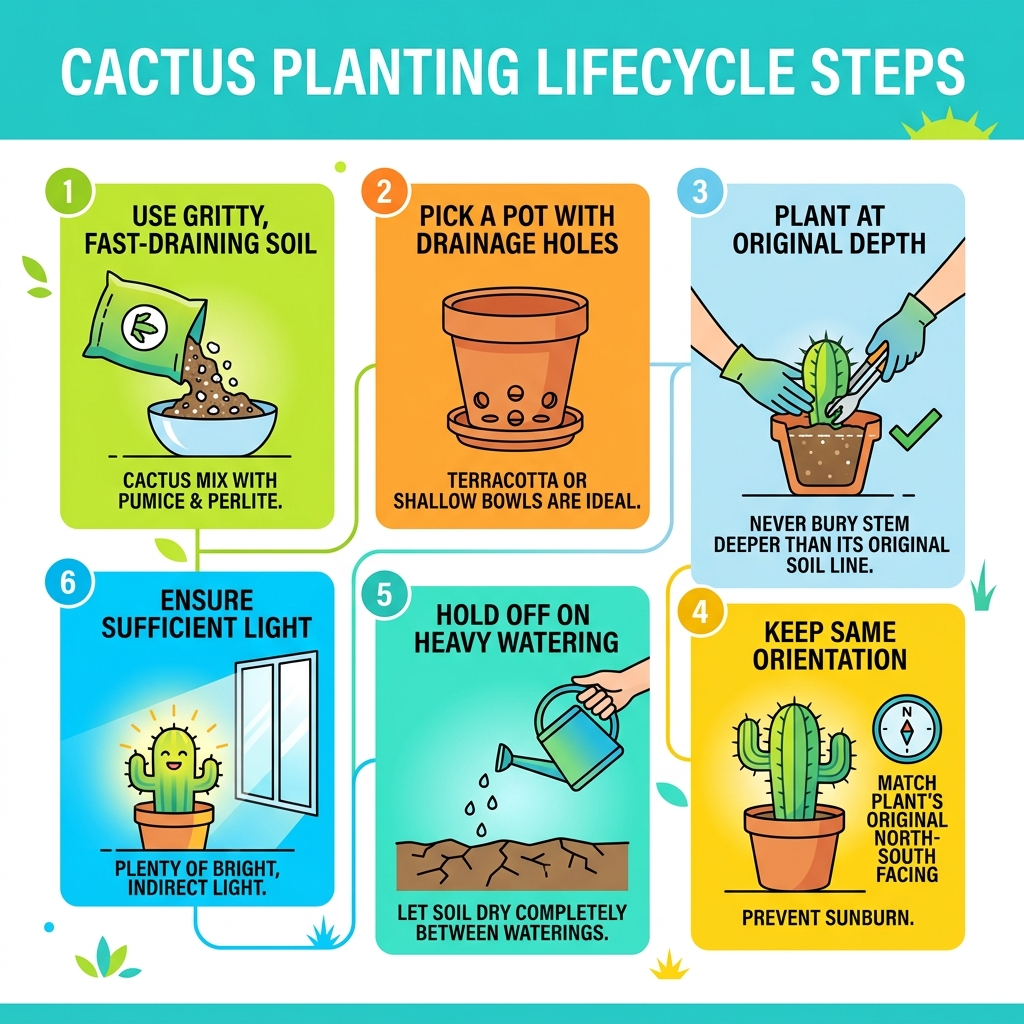
Here are the core things to get right from the start:
- Use gritty, fast-draining soil – a cactus mix with perlite, pumice, or crushed lava rock works best
- Pick a pot with drainage holes – terracotta or shallow bowls are ideal
- Plant at the same depth as before – never bury the stem deeper than its original soil line
- Keep the same orientation – match the plant’s original north-south facing to prevent sunburn
- Hold off on heavy watering – let the soil dry completely between waterings
- Protect your hands – nitrile-coated gloves and silicone tongs beat bare hands every time
- Time it right – spring and early summer give cacti the best chance to settle in
Cacti are genuinely easy to grow. But they are not forgiving of a few key mistakes – mainly too much water and too little light. Most people who lose a cactus don’t underwater it. They drown it.
Whether you’re arranging a tiny bowl garden for a kitchen shelf or transplanting a spiky statement plant into your backyard, the same core principles apply. Get the foundation right, and your cactus will practically take care of itself.
Essential Gear and Cactus Planting Tips for Safety
If you have ever spent an evening with a pair of tweezers trying to remove microscopic glochids (those tiny, hair-like spines) from your palms, you know that safety isn’t just a suggestion–it’s a necessity. One of our most important cactus planting tips is to abandon the idea that standard leather gardening gloves are enough. Many spines can pierce right through leather, and worse, they often get stuck in the material, turning your gloves into a prickly hazard for the next time you use them.
Instead, we recommend nitrile-coated gloves. Nitrile is a synthetic material that is much harder for tiny spines to penetrate and cling to compared to animal hide. For extra-spiny varieties, you can even layer your gloves for added protection.
Beyond gloves, your toolkit should include:
- Silicone Tongs: These are a game-changer. Unlike metal or wooden tongs, silicone-tipped versions provide a firm grip without bruising the plant’s fleshy skin or snapping off delicate spines.
- Rolled Newspaper or Towels: For larger specimens, wrapping a thick collar of newspaper or a heavy towel around the middle of the plant creates a makeshift handle.
- A Chopstick or Small Trowel: These are perfect for tamping down soil in tight spaces between plants without getting your fingers too close to the “danger zone.”
Safety isn’t just about protecting yourself; it’s about protecting the plant. Using the right tools prevents the scarring that occurs when a cactus is dropped or squeezed too hard. For more advice on keeping your prickly pals happy once they are safely in their pots, check out our indoor cactus and succulent care tips.

Choosing the Right Foundation: Soil and Containers
In cacti, drainage is king. In their native habitats, these plants often live in rocky, mineral-rich soils where water passes through almost instantly. When we bring them into our homes or gardens, we must mimic that environment.
The Importance of the Right Pot
We love using terracotta pots for cacti. Because terracotta is porous, it allows moisture to evaporate through the walls of the pot, which helps the soil dry out faster. If you live in a humid climate, unglazed clay is your best friend.
Cacti generally have shallow but wide-reaching root systems. This makes shallow bowls or “bulb pans” excellent choices. They provide plenty of surface area for the roots to spread out without holding onto a massive reservoir of damp soil at the bottom that the plant can’t reach. Regardless of the style, a drainage hole is non-negotiable. To keep your soil from washing out of that hole, try covering it with a small piece of broken clay pot or a large pebble rather than fine mesh, which can sometimes clog.
Mixing the Perfect Soil
Standard “all-purpose” potting soil is usually a death sentence for a cactus because it contains too much peat moss, which holds onto water like a sponge. We recommend a gritty soil mix. A popular choice among experts is incorporating crushed lava rock, pumice, or poultry grit. These inorganic materials create large air pockets, ensuring the roots can breathe.
| Feature | Commercial Cactus Mix | DIY Gritty Mix (Opcion Rural Style) |
|---|---|---|
| Primary Base | Peat moss or Pine bark | Pumice or Crushed Lava Rock |
| Drainage Speed | Moderate | Very Fast |
| Compaction Risk | Higher over time | Very Low |
| Nutrient Retention | High | Low (requires supplemental feeding) |
| Best For | Casual indoor hobbyists | Long-term health and large specimens |
To finish off your planting, consider adding a layer of inorganic mulch, such as decomposed granite or fine gravel, on top of the soil. This keeps the “neck” of the cactus dry and prevents water from splashing soil onto the plant’s body, which can lead to fungal issues.
Step-by-Step Guide to Transplanting and Repotting
Repotting a cactus can feel like a high-stakes game of Operation, but with a steady hand, it’s quite straightforward. Most cacti only need repotting every 3 to 5 years, as they are slow growers and often prefer being slightly root-bound.
Preparing the Roots for Success
When you remove a cactus from its nursery pot, you’ll often find a tight root ball that has taken the shape of the container. Don’t just plop this into the new pot! Gently squeeze the root ball to loosen the old, depleted soil.
Use a chopstick or a dull pencil to tease the roots outward. If you encounter any roots that are mushy, black, or smell like compost, trim them off with sterilized scissors—these are signs of rot. If you have to do significant root trimming, let the cactus sit in a dry, shaded spot for a few days to callous before replanting. This prevents pathogens from entering the open “wounds” when the plant hits the soil.
Mastering Cactus Planting Tips for Depth and Orientation
This is where many gardeners go wrong. One of the most critical cactus planting tips is to respect the original soil line.
- Depth: Never plant a cactus deeper than it was in its previous pot. If you bury the green stem, it will likely rot. It is actually better to plant it slightly higher (about a quarter-inch) than too deep.
- Orientation: This is a professional secret! Cacti develop a “tough skin” on the side that faces the most intense sun (usually the South side in the Northern Hemisphere). If you rotate the plant 180 degrees when you move it, the “tender” North side will suddenly be blasted by South-facing sun, leading to permanent sunburn scars. Before you move your cactus, mark the South-facing side with a small dot of white-out or a piece of tape so you can maintain its North-South orientation.
Long-Term Care: Watering, Light, and Aftercare
Once your cactus is in its new home, the “less is more” rule applies.
Watering Schedule: Immediately after planting, do not water. Wait about a week to ten days. This gives any tiny root tears time to heal before they are exposed to moisture. Once established, water your cactus every 2–3 weeks in the summer. In the winter, when the plant goes dormant, you can often reduce this to once every 4–6 weeks—or not at all if the environment is cold and damp. Always perform a soil moisture test: stick your finger or a wooden skewer two inches into the soil. If it comes out bone dry, it’s time for a drink.
Light and Temperature: Most cacti need at least 6 hours of direct sunlight daily. Indoors, a South- or West-facing window is best. If your cactus starts growing tall, skinny, and pale, it is “etiolating”—a fancy word for stretching toward the light. It’s telling you it needs a sunnier spot! Aim for temperatures between 65°F and 85°F during the growing season, but many cacti actually enjoy cooler nights (around 50°F) in the winter to encourage spring blooming.
Pests and Maintenance: Keep an eye out for mealybugs (which look like tiny bits of white cotton) and scale (hard, brown bumps). If you spot them, a cotton swab dipped in rubbing alcohol is usually enough to dispatch them. Think you’re a cactus pro? Test your prickly knowledge with a cactus identification quiz to see how many species you can name!
Advanced Cactus Planting Tips for Propagation
If you want to expand your collection without spending a dime, propagation is the way to go.
- Cuttings: Many cacti, like Prickly Pears, can be grown from “pads” or segments. Snap a segment off, let the end dry and callous for a week, then stick it upright in dry cactus soil. Don’t water until you see new growth!
- Seeds: Growing from seed requires patience but is incredibly rewarding. Use the “baggie method”: sow seeds on top of sterilized, moist cactus mix, seal the pot in a Ziploc bag to create 100% humidity, and place it in a warm (70°F – 90°F), brightly lit spot. Seedlings are the only stage of a cactus’s life where they actually enjoy high humidity. Once they develop visible spines (usually within a few months), you can slowly acclimate them to the open air.
Frequently Asked Questions about Planting Cacti
When is the best time of year to plant or repot a cactus?
The absolute best time is late spring or early summer. This is when the plant is entering its most active growth phase, meaning it has the energy to repair roots and establish itself in new soil. Avoid repotting in the dead of winter when the plant is dormant, as it won’t have the metabolic “steam” to recover from the move. Also, avoid the absolute peak of mid-summer heat for outdoor transplants, as the added stress can lead to wilting.
How do I know if I am overwatering my newly planted cactus?
The signs are usually clear if you know what to look for. Yellowing or a mushy base are the biggest red flags. If the stems feel unusually plump or “tight,” or if the plant begins to lean over and feel soft to the touch, you are likely dealing with the early stages of root rot. If this happens, remove the plant from the soil immediately, cut away the rot, let it dry out for a week, and start over in fresh, dry soil.
Can I plant indoor cacti in an outdoor garden?
Yes, but you must be careful about acclimation. A cactus that has lived in a climate-controlled living room will get “sun-scorched” if moved directly into 10 hours of blazing backyard sun. Move it outside into a shaded area first, then gradually increase its sun exposure over two weeks. Also, ensure your local hardiness zone matches the plant’s needs; most “houseplant” cacti cannot survive a freeze.
Conclusion
At Opcion Rural, we believe that gardening is about more than just decoration; it’s about building a creative, sustainable ecosystem that brings a bit of the wild into your daily life. Whether you are building a vast outdoor landscape or a miniature tabletop world, these cactus planting tips will ensure your desert garden thrives for years—perhaps even decades—to come.
Ready to take the next step in your creative journey? Dive into our Cactus terrarium DIY: Everything you need to know and start building your own glass-enclosed desert today. For more guides on rural living and creative nature projects, visit us at https://www.opcionrural.com/. Happy planting!
