
Why a Living Moss Wall Might Be the Best Thing You Add to Your Home
DIY living moss wall art is one of the easiest ways to bring real, living greenery into your home — no garden required.
Here’s a quick overview of how to build one:
- Choose your moss – Sheet moss, mood moss, or Thuidium delicatulum work well indoors
- Build a frame – A simple wood frame with a felt or mesh backing holds everything in place
- Attach the moss – Secure moss chunks to the backing with pins or non-toxic glue, leaving small gaps for airflow
- Mount it – Hang in a spot with indirect light, away from direct sun or heat vents
- Maintain it – Mist with distilled water every few days and watch it thrive
That’s the core of it. The sections below go deeper on each step.
Living moss walls are having a moment — and for good reason. They’re calming to look at, genuinely alive, and surprisingly simple to build yourself.
Unlike preserved moss art (which uses chemically treated, dormant moss), a living moss wall stays green and grows over time. It responds to light and moisture. It breathes.
For anyone who loves plants but struggles with space, a vertical moss wall is a smart solution. It takes up wall space instead of floor space, and moss is one of the lowest-maintenance plants you can work with indoors.
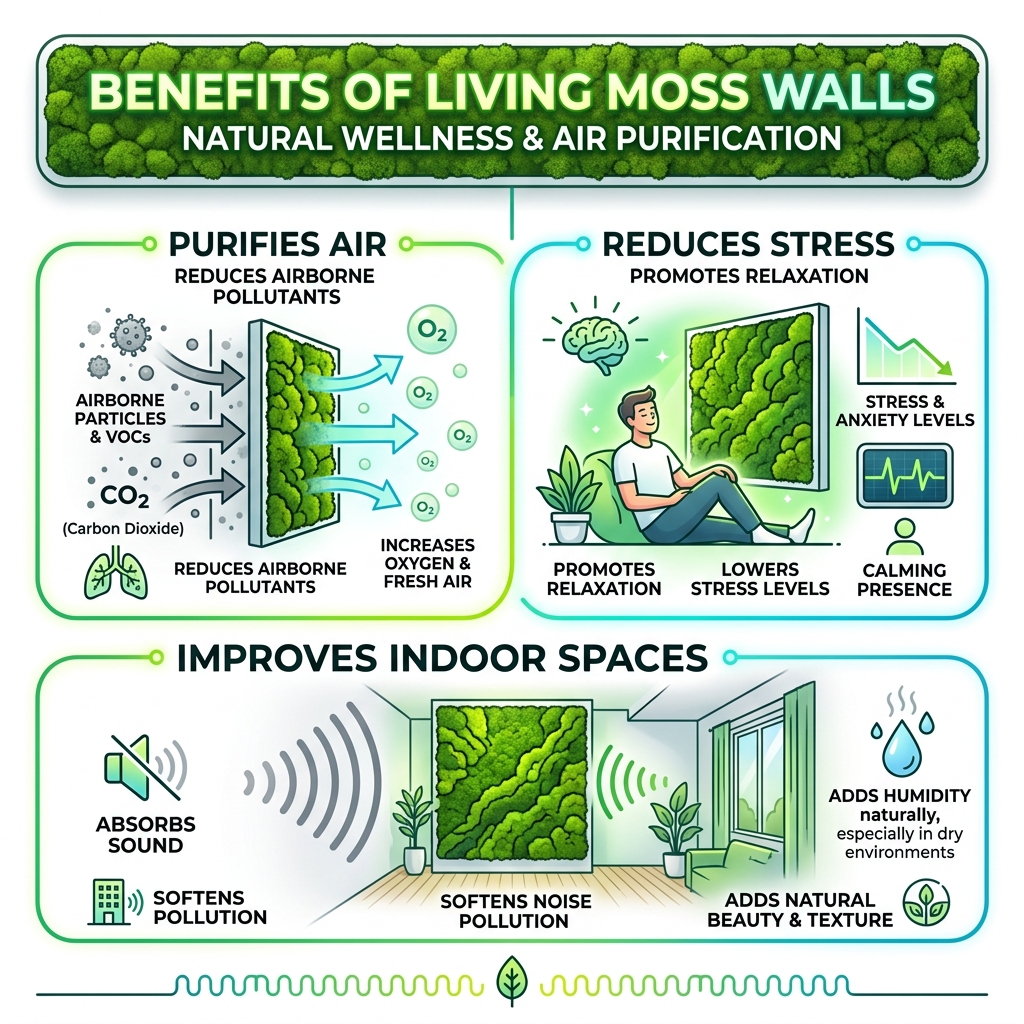
The payoff? A lush, textured piece of living art that also helps soften noise, adds humidity to dry rooms, and creates a little pocket of calm wherever you hang it.
Living vs. Preserved Moss: Choosing Your Greenery
When you start looking into diy living moss wall art, you’ll quickly notice there are two main paths: living and preserved. Understanding the difference is crucial because they require completely different care routines.
| Feature | Living Moss | Preserved Moss |
|---|---|---|
| Vitality | Alive and growing | Dormant/Dead |
| Maintenance | Regular misting/humidity | Zero watering |
| Air Filtration | Active CO2 and pollutant capture | Minimal to none |
| Longevity | Indefinite with proper care | 5-8 years (then needs touch-ups) |
| Chemicals | Natural and organic | Treated with dyes and glycerin |
| Best For | Humid areas/active gardeners | Low-light/low-effort decor |
The Vitality of Living Systems
A living moss wall is a functioning ecosystem. Research into engineered living moss systems has shown incredible results; for instance, certain high-end living moss products can capture 30% of carbon dioxide and over 1.5 million ppm of pollutants daily per square foot. While a DIY home version might not reach those laboratory-certified levels without specialized engineering, the biological process remains the same: the moss “eats” particles from the air.
The Preserved Alternative
Preserved moss is essentially “mummified.” It has been treated with a solution of glycerin and dyes to keep it looking soft and green without needing water. While preserved moss art is beautiful and can last up to 8 years without sunlight, it doesn’t offer the same air-purifying “breath” that living moss does. If you’re looking for a project that saves you money, making your own moss wall art—whether living or preserved—can save you three to four times the cost of buying a pre-made set.
Essential Supplies for Your DIY Living Moss Wall Art
Before we get our hands dirty (or mossy!), we need to gather our tools. Building a living wall requires materials that can handle moisture, as we’ll be misting this art piece regularly.
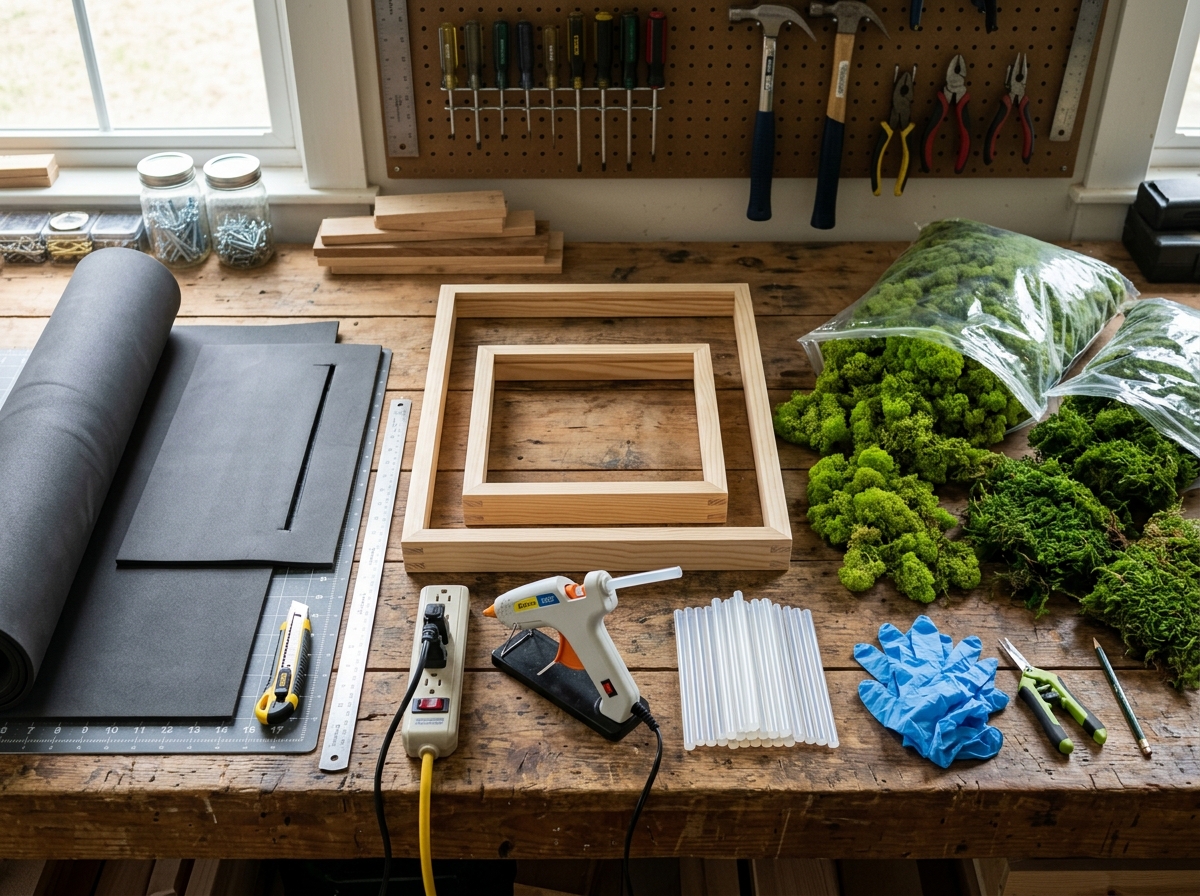
The Master List:
- Wood Frame: You can use wood trays or build a custom frame. If using MDF, make sure to seal it thoroughly with a sealer spray to prevent warping from moisture.
- Backing Material: This is what the moss clings to. We recommend neoprene foam or felt sheets. Some advanced builders use mesh netting or hydroponic felt.
- Adhesive: A hot glue gun and glue sticks are standard, but for living moss, you must use glue sparingly and only on the base to avoid “cooking” the plant. Gorilla’s wood glue or Superglue can also work for hardscape elements.
- Safety Gear: Nitrile gloves are a lifesaver to keep your hands clean and protect them from hot glue.
- Hardware: A power drill for mounting and silicone bumpers to keep the frame slightly off the wall (this prevents moisture from damaging your drywall).
- Maintenance Tools: A spray bottle for distilled water and an anti-static duster for occasional cleaning.
If you enjoy this type of nature-inspired crafting, you might also want to check out our guides on really simple DIY succulent terrariums for more indoor greenery ideas.
Selecting the Best Species for DIY Living Moss Wall Art
Not all mosses are created equal. For an indoor living wall, you want species that can handle lower light and stay compact.
- Sheet Moss: The “carpet” of your wall. It provides a consistent green background. You can find sheet moss easily online.
- Mood Moss: Thick, clumpy, and “moody.” It adds wonderful 3D texture and depth.
- Thuidium delicatulum (Fern Moss): This variety looks like tiny ferns and is very hardy for indoor environments.
- Hypnum cupressiforme: Often called “sheet moss” as well, it’s great for beginners because it’s low-maintenance.
- Reindeer Moss: Technically a lichen, but often used for its branching texture. reindeer moss is almost always sold preserved, so check if you’re buying live or treated versions.
Step-by-Step Guide to Building Your Living Masterpiece
Now, let’s get to the fun part. Building your diy living moss wall art is like painting with nature.
Step 1: Frame Preparation and Backing
Start by preparing your frame. If you’re repurposing an old picture frame or using a wooden tray, sand it down and apply a protective coat. We like to use a dark green or black paint on the backing material (like corrugated plastic or neoprene foam). This creates “shadow depth” so that if the moss shifts slightly, you don’t see bright wood or white plastic peeking through.
Step 2: The 60/30/10 Design Rule
To make your wall look professional, follow the 60/30/10 composition rule:
- 60% Base Moss: Use sheet moss to cover the majority of the area.
- 30% Mounded Forms: Use mood moss or fern moss to create “hills” and texture.
- 10% Accents: Incorporate driftwood branches, stones, or even faux air plants for a pop of variety.
Step 3: Securing the Moss
Apply your adhesive to the backing, not the moss itself. Gently press the moss into the glue. For a living wall, it is better to use mechanical fasteners like floral pins or staples where possible to keep the moss alive and healthy. If you must use hot glue, let it cool for a second before pressing the moss down.
Pro Tip: Leave small gaps (about 1/4 inch) between large chunks of moss. This allows for air circulation and gives the moss room to grow and expand.
If you’re finding this project a bit ambitious for a first try, you can always start smaller with an easy DIY succulent terrarium for beginners.
Caring for Your Living Moss Wall: Light, Water, and Maintenance
Your moss wall is alive, which means it has “feelings”—mostly about humidity and light.
Light Requirements
Moss is a forest-floor dweller. It loves indirect light. Placing your diy living moss wall art in direct, harsh sunlight will turn it into a crispy brown cracker in days. Aim for a spot near a north-facing window or a room with consistent ambient light. If the room is dark, you can use a simple LED grow light set to a “warm-neutral” temperature (3000–3500K).
Water and Humidity
This is the most important part!
- Use Distilled Water: Tap water often contains chlorine and minerals that can “burn” moss over time. Use distilled water or collected rainwater in your spray bottle.
- Misting: Give your wall a light misting every few days. The moss should feel soft and springy, not soaking wet.
- Humidity: If you live in a very dry climate (like the desert), you may need a humidifier in the room to keep the moss from drying out.
How to Touch Up and Revive Moss
If a section looks a bit sad, don’t panic. You can touch up moss by removing the dead patch and pinning in a fresh piece. For preserved moss that has faded, some people use a tiny bit of watered-down green paint to restore the color, but for living moss, fresh replacement is always better.
Troubleshooting Your DIY Living Moss Wall Art
- Moss Drying Out: Usually caused by direct sun or being too close to an A/C vent. Move the frame and increase misting.
- Mold Prevention: Mold happens when there is too much water and zero airflow. Ensure your room has decent circulation and don’t “over-soak” the backing.
- Color Fading: This is a sign of too much UV light. Move it further from the window.
- Pest Management: While rare, you might see aphids or mites. Use a very mild, organic insecticidal soap or simply remove the affected clump.
Frequently Asked Questions about Living Moss Walls
How long do living moss walls last?
With proper care—meaning consistent humidity and the right light—a living moss wall can last for many years. Unlike preserved moss, which eventually becomes brittle after 5-10 years, living moss continues to regenerate. The key is maintaining the “micro-climate” it lives in.
Do living moss walls attract bugs or spiders?
It is a common myth that moss walls are “bug magnets.” While any plant can occasionally host a stray gnat or spider, indoor moss walls are generally very clean. Because they don’t use traditional soil (which is where most indoor pests like fungus gnats live), the risk is low. Regular cleaning and misting help keep the environment “unfriendly” to unwanted guests.
Can living moss walls be used outdoors?
Yes, but the conditions are harder to control. Outdoor living walls work best in high-humidity areas with lots of shade. In dry climates, an outdoor living wall will likely fail without a constant irrigation system. For exterior decor, many people choose preserved moss or “dried” moss art that can withstand the elements better.
Conclusion
Creating diy living moss wall art is more than just a weekend project; it’s an investment in your well-being. From the stress-reducing benefits of biophilic design to the simple joy of watching a tiny forest grow on your wall, it brings a unique “luxury” to any home.
By building it yourself, you’re not only saving money but also ensuring that no harsh chemicals or dyes are entering your living space. Whether you’re a seasoned gardener or a total beginner, moss is a forgiving and beautiful medium to work with.
Ready to dive deeper into home ecosystems? Start your next creative nature project at Opcion Rural and discover how easy it is to blend art and nature in your own home. Happy building!
