
Fresh Herbs at Your Fingertips: Why a DIY Herb Garden Wall Works
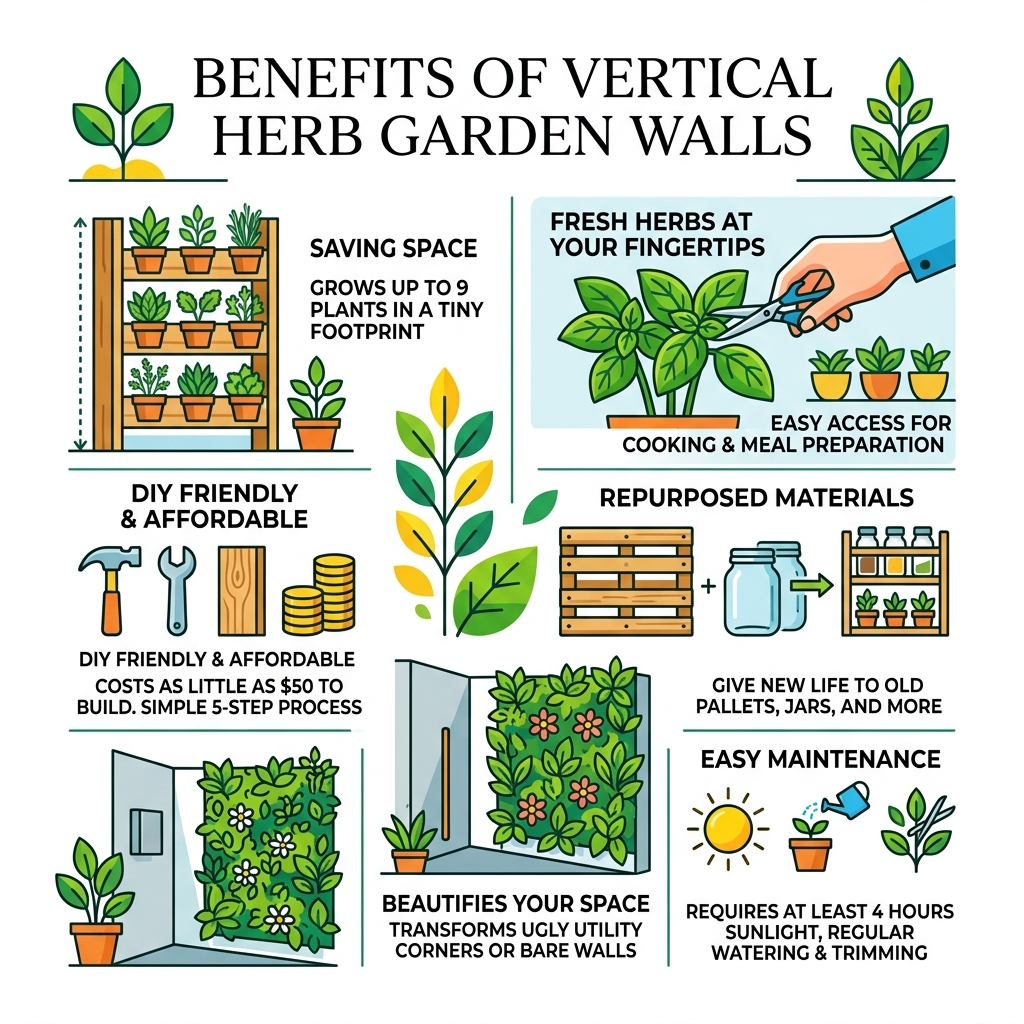
A diy herb garden wall is one of the smartest small-space gardening projects you can tackle — and it costs as little as $50 to build from scratch.
Here’s how to make one in 5 simple steps:
- Choose your design — pallet wall, shelf system, or mason jar board
- Pick your location — a spot with at least 4 hours of sunlight daily
- Gather materials — pallets, pots, screws, landscape fabric, and potting soil
- Build and mount — assemble your structure and anchor it securely to wall studs
- Plant and maintain — add herbs, water regularly, and trim to keep them thriving
No sprawling backyard required. A vertical herb wall lets you grow up to 9 plants in a tiny footprint — on a patio, in a kitchen, or along a screened porch. Whether you’re hiding an ugly utility corner or just craving fresh basil for dinner, this project delivers real, practical value without a big budget or advanced skills.
The best part? Most designs use materials you can find for free or cheap — old pallets, spare mason jars, even a yard-sale spice rack.
Planning Your DIY Herb Garden Wall
Before we start swinging hammers, we need a plan. A diy herb garden wall is a living ecosystem, and like any roommate, herbs have specific needs. In our experience at Opcion Rural, the biggest mistake beginners make is putting their garden where it looks pretty but where the plants can’t actually breathe or eat.
Sunlight and Climate Considerations
Most herbs are sun worshippers. To truly thrive, your vertical garden needs about 4 hours of direct sunshine per day. If you live in a place like Zone 5b, your outdoor growing season might only last eight months. This is why many of us choose to build indoor herb walls or mobile units that can transition between the patio and the kitchen.
For outdoor setups, a south-facing wall is the “gold standard.” It catches the most consistent light throughout the day. If you’re building indoors, you’ll want to be near a large window, but be careful — sometimes indoor light isn’t quite enough. You might need to supplement with a small grow light or rotate your plants every few days to ensure they don’t grow “leggy” as they stretch toward the sun.
Selecting the Best Herbs for Your DIY Herb Garden Wall
Not all herbs are created equal when it comes to vertical living. Some are “spreaders” (we’re looking at you, Mint), while others are a bit more delicate. When selecting your plants, think about what you actually cook with. There’s no point in growing a wall of tarragon if you never use it!
| Herb | Light Needs | Best Environment | Growth Habit |
|---|---|---|---|
| Basil | High (6+ hours) | Warm Outdoor/Sunny Indoor | Upright; needs frequent pinching |
| Mint | Partial to Full Sun | Indoor/Outdoor (Isolated) | Invasive; give it a private pot |
| Rosemary | Full Sun | Outdoor (Hardy) | Woody; prefers drier soil |
| Thyme | Full Sun | Indoor/Outdoor | Trailing; looks beautiful hanging |
| Cilantro | Full Sun/Cooler | Outdoor (Spring/Fall) | Needy; bolts quickly in heat |
| Chives | Partial to Full Sun | Indoor/Outdoor | Grass-like; very easy to regrow |
| Parsley | Partial to Full Sun | Indoor/Outdoor | Compact; biennial |
Pro Tip: If you’re buying herbs from a grocery store, be careful. Many of those potted herbs are bred to last only a week or two. We always recommend visiting a local nursery to get “starts” that are meant for long-term growth.
Choosing the Right Location for a DIY Herb Garden Wall
Accessibility is king. If your herb wall is three flights of stairs away from your stove, you won’t use it. We love placing our walls on screened-in patios or right in the kitchen.
Beyond convenience, consider these factors:
- Airflow: Herbs hate stagnant air, which can lead to mold or pests. Ensure there’s a bit of a breeze.
- Temperature: Avoid placing your indoor wall right next to an A/C vent or a heater. Extreme temperature swings will stress the plants.
- Water Proximity: You’ll be watering these frequently. If you have to carry a heavy watering can across white carpet every morning, you’ll eventually regret your placement!
Essential Materials and Budget-Friendly Tools
Building a diy herb garden wall shouldn’t break the bank. In fact, one of the most popular versions—the pallet wall—can be built for around $50, including the plants!
The “Shopping” List (Check your garage first!)
- The Structure: Old wooden pallets (ensure they are heat-treated, marked “HT,” not chemically treated), pine boards, or even a repurposed wire spice rack.
- The Containers: Mason jars, 6-inch plastic pots (cheaper and lighter than terracotta), or upcycled items like paint cans or galvanized gutters.
- Hardware: Exterior wood screws, hose clamps (for holding jars), S-hooks, and corner brackets.
- Planting Needs: High-quality potting soil (not garden soil!), landscape fabric to line wooden boxes, and a waterproofing wood sealer.
Tools You’ll Need
You don’t need a professional workshop to pull this off. Most of our projects at Opcion Rural rely on these basics:
- Electric Drill: For assembly and mounting.
- Jigsaw: If you need to cut pallets or boards to size.
- Masonry Bits: Essential if you are mounting your garden to a stucco or brick wall.
- Stud Finder: To ensure your heavy garden doesn’t rip out of the drywall.
- Laser Level: Because a crooked garden is a sad garden.
- Sanding Sponge: To smooth out those rough pallet edges and prevent splinters.
Step-by-Step Instructions for a Pallet Herb Wall
The pallet herb wall is a classic for a reason: it’s rustic, functional, and incredibly cheap. We’ve even seen versions on swivel casters that act as a mobile privacy screen to hide unsightly trash cans or A/C units!

Step 1: Prep the Pallet
Find a clean pallet and sand it down. You don’t need it to be smooth as a dining table, but you want to remove the major splinters. Apply a waterproofing exterior wood sealer. This is vital because you’ll be getting this wood wet daily.
Step 2: Build the Planter Boxes
You can use the slats from a second pallet to create small “boxes” within the frame of the first pallet. Use your jigsaw to cut them to size and secure them with exterior screws. If you’re feeling fancy, you can even build these boxes as separate units and attach them with corner braces.
Step 3: Add Drainage and Lining
Drill several drainage holes in the bottom of every planter box. Line the inside of the boxes with landscape fabric. This keeps the soil in place while letting the water escape—essential for preventing root rot!
Step 4: Soil and Plants
Fill your boxes with potting soil. We like to plant two to three herbs per box, but remember to keep the “bullies” like Mint in their own dedicated containers so they don’t choke out the delicate Cilantro. If you’re interested in other vertical projects, check out our guide on easy-fun-project-diy-hanging-succulent-terrarium.
Step 5: The Mobile Option (Optional)
If you want a mobile diy herb garden wall, attach swivel locking casters to the bottom. This allows you to roll the garden into the sun during the day and tuck it away at night.
Secure Mounting and Structural Support
A fully watered herb wall is heavy. Soil, water, and wood add up quickly, so safety is our priority.
Finding the Studs
For indoor drywall, you must mount your garden to the wall studs. Standard studs are usually spaced 16 inches apart. Use a stud finder to mark your spots. If you miss the studs, you risk the entire garden crashing down, taking a chunk of your wall with it.
Mounting on Different Surfaces
- Drywall: Use heavy-duty toggle bolts if you absolutely can’t hit a stud, but try to hit at least one.
- Stucco/Masonry: You’ll need a masonry drill bit and a hammer drill. Use masonry screws (like Tapcons) and ensure you don’t drill all the way through if it’s a thin exterior wall.
- Wood Fences: Use galvanized screws to prevent rusting over time.
Weight Distribution
If you’re using a shelf-based system, use plumbing flanges and threaded pipes for an industrial look that can support a lot of weight. Always check your work with a level. There’s something uniquely frustrating about a garden where the water all pools in one corner because the shelves are slanted!
Maintenance Tips to Prevent Common Mistakes
Building it is only half the battle. Keeping it alive is where the “rural” in Opcion Rural really comes into play.
The Watering Dance
Vertical gardens dry out faster than ground gardens. However, the most common killer is actually overwatering.
- Top-Down Drainage: Design your wall so the water from the top pots drips down into the ones below. This creates a semi-self-watering effect.
- The Finger Test: Stick your finger an inch into the soil. If it’s dry, water it. If it’s “moist” (we know, we hate the word too, but it’s accurate!), leave it alone.
- Watering Mats: Consider placing a watering mat behind your pots. It helps retain moisture and prevents water from running down your wall and causing damage.
Pruning and Harvesting
Don’t be afraid to use your herbs! Regular trimming prevents them from becoming “leggy” (long, thin stems with few leaves).
- Basil: Pinch off the top leaves to encourage the plant to grow outward rather than upward.
- Cilantro: Pinch off any flowers immediately. Once it flowers, the leaves start to taste like soap.
- Mint: Trim it back aggressively; it can handle it.
Preventing Root Rot
If your pots don’t have holes, your herbs will die. It’s that simple. If you’re using mason jars, you can’t easily drill holes, so you must be extremely careful with water or add a layer of charcoal and pebbles at the bottom to act as a reservoir.
Frequently Asked Questions about DIY Herb Walls
How much does a DIY herb wall typically cost?
Most of the projects we’ve discussed can be completed for under $50. If you upcycle materials like pallets or old tin cans, your main costs will be the herbs themselves (about $3-$5 per plant) and a good bag of potting soil ($10).
How do I prevent my vertical herbs from drying out?
Terracotta pots are beautiful but porous, meaning they suck moisture out of the soil. If you’re struggling with dry plants, switch to plastic liners inside the terracotta or use a watering mat. Also, ensure you aren’t placing the wall in a high-wind area, which evaporates moisture rapidly.
Can I build a herb wall if I have no woodworking skills?
Absolutely! You don’t need to be a carpenter. You can use a hanging shoe organizer (the canvas pocket kind), a wire spice rack, or even just S-hooks on a metal trellis. These “no-tool” versions are just as effective for growing fresh flavors.
Conclusion
At Opcion Rural, we believe that you don’t need a hundred acres to live a sustainable, creative life. A diy herb garden wall is more than just a place to grow food; it’s a piece of living art that brings joy, aroma, and health into your home.
Whether you’re building a robust cedar-post privacy screen or a simple mason jar rack for your kitchen, the act of crafting something with your own hands is incredibly rewarding. It anchors you to your space and provides a daily connection to nature, even in the heart of the city.
Ready to start your next project? From succulent terrariums to home ecosystem builds, we’re here to help you blend art and nature. Start your next project at Opcion Rural and let’s get growing together!
