
What Is a DIY Indoor Vertical Garden Wall (and How Do You Build One)?
A diy indoor vertical garden wall is a living or planted display mounted vertically on a wall inside your home — and it’s one of the most rewarding projects a small-space plant lover can tackle.
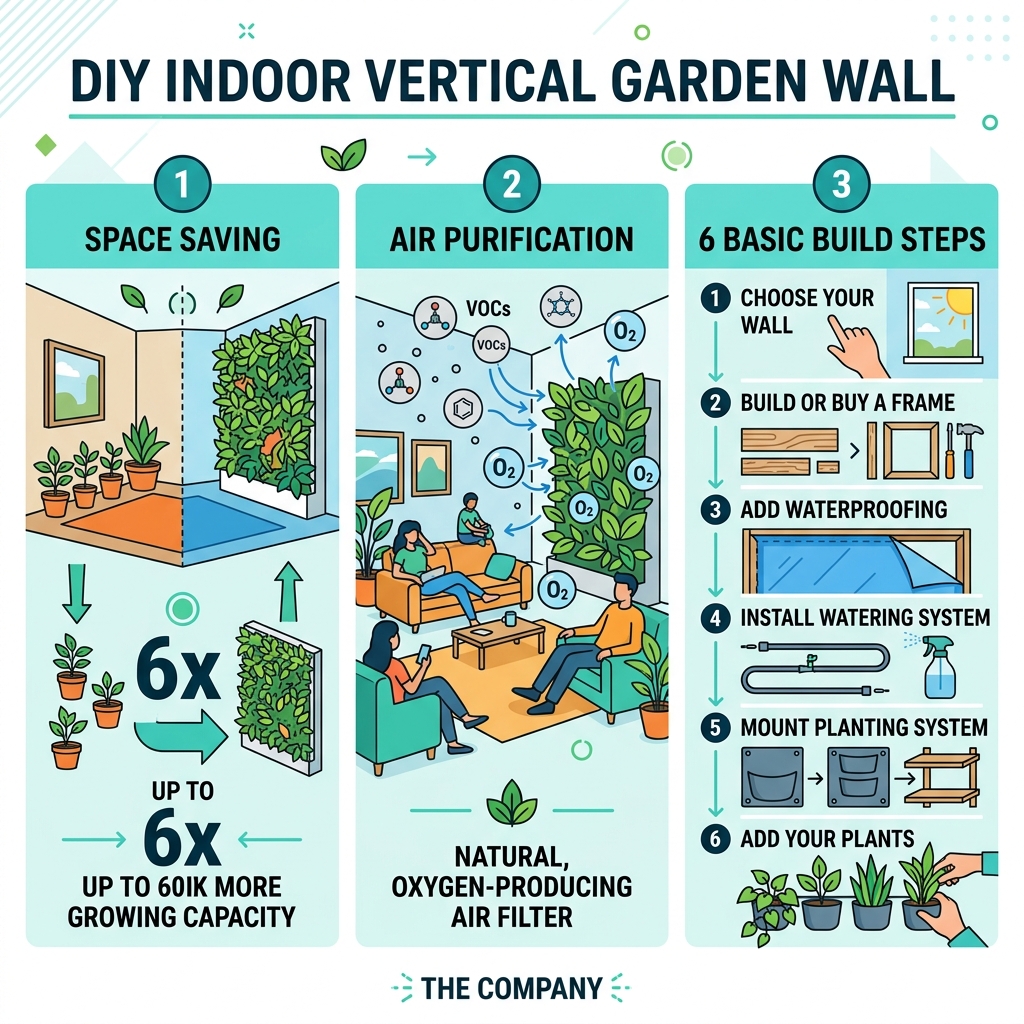
Here’s how to build one in six basic steps:
- Choose your wall – Pick a spot with good natural light or room for a grow light
- Build or buy a frame – Use wood, pallets, pocket felt panels, or shelving units
- Add waterproofing – Line the interior with a pond liner or plastic sheet to protect the wall
- Install a watering system – Use a drip system, watering bulbs, or manual misting
- Mount your planting system – Attach pockets, modules, or shelves to the frame
- Add your plants – Fill with low-maintenance species like pothos, snake plants, or herbs
Most people think growing plants indoors means rows of pots on a windowsill. But vertical gardening flips that idea — literally. Research shows vertical systems can provide up to 6x more growing capacity than traditional floor-based methods, all without taking up extra floor space.
Whether you live in a studio apartment or just want a stunning focal point in your living room, a DIY indoor vertical garden wall lets you bring nature inside in a creative, space-smart way.
The best part? You don’t need a big budget or advanced skills. Setups can cost anywhere from $100 to $1,000 depending on size and materials — and many builders use scrap wood, repurposed pallets, or simple rope-and-shelf systems to keep costs low.
Why You Need a DIY Indoor Vertical Garden Wall
If you have ever felt like your apartment was a bit too “concrete jungle” and not enough “actual jungle,” we hear you. Beyond the obvious aesthetic upgrade, there are scientific reasons to go vertical.
First, let’s talk about the air we breathe. NASA research has famously shown that certain indoor plants are powerhouses at air purification. They don’t just sit there looking pretty; they actively scrub the air of Volatile Organic Compounds (VOCs) like formaldehyde and benzene, which are often released by furniture and household cleaners. By building a diy indoor vertical garden wall, you are essentially installing a natural, oxygen-producing air filter.
From a space-saving perspective, the numbers are hard to ignore. According to research from ICAR-IIHR, vertical systems provide 6x more growing capacity compared to traditional methods. This means you can grow 60 plants in the space where you previously only had room for ten. It’s the ultimate “hack” for urban dwellers facing a space crisis.
There’s also a thermal benefit. While most of our focus is indoors, vertical gardens are known to reduce ambient temperatures by up to 8°C in urban environments. Inside your home, this translates to better natural insulation and a cooler, more comfortable living area. Furthermore, the layers of soil and foliage act as a natural sound insulator, dampening the echoes in a minimalist room or blocking out the hum of city traffic.
Finally, we cannot overlook the biophilic design benefits. Humans have an innate need to connect with nature. Having a lush, green wall in your line of sight while you work or relax has been proven to lower cortisol levels and boost mental clarity. It’s not just a garden; it’s a wellness feature.
Choosing the Right Method for Your Home
Before you grab your drill, you need to decide which “flavor” of vertical garden suits your lifestyle and DIY confidence. Not all walls are created equal, and neither are all planting systems.
| System Type | Best For | Pros | Cons |
|---|---|---|---|
| Felt Pockets | Beginners | Lightweight, easy to install, affordable | Can dry out quickly; needs good waterproofing |
| Wooden Frames | Custom Decor | Highly aesthetic, sturdy, long-lasting | Heavier; requires more woodworking tools |
| Shelving Units | Renters | No wall damage (if freestanding), easy to move | Takes up a small amount of floor space |
| Modular Magnetic | Modern Minimalists | Extremely flexible, easy to rearrange | Higher initial cost for specialized pots |
Popular DIY Approaches
- Pallet Gardens: A classic for a reason! You can often find pallets for free. By backing them with landscape fabric and filling the slats with soil, you create a rustic, tiered garden.
- Felt Pockets: These are breathable fabric pouches that you mount directly to a waterproof backing. They are excellent for herbs and ferns because they allow for great air circulation around the roots.
- Modular Magnetic Systems: These use steel boards and magnetic pots. They are the “Lego” of the plant world—you can move your plants around whenever the mood strikes.
- The “Copper Coin” Trick: If you are worried about mosquitoes breeding in any standing water or drainage trays, here is a pro tip: drop a few copper coins (like 1, 2, or 5 cent pieces) into the water. The copper slightly alters the pH, preventing mosquito larvae from developing.
If you aren’t ready to build a structure from scratch, you can always SHOP wall planters and mounting hardware to get a head start.
Designing a Renter-Friendly DIY Indoor Vertical Garden Wall
We know the struggle: you want a lush living wall, but your landlord wants their security deposit-protected drywall to remain pristine. Don’t worry, we’ve got options that won’t result in a “please explain” email from your property manager.
- Tension Poles: Use floor-to-ceiling tension poles (often sold as shower or closet organizers) to create a vertical spine. You can clip pots or light wooden slats to these poles without driving a single screw into the wall.
- Command Strips: For lightweight felt pockets or small individual plastic planters, heavy-duty adhesive hooks can work wonders. Just be sure to check the weight rating!
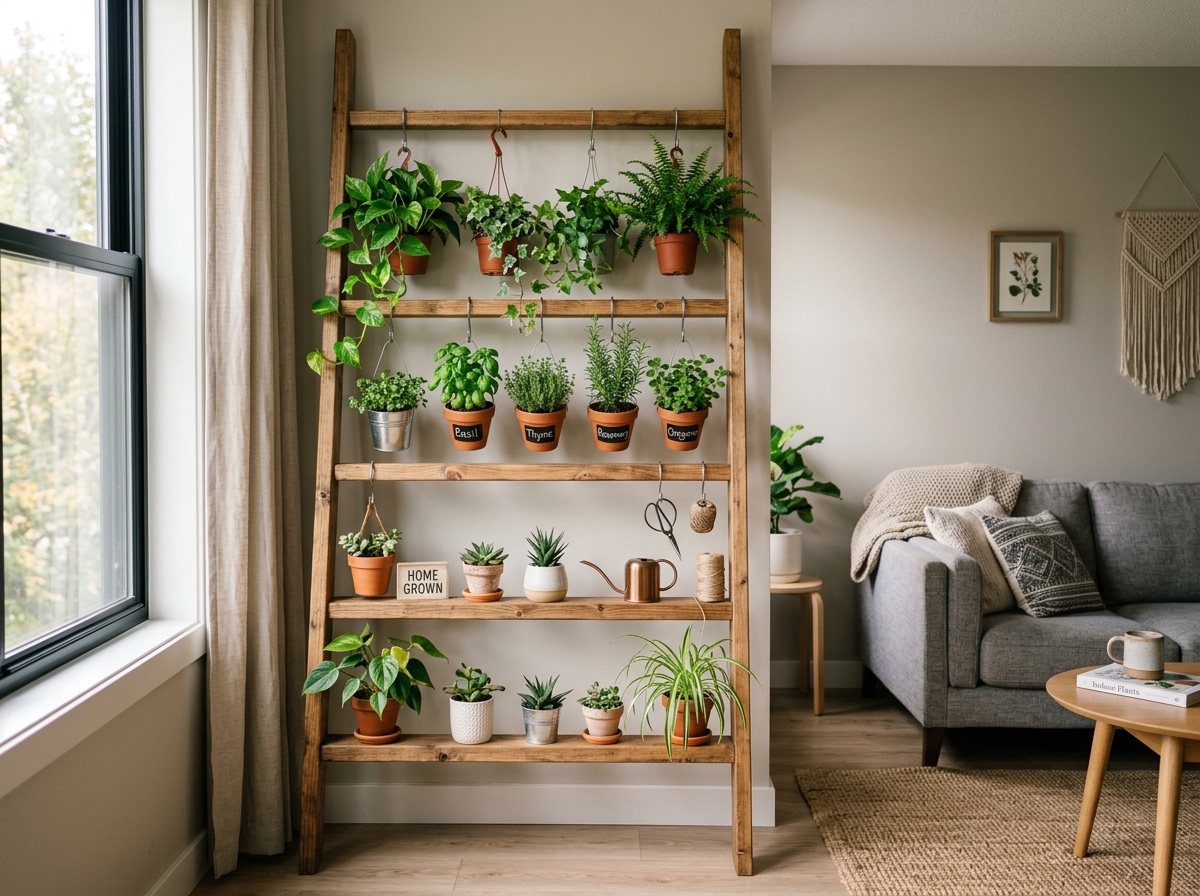
- Freestanding Ladder Shelves: Lean a decorative ladder against the wall. You can hang S-hooks and pots from the rungs. It gives the illusion of a wall-mounted garden with zero holes.
- Propagation Stations: A series of small glass vials mounted on a light wooden strip can be hung with a single nail. It’s a great way to grow new plants from cuttings while adding a “laboratory-chic” vibe to your room.
- Removable French Cleats: If you must drill, a French cleat system is the most stable. It allows you to hang a large frame and remove it easily when you move, leaving only a few easily-patchable holes behind.
Step-by-Step: Building a Framed DIY Indoor Vertical Garden Wall
For those ready to get their hands dirty with a more permanent structure, a framed wooden garden is the gold standard. It looks like a piece of living furniture.
Materials Needed:
- Cedar wood boards (Cedar is naturally rot-resistant and smells great!)
- Waterproof pond liner or heavy-duty plastic sheeting
- Burlap fabric
- Potting soil (look for a lightweight mix)
- RYOBI 18V Cordless Drill / Driver
- RYOBI Airstrike Nailer
Step 1: Create the Outer Frame Using your RYOBI 12″ Sliding Miter Saw, cut your cedar boards to your desired dimensions. A standard size is often 2 feet wide by 3 feet tall. Assemble the outer box using pocket hole joinery for a clean, professional look.
Step 2: Install the Waterproof Backing This is the most critical step for an indoor garden. You must protect your drywall! Staple a thick pond liner to the inside back of your frame. Ensure there are no punctures. We recommend sealing the edges with a waterproof silicone caulk for extra peace of mind.
Step 3: Create the Slats or Shelves Inside the frame, install horizontal slats. If you want a “pocket” style, angle the slats slightly inward to help hold the soil. If you prefer a “shelf” style, ensure they are level and spaced far enough apart for your plants to grow upward.
Step 4: Soil Containment with Burlap To prevent soil from falling out of a vertical setup, we use a “sandwich” method. Place your soil in the frame, then cover the front with a layer of burlap. Secure the burlap to the slats. You will eventually cut small slits in the burlap to insert your plants. The burlap holds the soil in place while the roots establish themselves.
Step 5: Mounting Mount the frame to your wall using heavy-duty French cleats. This ensures the weight (which can be significant once the soil is wet) is distributed across multiple wall studs.
Plant Selection and Maintenance Essentials
Choosing the right plants for your diy indoor vertical garden wall is the difference between a thriving oasis and a wall of brown sticks. Indoors, we are usually dealing with lower light and lower humidity than a greenhouse.
The “Unkillables” (Perfect for Beginners):
- Pothos (Epipremnum aureum): The king of vertical gardens. It grows fast, trails beautifully, and can handle low light.
- Snake Plants (Sansevieria): These are practically bulletproof. They grow upright, providing a nice structural contrast to trailing vines.
- Philodendrons: Similar to pothos but with heart-shaped leaves. They are very forgiving of occasional missed waterings.
- Spider Plants: Great for adding texture and “babies” that hang down.
The Science of Watering Watering a vertical wall can be tricky. Gravity wants to pull all the water to the bottom, leaving the top plants thirsty and the bottom plants drowning.
One secret weapon we love is hydrogel. Research shows that hydrogel incorporation improves water efficiency by 40-60% in vertical growing systems. These tiny crystals absorb water and release it slowly to the roots, which is a lifesaver for vertical setups that tend to dry out faster than traditional pots.
To prevent root rot, always use a “finger test.” Stick your finger an inch into the soil; if it feels damp, wait a day. If you are building a larger system, consider a Green Connect Drip System for automatic, even watering.
Lighting Solutions for Your DIY Indoor Vertical Garden Wall
Unless your wall is directly opposite a large south-facing window, your plants will likely need a little help in the light department. Indoor plants need light for photosynthesis, but they also need a period of “rest” (cellular respiration).
Natural Light Orientation:
- North-facing: Low light. Stick to ferns and snake plants.
- South-facing: Bright, direct light. Great for herbs and succulents (but watch for leaf scorch!).
- East/West-facing: Moderate light. Perfect for pothos and philodendrons.
Artificial Lighting: If your “dream spot” is a dark hallway, don’t fret. LED full-spectrum grow lights have become incredibly affordable and stylish. You can find sleek panels that mount directly above your garden or even screw into standard light fixtures.
Aim for a “timer automation” setup. Most indoor tropicals thrive on 12-14 hours of light followed by a period of darkness. Using a simple plug-in timer ensures your plants get a consistent “sunlight” schedule even if you are away for the weekend.
Troubleshooting and Common Mistakes
Even the best of us run into issues. Here is how to handle the “Big Three” problems:
- Overwatering & Root Rot: This is the #1 plant killer. If your leaves are turning yellow and feeling mushy, you are likely overwatering. Ensure your planting system has adequate drainage. If you are using a closed-bottom frame, you must be extremely precise with your water—use a watering bulb to deliver small amounts directly to the roots.
- Poor Waterproofing: If you see bubbling paint or damp spots on the wall behind your garden, stop immediately. You likely have a leak in your liner. This is why we emphasize using a high-quality pond liner and sealing all joints.
- Pest Management: Indoor gardens can occasionally attract spider mites or fungus gnats. We recommend a monthly spray of Neem oil (about 20ml per liter of water) as a natural preventative. Also, keep the air moving—a small, quiet fan nearby can prevent the stagnant air that pests love.
For those who love gadgets, sensor-based irrigation reduces water consumption by 50-70% and takes the guesswork out of maintenance. These sensors tell the system exactly when the soil is dry, preventing the dreaded “overwatered yellow leaf.”
Frequently Asked Questions about Indoor Living Walls
How much does a DIY indoor vertical garden cost?
A basic setup using repurposed materials like a pallet or a DIY rope shelf can cost as little as $100. A more professional-looking framed system with a built-in irrigation kit and high-end cedar wood typically ranges between $300 and $600. If you are looking for a massive, floor-to-ceiling installation with professional lighting, you might spend up to $1,000.
How do you water a vertical wall without making a mess?
There are three main ways:
- The Drip System: A hidden tube runs along the top and slowly drips water into each pocket. A collection tray at the bottom catches any excess.
- Watering Bulbs: These glass or plastic globes are filled with water and stuck into the soil. They release water slowly as the soil dries out.
- The “Take-Down” Method: If you use a system like French cleats or magnetic pots, you can simply take the plants to the sink once a week, water them, let them drain, and then pop them back on the wall.
Which plants are safest for pets in a vertical setup?
If you have a curious cat or a nibbling dog, stick to non-toxic options. Spider plants, Boston ferns, and Calatheas are generally considered safe. Avoid Pothos and Philodendrons if your pets are prone to eating greenery, as these can cause irritation if ingested. Luckily, the “vertical” nature of these gardens often keeps them safely out of reach of most furry friends!
Conclusion
At Opcion Rural, we believe that everyone should have the chance to cultivate their own creative home ecosystem, regardless of how many square feet they have. A diy indoor vertical garden wall isn’t just a home decor trend—it’s a way to blend art, nature, and functionality into your daily life.
By following the steps we’ve outlined, you can transform a boring blank wall into a breathing, thriving masterpiece. Whether you start with a simple propagation station or a full-scale cedar-framed living wall, the reward is the same: a fresher, calmer, and more beautiful home.
Ready to dig in? Start your next creative project with Opcion Rural and let’s bring some nature back into our living spaces together!
