
Why Zen Garden Succulent Designs Are the Perfect Blend of Calm and Low Maintenance
Zen garden succulent designs combine the peaceful simplicity of Japanese rock gardens with the tough, water-wise beauty of succulents — and they work in almost any space.
Here’s a quick look at what you need to get started:
| Element | What to Use |
|---|---|
| Container or space | Shallow bowl, raised bed, or open backyard area |
| Ground cover | White pebbles, coarse sand, or crushed stone |
| Plants | Haworthia, Crassula, Echeveria, Agave, or Sedum |
| Focal points | Rocks, driftwood, or a Buddha statue |
| Tools | Chopstick or small rake for sand patterns |
Traditional Japanese zen gardens use rocks and raked gravel to represent mountains and flowing water. They’re built for meditation — not busyness. Succulents fit naturally into this philosophy. They’re slow-growing, sculptural, and ask very little from you in return.
Whether you want a tiny desktop bowl for your home office or a dramatic backyard landscape, the principles are the same: keep it simple, choose plants that thrive on neglect, and let the design breathe.
The best part? Succulent zen gardens need pruning at most once or twice a year — and most of the plants thrive with just 4-6 hours of sunlight daily.
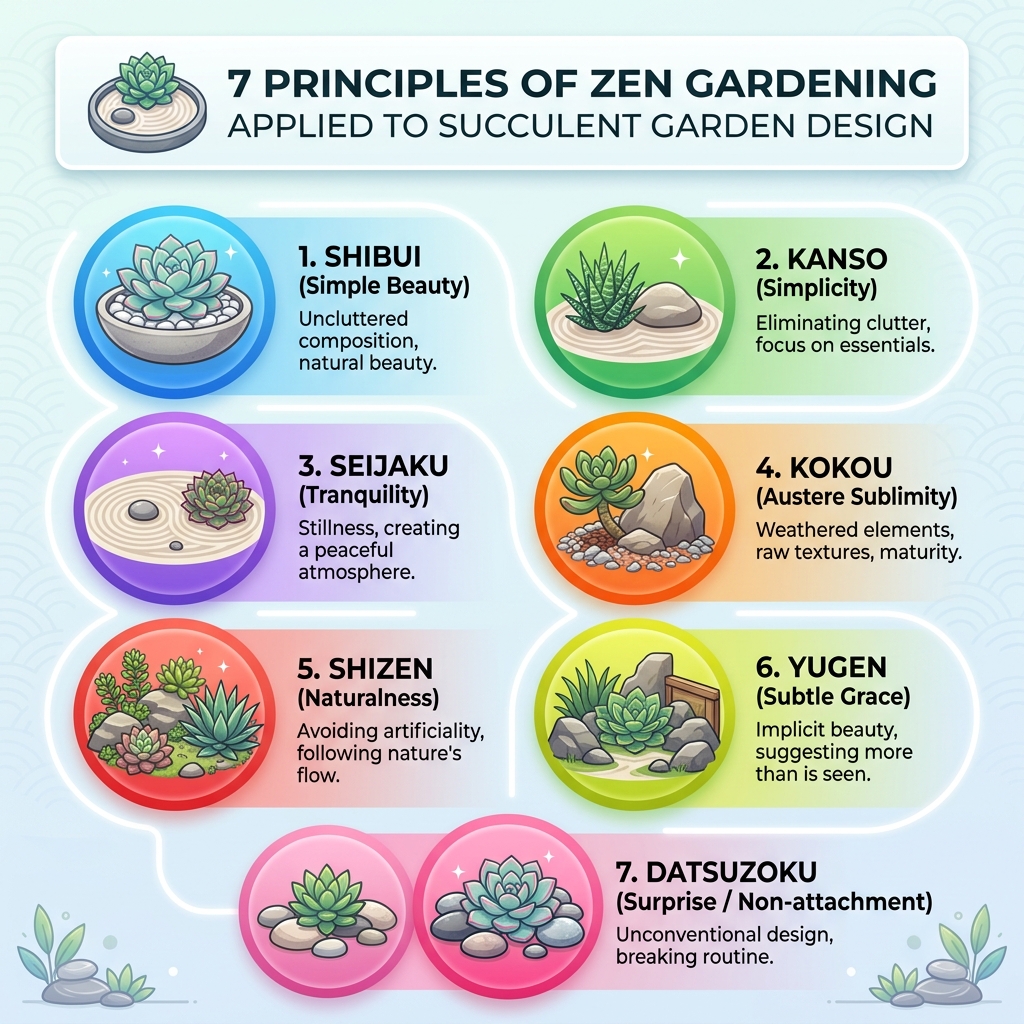
Core Principles of Zen Garden Succulent Designs
When we talk about zen garden succulent designs, we aren’t just talking about putting plants in a pot. We are tapping into a centuries-old Japanese philosophy known as Karesansui (dry landscape). The goal is to create a miniature representation of the universe that encourages contemplation and stress reduction.
There are several core principles we follow to ensure our designs feel truly “Zen”:
- Minimalism (Kanso): This is the art of elimination. We don’t crowd the space. If an element doesn’t serve a purpose or bring peace, it doesn’t belong.
- Naturalness (Shizun): While the garden is carefully planned, it shouldn’t look forced. We avoid perfect symmetry and instead opt for organic groupings that mimic how plants grow in the wild.
- Symbolism: In a traditional Zen garden, sand or gravel represents water, while large rocks represent islands or mountains. In our zen garden succulent designs, a single rosette-shaped Echeveria might symbolize a blooming flower on a distant peak.
- Raked Gravel: The act of raking patterns into sand or fine gravel is a meditative practice in itself. These lines represent the ripples of the sea or the flow of a river.
To help you understand how these designs differ from standard gardening, we’ve put together a quick comparison:
| Feature | Traditional Japanese Zen Garden | Succulent Zen Garden |
|---|---|---|
| Primary Plants | Moss, Japanese Maple, Azaleas | Echeveria, Haworthia, Agave |
| Water Needs | Moderate (for plants) | Very Low (drought-tolerant) |
| Symbolism | Abstract (rocks as islands) | Sculptural (plants as living art) |
| Maintenance | High (pruning/sweeping) | Low (minimal pruning/watering) |
| Climate | Temperate/Moist | Arid/Dry/Sunny |
By blending these ancient rules with modern, hardy plants, we create a space that is both visually striking and incredibly easy to care for.
Essential Materials and Plant Selection
To build a successful garden, we need to gather the right “ingredients.” The beauty of zen garden succulent designs lies in the contrast between the soft, fleshy leaves of the plants and the hard, rugged textures of the stones.
The Foundation: Rocks and Stones
Rocks are the backbone of any Zen design. We recommend using a variety of scales:
- Boulders and Large Rocks: These act as focal points. Stacking stones like Chief Cliff dry stack can create organic-looking planter beds.
- Mexican River Rocks: These smooth, dark stones provide a beautiful contrast when laid on their side as “graphic mulch,” allowing water to percolate through while reducing evaporation.
- White Pebbles or Fine Gravel: These are used for the “sea” areas where you will rake your patterns.
Soil and Drainage
Succulents hate “wet feet.” We always use a well-draining soil mix specifically designed for cacti and succulents. If you are building an indoor miniature version, you might even start with a layer of gravel at the bottom to ensure moisture doesn’t sit around the roots. For more complex arrangements, check out our guide on Succulent arrangement using different varieties to see how different species can share a space.
Decorative Elements
To complete the look, we often add:
- Driftwood: Adds a weathered, natural feel.
- Buddha Statues: A 45kg stone Buddha can serve as a massive focal point for an outdoor garden, while a tiny figurine works for a desk.
- Sand: Using two colors of sand (like black and white) can create stunning visual depth in miniature indoor designs.
Best Succulent Varieties for Zen Garden Succulent Designs
Not every succulent is a good fit for a Zen aesthetic. We look for plants that grow slowly and maintain a tidy, sculptural shape.
- Haworthia (Zebra Plant): These are absolute stars for Zen designs. They reach 4-6 inches in height, grow slowly, and feature striking white stripes that look like natural art.
- Echeveria: Renowned for their exquisite rosette form, varieties like ‘Blue Flame’ or ‘Perle von Nurnberg’ offer a “flower that never fades” look.
- Agave: For outdoor gardens, Agaves provide a bold, dramatic silhouette. Varieties like Agave attenuata are extremely low-water and low-maintenance.
- Crassula (Jade Plant): These have a tree-like structure that fits perfectly into a miniature landscape.
- Golden Barrel Cactus (Echinocactus grusonii): These provide a perfect spherical focal point that represents a sun or a moon in your design.
- Sedum (Stonecrop): Excellent as ground cover to fill gaps and soften the rigid lines of larger rocks.

Design Considerations for Outdoor Zen Garden Succulent Designs
If you are lucky enough to have a backyard space, zen garden succulent designs are a fantastic way to implement xeriscaping. In hot climates like Valencia or the American Southwest, where temperatures can soar, succulents are the ultimate survivors.
When designing outdoors, consider fire-resilient landscaping. Succulents hold water in their leaves, making them much more fire-resistant than dry grasses or woody shrubs. We recommend adjusting landscape designs for wider spacing in high fire hazard areas.
For a professional touch, incorporate solar-powered spotlights to frame your Zen area at night. This highlights the architectural shapes of the Agaves and Aloes without the need for complex wiring. If you have a pool, keep your plants 1.5 to 2.5 meters away from the edge to avoid getting leaf debris in the water.
One clever tip from professional landscape architects: if you have an ugly drainage pipe, don’t just cover it up. Use a “sheer descent” fountain or a carefully placed rock formation to hide the pipe while keeping it accessible for maintenance. You can find more inspiration for large-scale projects at A Ravishing Zen Garden.
Step-by-Step Guide to Building Your DIY Succulent Zen Garden
Ready to get your hands dirty? Building a succulent zen garden is a rewarding weekend project. Whether you are transforming a “trouble spot” in your yard or a corner of your living room, follow these steps.
Step 1: Site Preparation
For outdoor gardens, clear the space of all weeds and level the soil. We highly recommend laying down a high-quality weed barrier (like GardenMat). This prevents weeds from poking through your beautiful white stones and protects your succulent roots from burrowing pests.
Step 2: Placing Focal Points
Before you plant anything, place your largest elements. This includes your boulders, Buddha statues, or large driftwood. These are your “mountains.” If you’re working on a smaller scale, you might want to look at our Easy DIY succulent terrarium for beginners for tips on scale and placement.
Step 3: Planting
Dig holes through your weed barrier and nestle your succulents into the soil. Use a mix of heights—tall Agaves in the back and low-growing Sedums or Echeverias in the front. For a modern look, try planting large chunks of a single plant type in custom steel containers for a graphic, bold effect.
Step 4: Layering and Top-Dressing
Once your plants are in, cover the soil with a layer of gravel or sand. This isn’t just for looks; it keeps the leaves of the succulents off the damp soil, which prevents rot.
Step 5: The Raking
This is the most important part for the “Zen” feel. Use a rake (or a chopstick for small gardens) to create curving strokes around your “islands.” These patterns should mimic waves or ripples. Maintain at least 5 cm of sand depth to make the lines deep and visible.
Creating Miniature Zen Garden Succulent Designs Indoors
Indoor designs are perfect for those of us who want a “desk oasis.” You can use a shallow decorative bowl or even repurposed glassware. For a unique look, try turning glass containers into DIY succulent terrariums 2.
In a mini garden, we love using two different colors of sand—perhaps a dark charcoal sand for the base and a bright white sand for the raked top layer. This creates a “moon” or “yin-yang” effect. To keep your workspace clean, check out our guide on how to beautify your workspace with a DIY succulent terrarium.
Maintenance and Care for a Thriving Landscape
One of the biggest benefits of zen garden succulent designs is that they thrive on what we call “enlightened neglect.” However, they do need some basic care to stay looking their best.
- The Soak-and-Dry Method: Never mist your succulents. Instead, wait until the soil is completely dry, then give it a deep soak. In an indoor zen garden, be careful not to wet the sand too much, as it can ruin your raked patterns.
- Sunlight Needs: Most succulents need at least 4-6 hours of bright, indirect sunlight daily. If they don’t get enough light, they will “stretch” (etiolate) and lose their compact Zen shape. If you see your Echeveria getting tall and spindly, it’s crying out for a sunnier window!
- Temperature and Airflow: Succulents love temperatures between 60°F and 80°F. Ensure your indoor garden has good air circulation; avoid placing it directly next to a radiator or air conditioner.
- Pruning: You’ll only need to prune once or twice a year. Remove dead leaves from the bottom of the rosettes to prevent pests like mealybugs from hiding there.
- Feeding: During the growing season (spring and summer), you can use a diluted succulent fertilizer once a month.
For those interested in a lower-maintenance version, you might explore the guide to creating a self-sustaining succulent terrarium.
Frequently Asked Questions about Succulent Zen Gardens
Are succulent zen gardens easy to maintain?
Absolutely. Because succulents are drought-tolerant and slow-growing, they require far less work than a traditional garden. Once established, your main “job” is the occasional raking of the sand, which is meant to be a relaxing hobby, not a chore!
How much sunlight do mini succulents need?
Mini succulents on a desk need about 4-6 hours of sunlight. If your office is dark, you might need a small LED grow light to keep them from losing their vibrant colors.
Can I use sand or gravel for outdoor designs?
For outdoor zen garden succulent designs, we recommend crushed stone or small pebbles over fine sand. Sand is light and can easily blow away in the wind or wash out during a heavy rainstorm. Crushed stone provides better drainage and stays in place much better.
Conclusion
Creating your own zen garden succulent designs is more than just a landscaping project; it’s a way to bring a sense of peace and intentionality into your daily life. Whether you are raking patterns in a tabletop bowl after a long day of work or admiring the sculptural beauty of an Agave in your backyard, these gardens remind us to slow down and breathe.
At Opcion Rural, we believe in blending art and nature to create accessible home ecosystems. If you’re looking for more ways to get creative with these amazing plants, don’t miss our crafty and creative DIY succulent terrarium ideas.
Ready to find your inner peace? Start creating your dream garden today!
