The Romance Scam: How It Works and How to Walk Away
This one needs to be written carefully, because the romance scam is unlike the others.
It doesn't break in. It doesn't fool you with a fake login page. It works by being patient and tender for weeks or months until the question of money is the most natural thing in the world.
People who lose money to romance scams are not stupid. Not lonely in any obvious way. Not gullible. They are simply on the wrong side of someone who has spent years getting good at this specific thing.
If you are reading this on someone else's behalf — an adult child worried about a parent, a friend worried about a friend — what follows is meant to be useful to both of you. If you are reading because something is bothering you about a connection you have made online, please keep reading. Don't put the phone down.
How the scam actually unfolds
The introduction is always through some platform that isn't a dating site. Facebook. Words With Friends. Instagram. A church group's chat. A condolence comment under a death notice on a local newspaper's website. The scammer reaches out warmly, mentions something specific that suggests they read what you posted, and starts a friendly conversation.
The conversation moves quickly to a private messaging app — usually WhatsApp or Telegram, because Facebook and Instagram are increasingly good at flagging these patterns. They send a few photographs. The photographs are stolen from someone else's social media, often a retired military officer or a successful professional who travels for work. The person in the photographs is real. The person sending them is not that person.
Over the next four to twelve weeks, they call you, message you in the morning, message you at night. They learn the names of your children. They tell you about their late spouse. They share a story about a difficult moment in their life and ask you to share yours. The intimacy is real for you. For them, it is an extended professional engagement.
Then there is a problem. The problem is always small at first and grows. A medical emergency for their daughter in Manila. A frozen bank account in Dubai. A shipping fee for a container of equipment from a contract they need to release. Could you send a small amount — $300, $500 — to bridge the gap? They will pay it back next week. They are so embarrassed to ask.
If you send the first amount, the asks grow. Each new request comes with a new emergency. They are coming to visit; their flight is delayed and they need to pay the rebooking fee. The customs official is asking for a release payment. Their lawyer says the company has frozen assets pending an audit. There is always a reason the next payment, this time, will be the last one.
The pattern continues until you say no, or until your family notices, or until the bank flags the transactions. By then the average loss for a senior in the US is between $40,000 and $200,000.
The moments that should make you stop
Any of these. Even one is enough.
They will not video-call you. They have endless reasons — bad internet, a broken camera, military rules. Real people who are romantically interested in you will get on video. Scammers, with rare exceptions, won't. A romance that exists only in text messages and voice calls is, at minimum, a romance that needs to clear this bar before it goes any further.
They want to take the conversation off the original platform. WhatsApp or Telegram aren't inherently bad; the move there is meant to escape moderation. If someone presses you to switch platforms shortly after first contact, ask why and watch the answer.
They mention any kind of financial difficulty in the first two months. A real new relationship doesn't involve the other person's banking troubles right after meeting. A scam relationship almost always does.
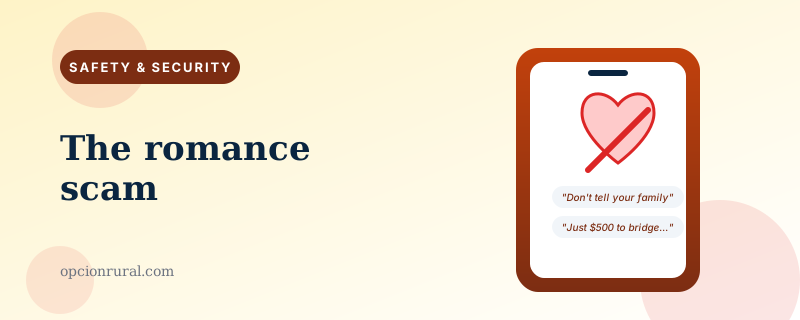
They ask you not to tell your family. "Your children won't understand." "Let's keep this between us for now." This is the most reliable single tell. Real people who care about you are happy to be talked about with your family. Scammers know your family will see what they can't.
They will not ever, under any circumstances, meet you in person. Plans are made. The flight is booked. Something always happens.
If you've already sent money
Stop. Don't send more, even if the request comes with the worst story you've heard yet. The asks escalate to test how far you'll go; the worst one comes after you've already given up the most.
Call your bank's fraud line — the number on the back of your card. Tell them what happened. They cannot reverse wire transfers or Zelle, but they can flag your account against further outgoing transactions and protect you from additional damage. They have heard this exact story before. There is no judgment.
Report the matter to the FBI's Internet Crime Complaint Center at ic3.gov, the FTC at reportfraud.ftc.gov, and your state's attorney general. The chance of recovering the money is small but not zero, and the reports help build cases that occasionally do result in arrests.
Tell one person in your family. Not all of them. Pick the one you trust most to receive this news with grace. They will help carry the next several weeks.
If you're an adult child reading this
The instinct is to confront. Tell your parent they've been scammed. Take their phone away. Move the bank accounts to your name. These instincts come from love, and they usually backfire.
What works better: ask questions, gently, repeatedly. "Tell me about your new friend. How did you meet? What does she do? Has she sent any photographs? Have you spoken to her on video?"
The questions invite your parent to think about the answers themselves rather than be told what to think. The realization, when it comes, hurts a great deal less when it arrives through their own asking.
Don't shame. The shame is what kept your parent from telling you when the relationship started, and shame from you will push them further toward the scammer for emotional support — which the scammer is offering in unlimited supply.
Talk to the bank. Most major banks now have specific procedures for elder financial abuse and can put protective alerts on an account without involving the parent at all. The bank will not freeze the account; they will simply be more cautious about unusual outgoing transactions.
If money has already been sent, the bank's fraud team can guide you through the limited recovery options. The FTC's site at reportfraud.ftc.gov walks through what to file.
The harder part
What I want to say to people who have been through this, and to the people who love them: the relationship was real for the victim. The feelings were real. The love was real. The fact that the other side was a professional doesn't make the months of conversation, the trust, the late-night text messages, less true on the victim's end. They are mourning a relationship that did not exist while being told they were foolish for having had it.
That's a hard place to recover from. Recovery takes time, conversation, and almost always counseling. Many AARP chapters and adult protective services agencies have free support groups specifically for victims of romance scams. The loss is more common than people think. The person is not alone.
If you've read this far for yourself, please tell someone today. The first phone call is the hardest. After it, the path forward starts.
Written by Justin Lowen. Last verified 6 June 2026.